Battle of Guadalcanal
What does the Battle of Guadalcanal have to do with this journey? We’re there! One of the must-see sights during this tour of Southeast Asia is the island of Guadalcanal and the WW2 museums and battlefields. The Battle of Guadalcanal played a vital role in stopping Japanese expansion back in 1942. The Battle of the Coral Sea and Battle of Midway were both defining moments in naval warfare. The Battle of Guadalcanal was the defining moment for Pacific land battles.
Here’s a summary:
Sometime during June-July 1942, the brain trusts of the American war machine got together and discussed the Japanese problem. Seems those guys were advancing towards Hawaii and the west coast of the United States at a pretty fast clip. They are also gathering enough resources, oil, gas, metals, manpower, etc. to make reaching the US possible. Gonna need to do something about that. Now let’s have lunch.
After decisive wins by the Navy at the Battle of the Coral Sea & Midway, the US felt ready to go on the offensive. So, it was decided that even though the area chosen to stop the Japanese was within the playing field of Gen. Douglas MacArthur, it would be handed over to Admiral Nimitz and the Navy to be responsible for the operation. Slightly pissing off Dougey.
The new boundary was set, Nimitz got to work putting together aircraft carriers, support ships, and troops, to trot off and slap a Jap (direct quote). In preparation for what was called, “Operation Watchtower”, Major General Vandegrift relocated the 1st Marine Division (~20,000 men) to New Zealand. Plans were made for a Marine landing on the islands of Tulagi and Santa Cruz (not in California). BUT, after reconnaissance reports came back showing a new airfield being built on Guadalcanal, things changed. New targets, Tulagi, Guadalcanal, and Florida (again, an island, not the state).
And so it began, 7 August 1942, the “Midnight Raid on Guadalcanal”. Vandegrift split his Marines into two groups with one group attacking Tulagi and nearby islands, and the other group attacking Guadalcanal. The attack group on Tulagi saw fierce resistance with the enemy fighting to the last man. Guadalcanal, however, saw very little resistance. Vandegrift landed 11,000 Marines at two locations, around 9:10am on 7 August. By 4:00pm 9 August, they had secured the airfield which was promptly renamed, “Henderson Field” after Major Lofton Henderson, a Marine pilot killed at the Battle of Midway.
Over the course of the next 6 months, the Japanese would resupply with troops, ammunition, and food during the night; while the US would resupply during the day. Air battles became a daily occurrence, as well as bombing the airfield, strafing troops, sinking battleships, and night raids, but a couple raids are worth mentioning.
The Battle of Tenaru was a major victory for the US Marines. In retaliation for landing on Guadalcanal, the Japanese high command sent troops to displace the marines. Landing at night on 19 August, a “First Element” of Colonel Kiyonao Ichiki marched for 9 miles to surprise attack the Marine contingent at “Alligator Creek”, also called the “Ilu River”. Jacob Vouza , a Solomon Islands “Coastwatcher” scout, saw the Japanese troops, was captured and almost beaten to death, escaped and warned the Marines of the impending attack.
In the early morning hours, the attack began and was countered by the Marines. By daybreak, the Marines counter-attacked the surviving Japanese troops. Of the 917 Japanese troops in the initial charge, all but 30 were killed.
The Battle of Edson’s Ridge is the second battle that deserves mentioning. On 7 September, 1942, Major General Kiyotake Kawaguchi issued an attack plan to annihilate the enemy forces on Guadalcanal. On 7 September, Kawaguchi landed ~3,000 men on Guadalcanal and began the march to Henderson Field. Lt. Colonel Merritt Edson (Edson’s Raiders), was advised by local Coastwatcher scouts of the Japanese movement towards the airfield. On 11 September, Edson deployed his 840 men along a ridge overlooking the airfield and made preparations for battle.
On 12 September Kawaguchi’s 1st Battalion made a flank attack on Edson’s men, broke through the lines, but was repelled. A second attack came from the front and was successful in pushing Edson’s men back to a nearby hill, #2. Throughout the next 2 days, constant attacks and counter attacks occurred with the final outcome being the defeat of Kawaguchi’s troops. 14 September, Kawaguchi retreated after losing 850 men. The Marines lost 104.
In all, once the battle for Guadalcanal ended, over 31,000 Japanese personnel lost their lives, over 7,000 Allied personnel lost their lives. This includes land, air, and sea casualties.
The naval battles resulted in 39 ships lost for the Japanese and 29 ships lost for the US. Approximate number of aircraft lost is 683 for the Japanese, 615 for the Allies.
The Japanese military never recovered from these losses and the Allies began steady, though difficult, island hopping to Japan.
Today we visited both battle sites, Battle of Tenaru and “Bloody Ridge”. Not much left at Tenaru. Now it’s just a river with heavy bush on the shores, just a memory. But “Bloody Ridge” where Lt. Col. Edson and his men fought, there is a memorial.
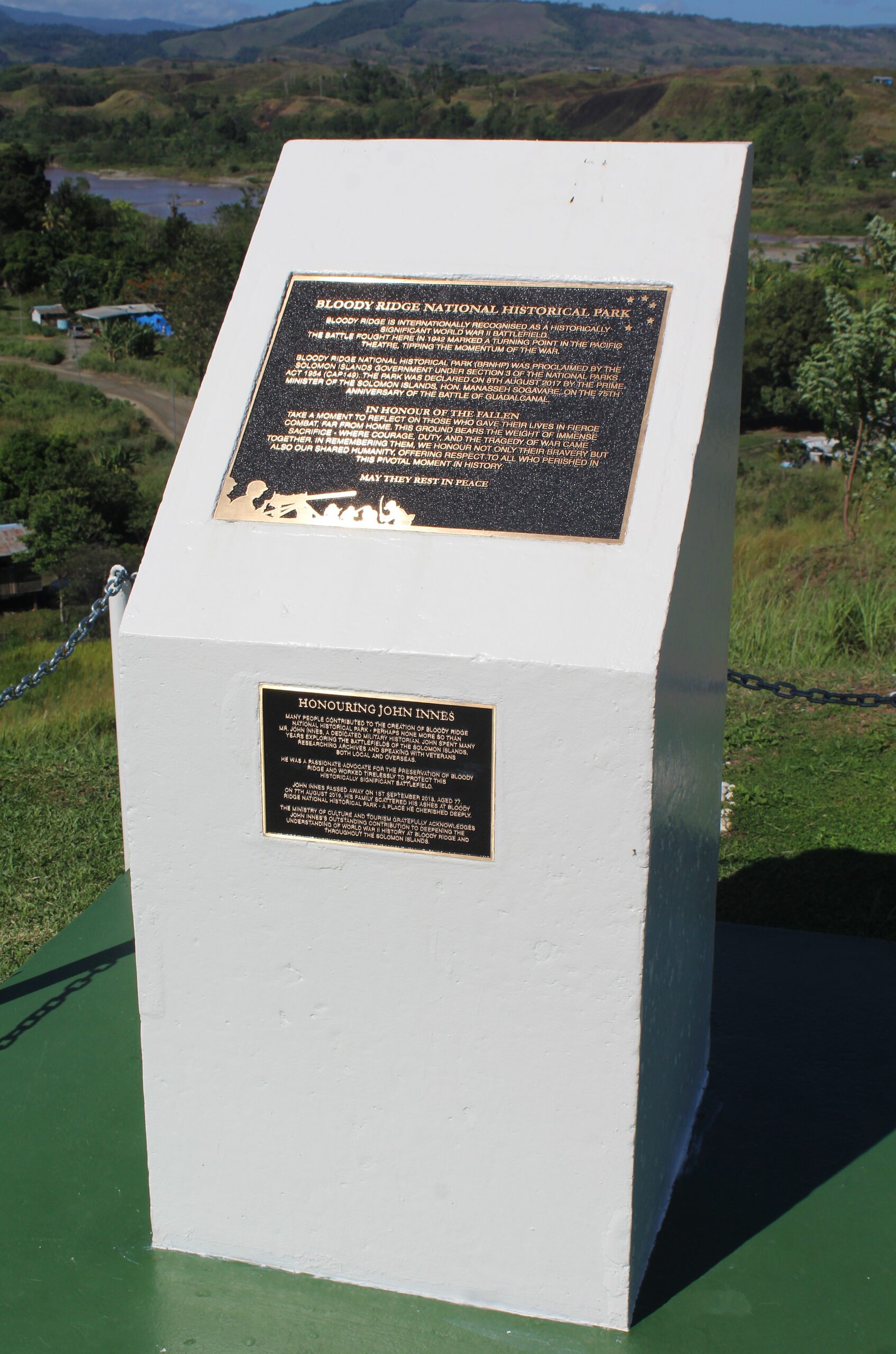
Labeled “Hill #2” during the war, Bloody Ridge is the point where Edson and his men finally defeated Kawaguchi’s 3,000-man army. Wave after wave of attacks were repelled by the Marines over the 3 day battle. Today there are remnants of foxholes but not much else. It is a very narrow ridge so it’s hard to imagine 800+ men fighting there.
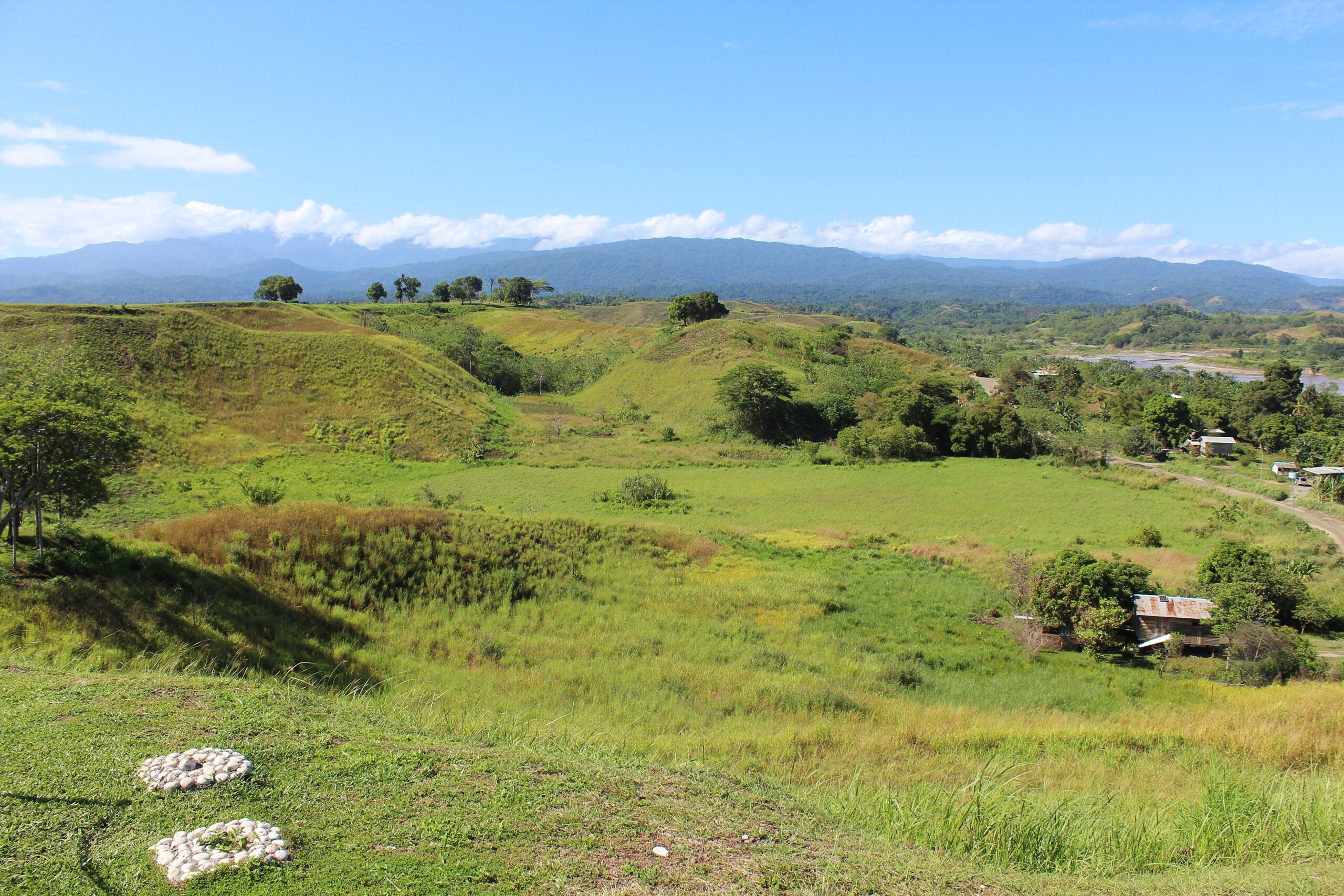
North-west view from Hill#2
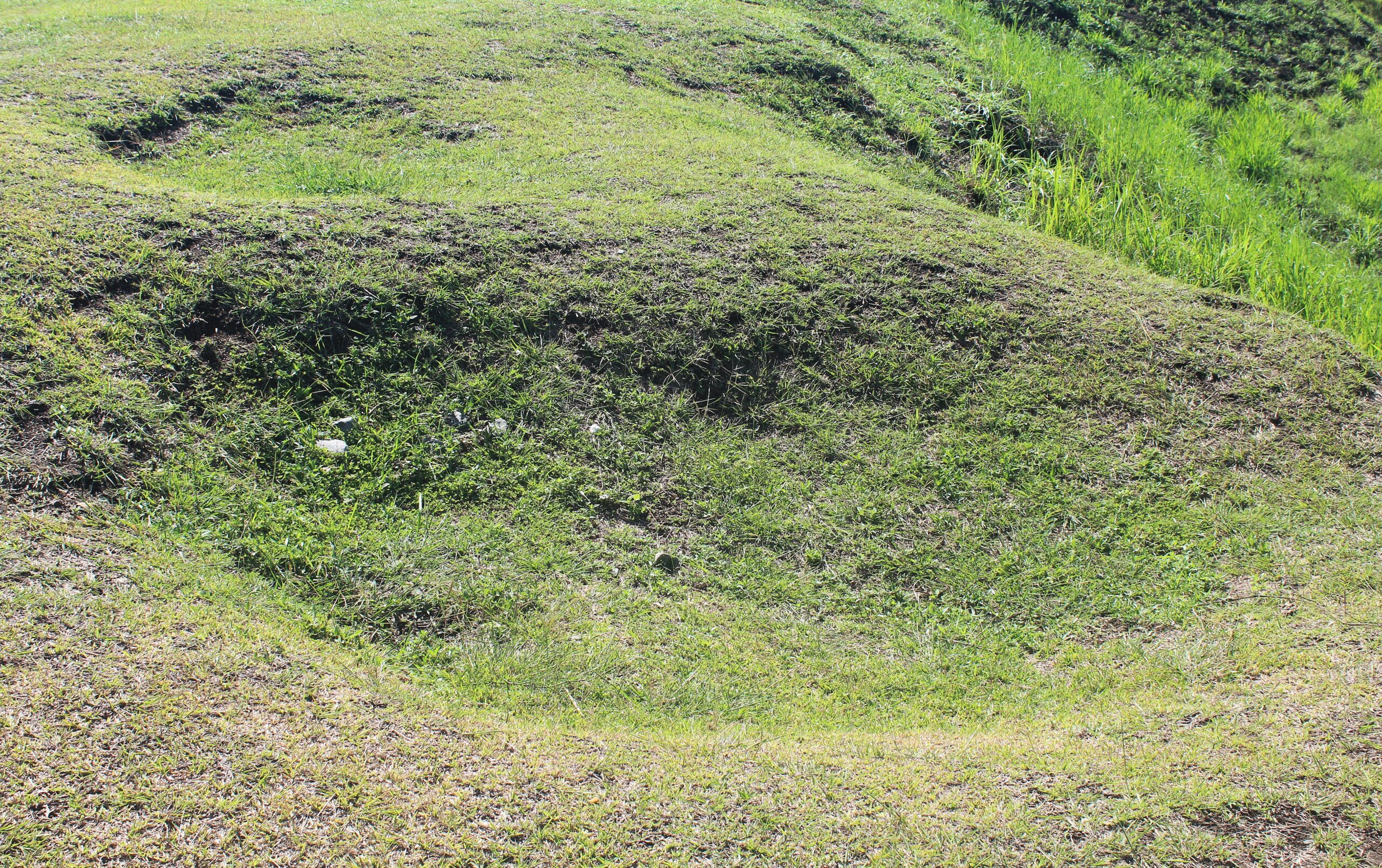
Foxholes Hill#2
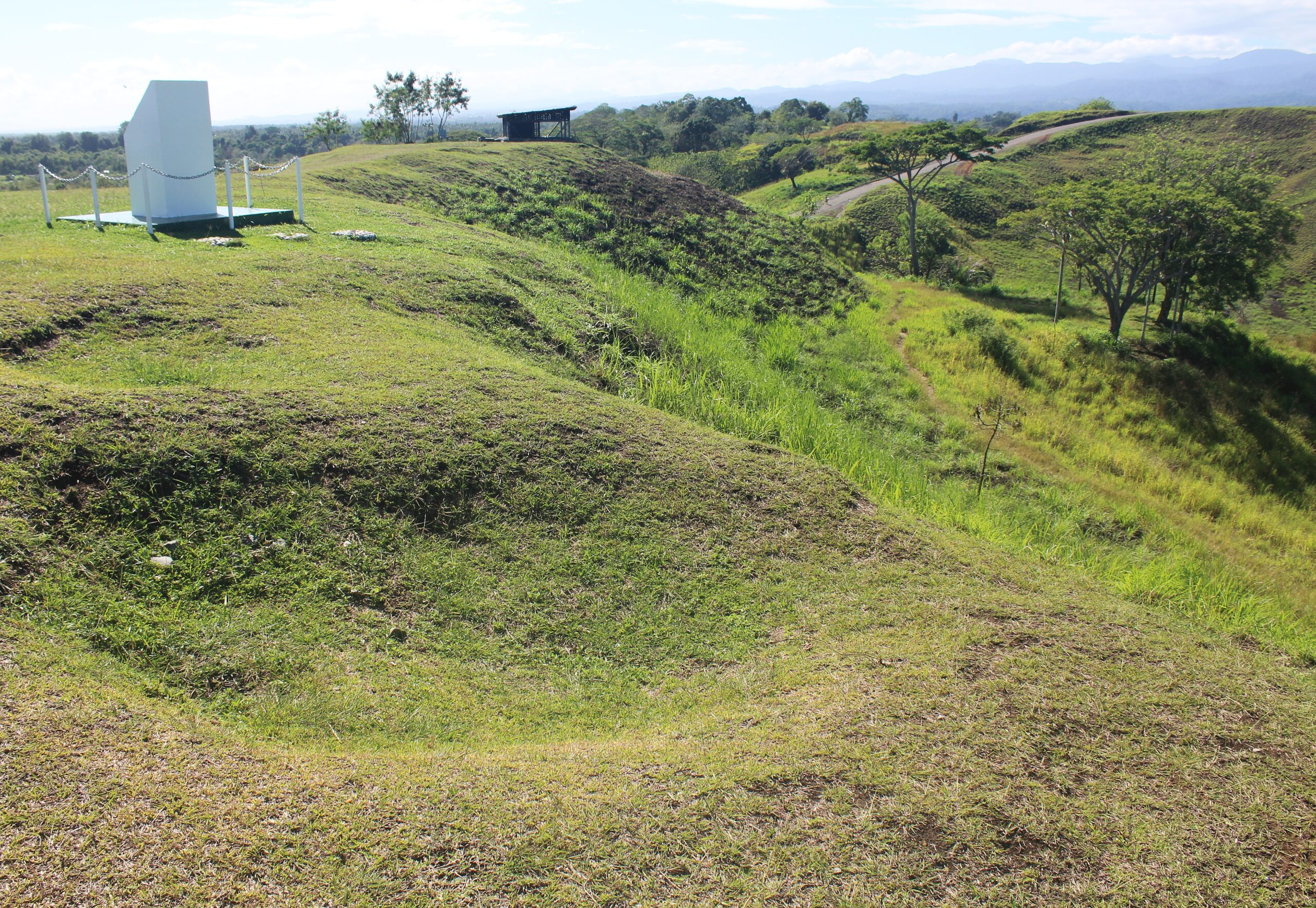
View of foxholes facing Coffin Corner
Hill #1 is a short walk away where the Japanese attempted to place a 37mm quick fire cannon. Fortunately, the cannon was damaged during movement and was inoperable. It would have made all the difference in this battle.
At the far end of Hill #2 is an area named, “coffin corner”. This area is were the Allies buried in mass graves, the Japanese dead.
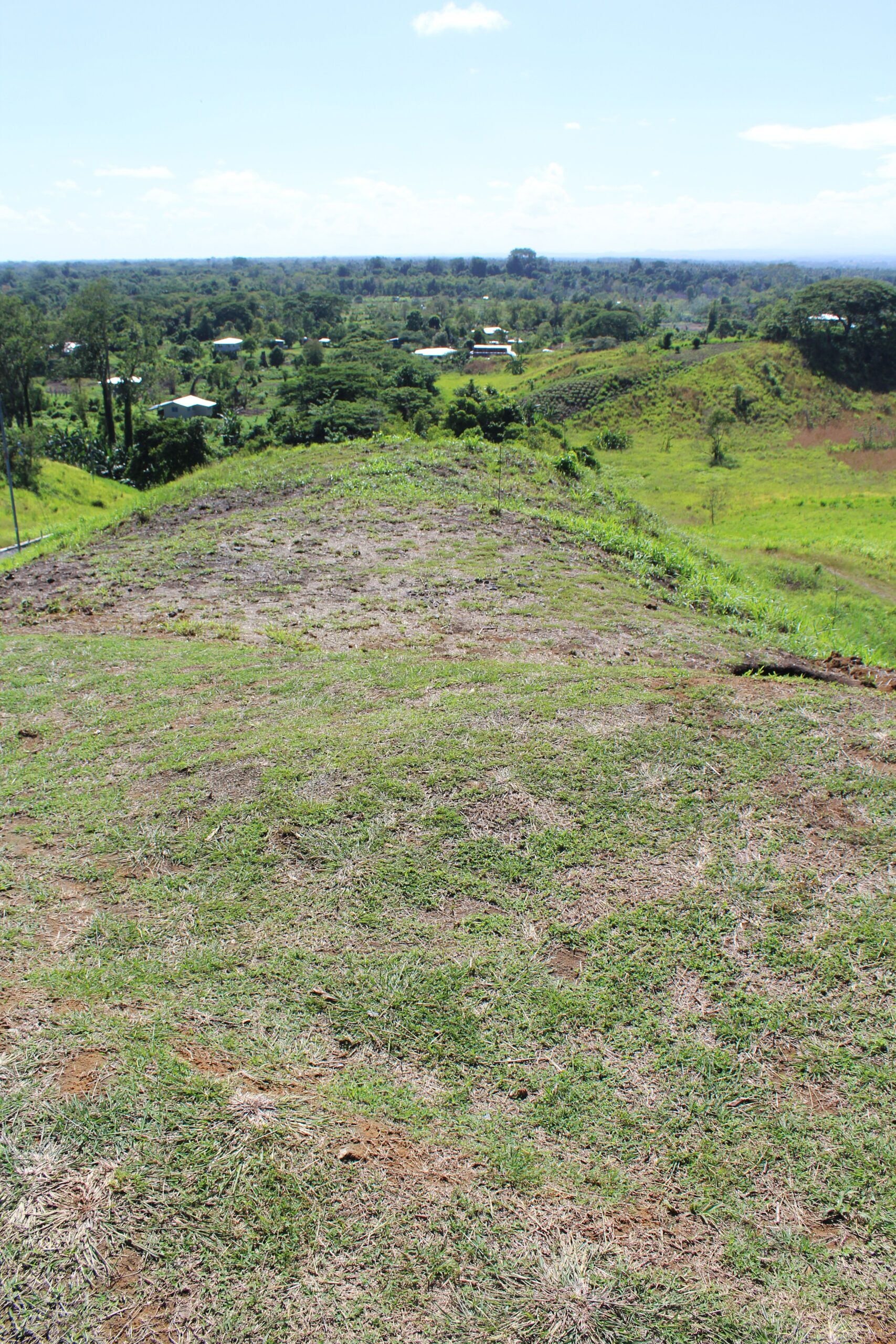
“Coffin Corner” site of Japanese mass graves
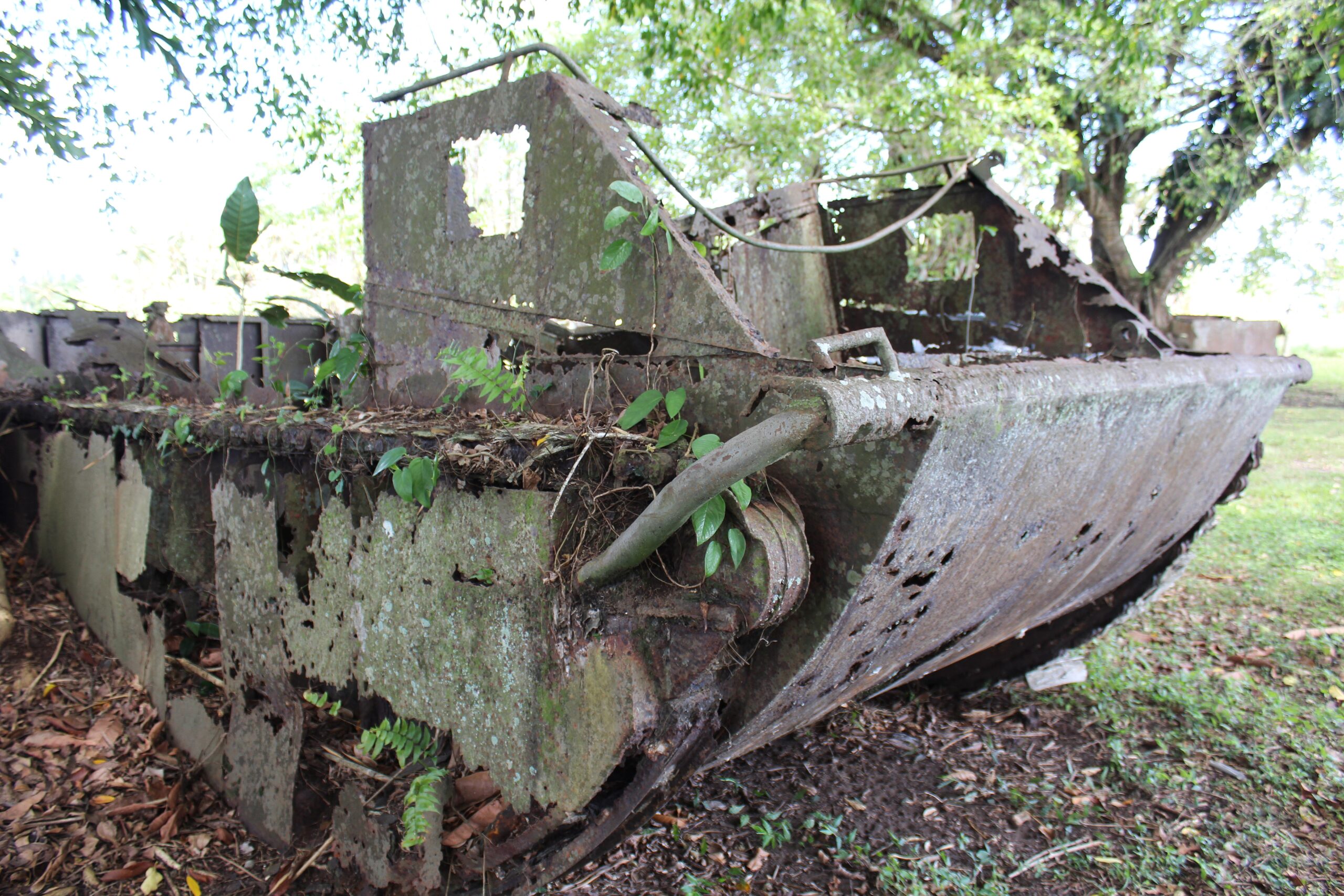
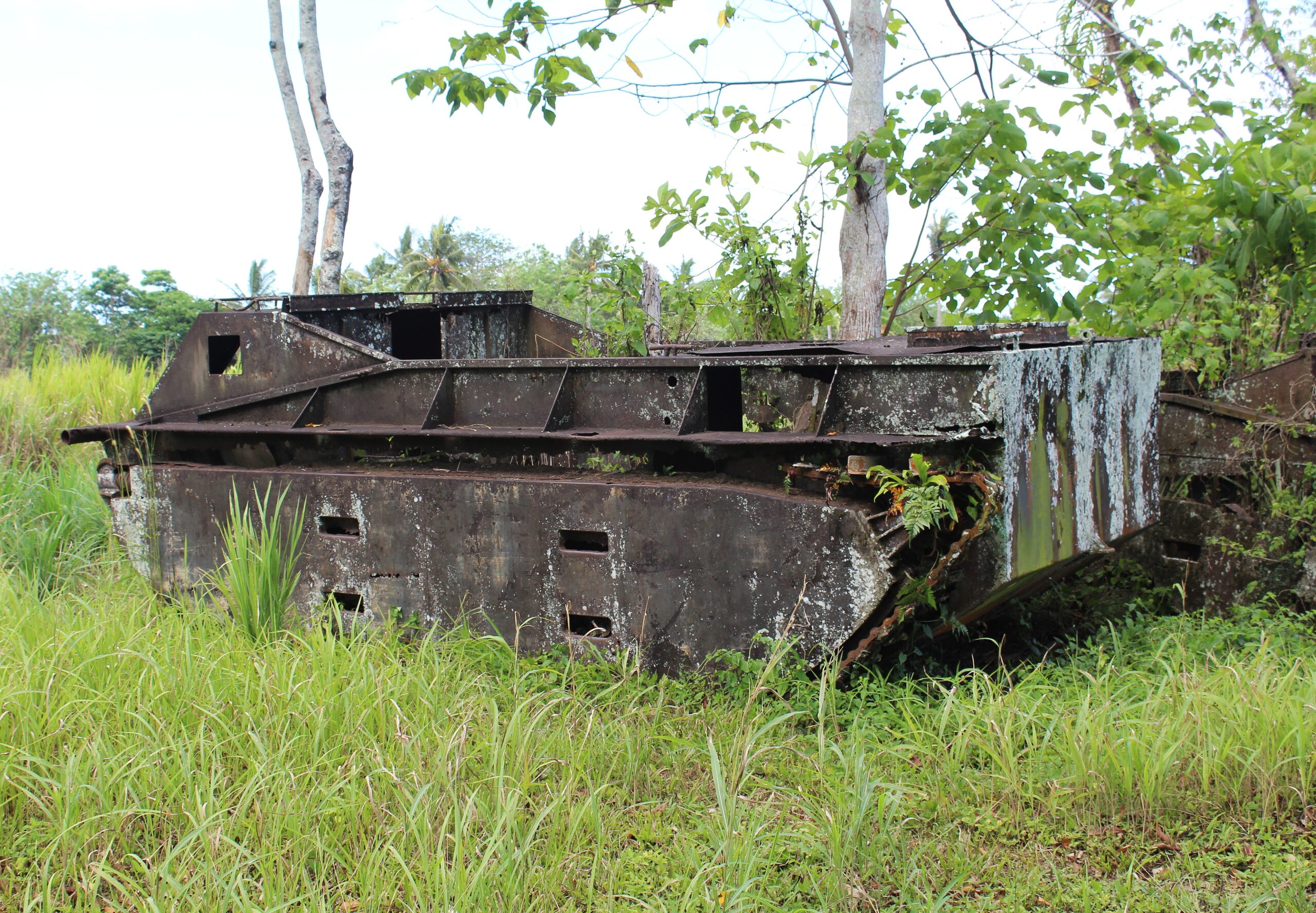
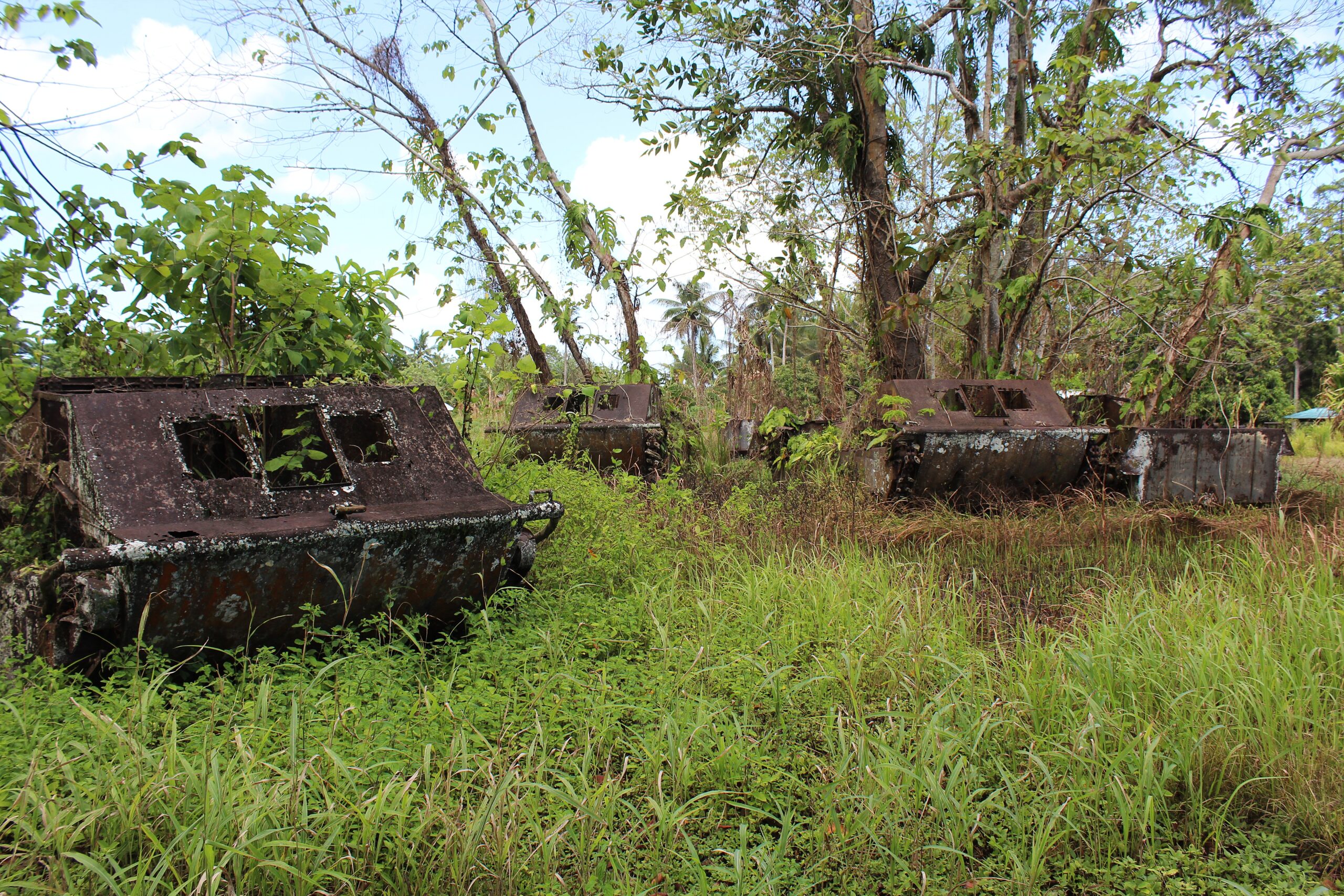
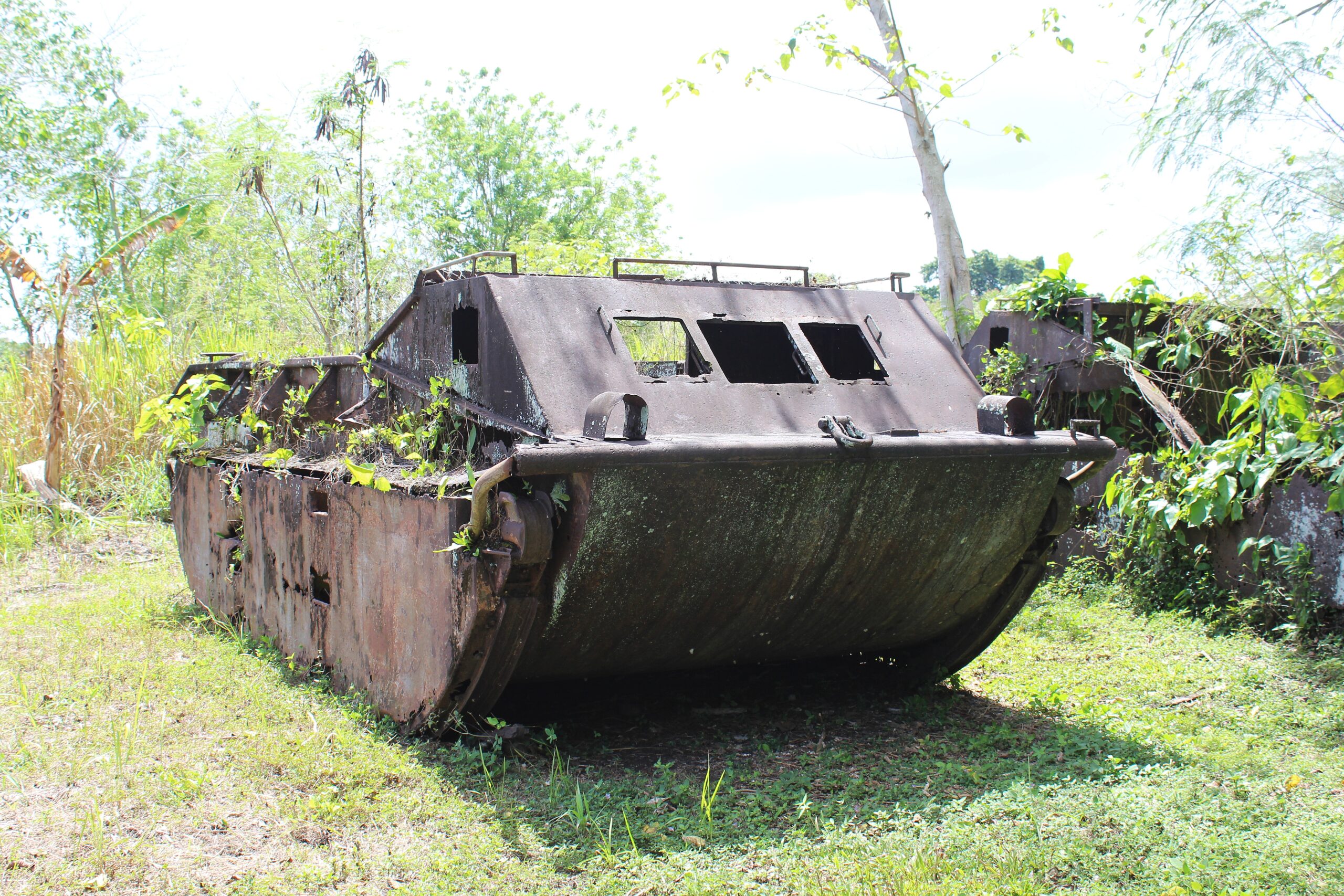
Continuing on our tour of war sites, we arrive at Tetere Beach, not a battle site but a resting place for about 20 “Amtracs” or LVT1 carriers (Landing Vehicle, Tracked). Just as in Europe or any war, it’s cheaper to leave heavy equipment than ship it home. This “museum”, use the term loosely, is outside with the LVT’s clumped together in various spots. Most have been overtaken by Banyon trees, others, almost completely gone due to rust. But, they are remnants from the war, so let’s see em’.
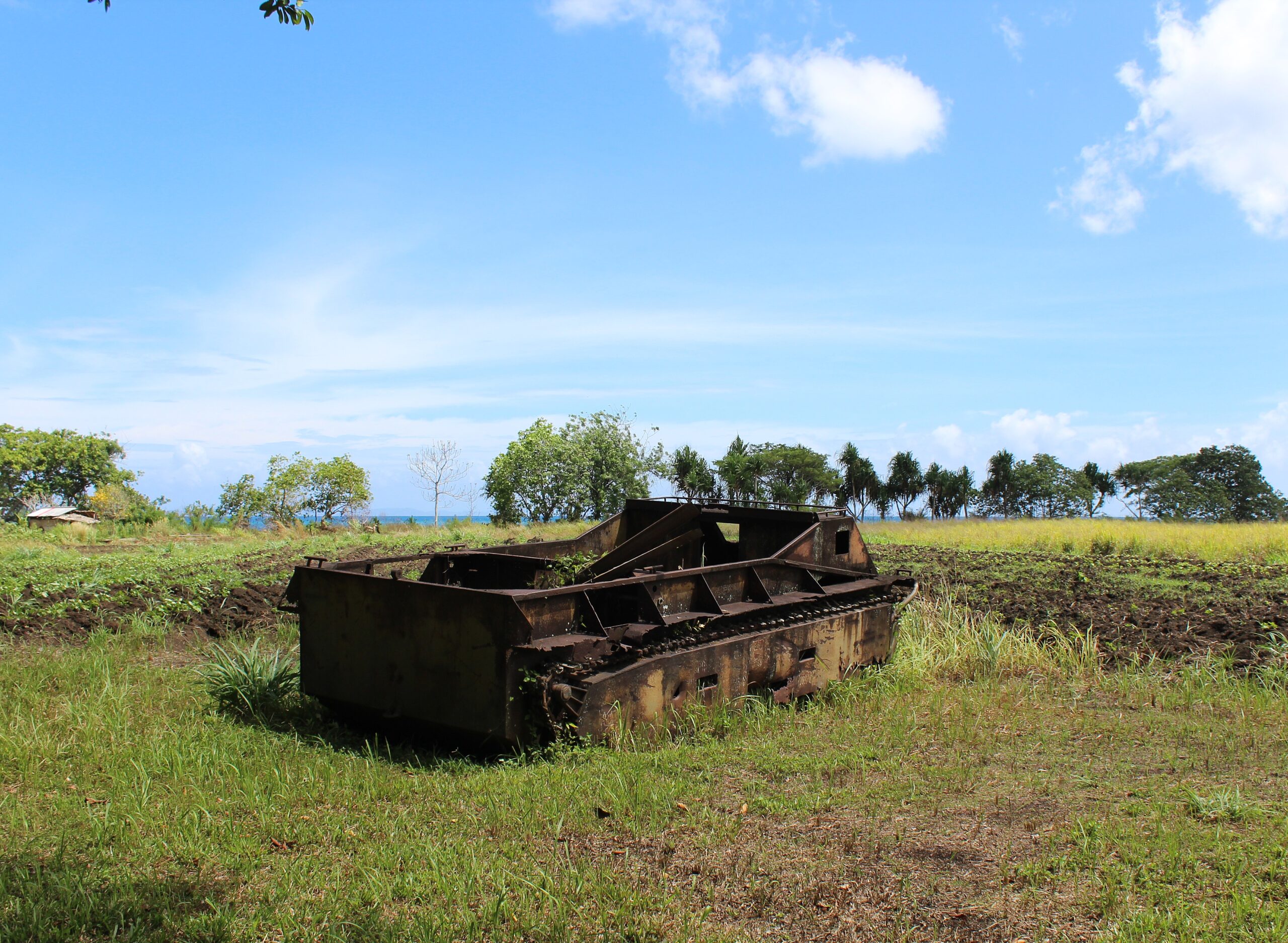
LTV-1 less a few parts
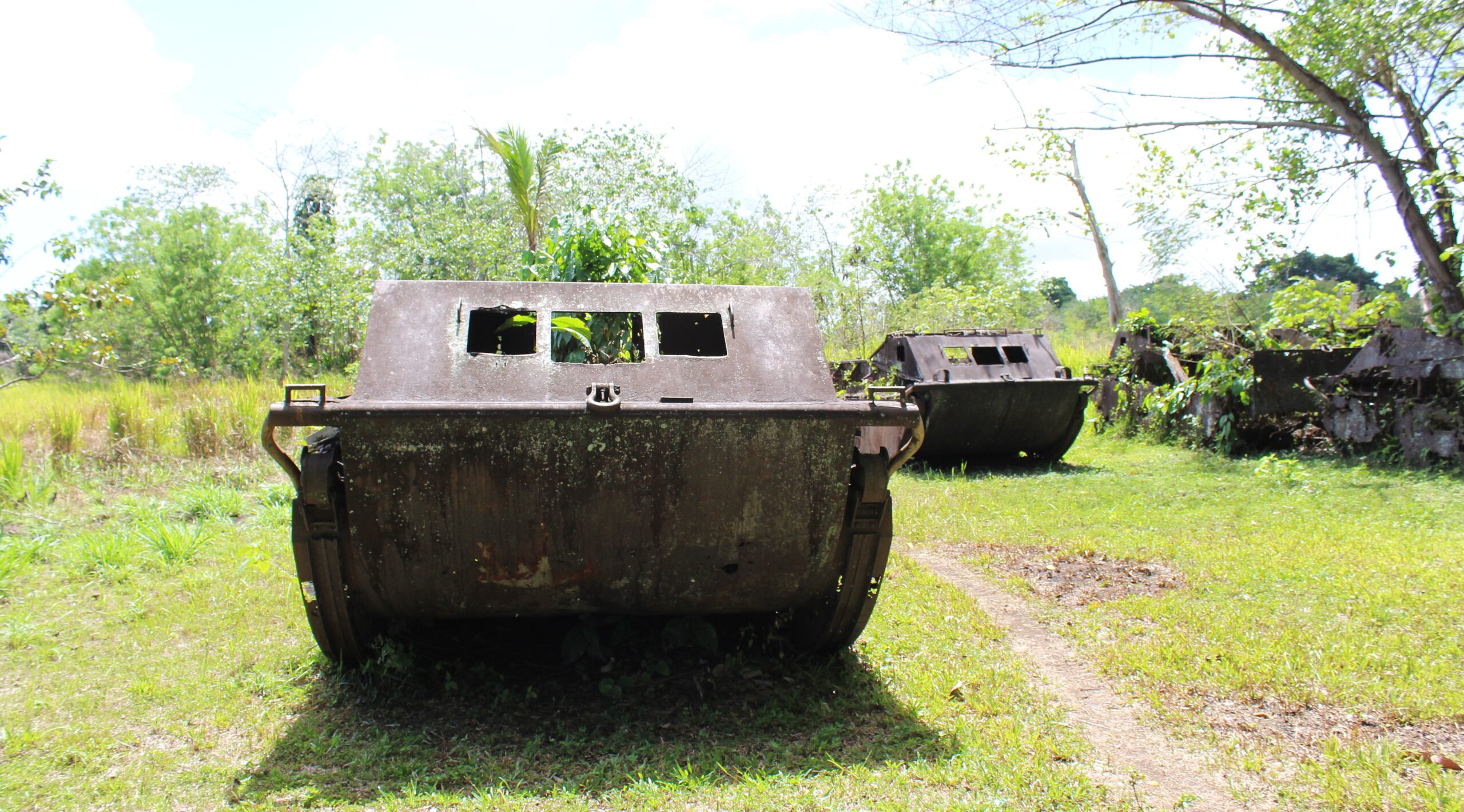
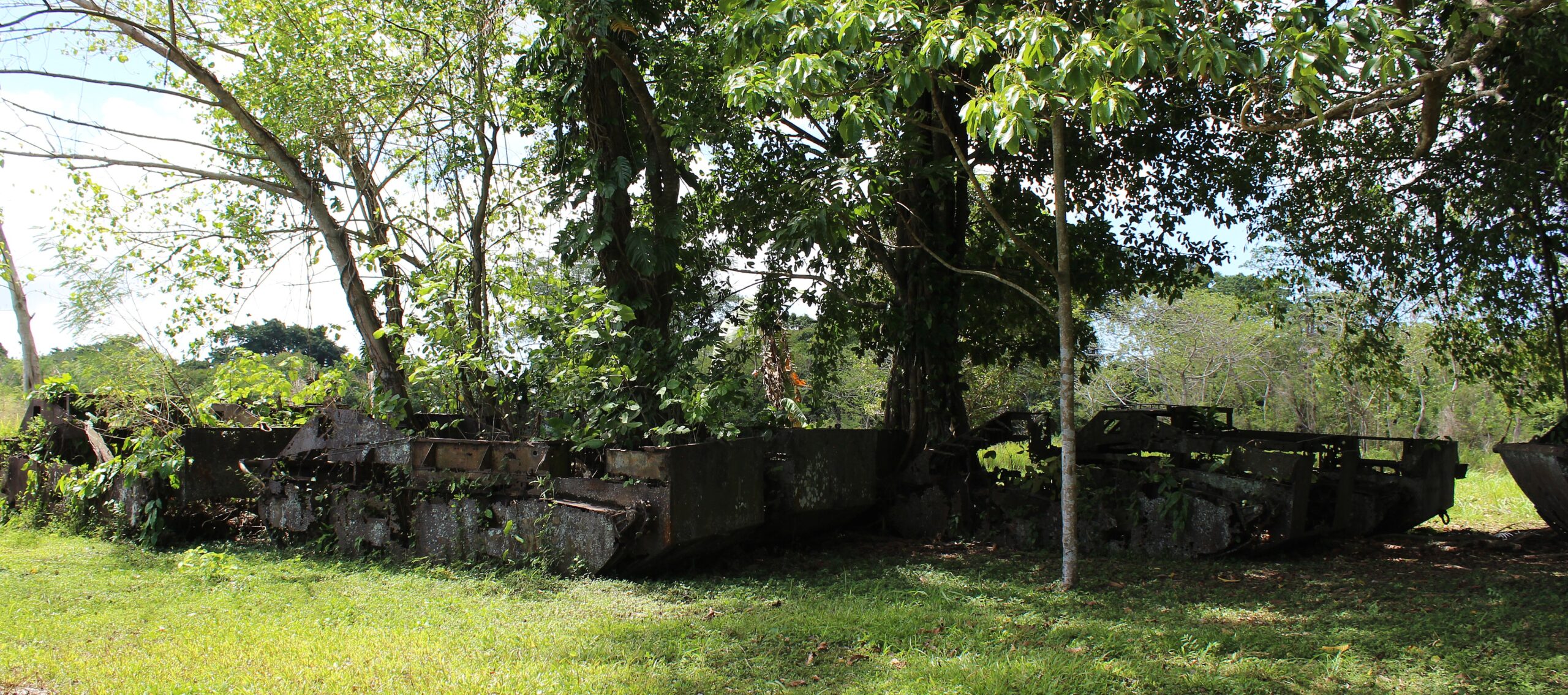
After a quick stop at Tetre Beach, off to the Pagoda Temple site, the cave used by the Japanese for fire control overlooking Henderson Field. The cave was soon taken over by the Allies and used as a spotter location for attacking aircraft at Henderson Field.
Today, a restaurant sits atop the cave where the original Pagoda Temple stood. Pretty smart to put a temple above your command station. The cave consists of two tunnels connecting two rooms, all dug out by hand with a concrete floor in the communications room. The ceiling has a 16-18” diameter hole where an antenna ran up thru the pagoda. The cave has an clear view of Henderson Field and surrounding area.
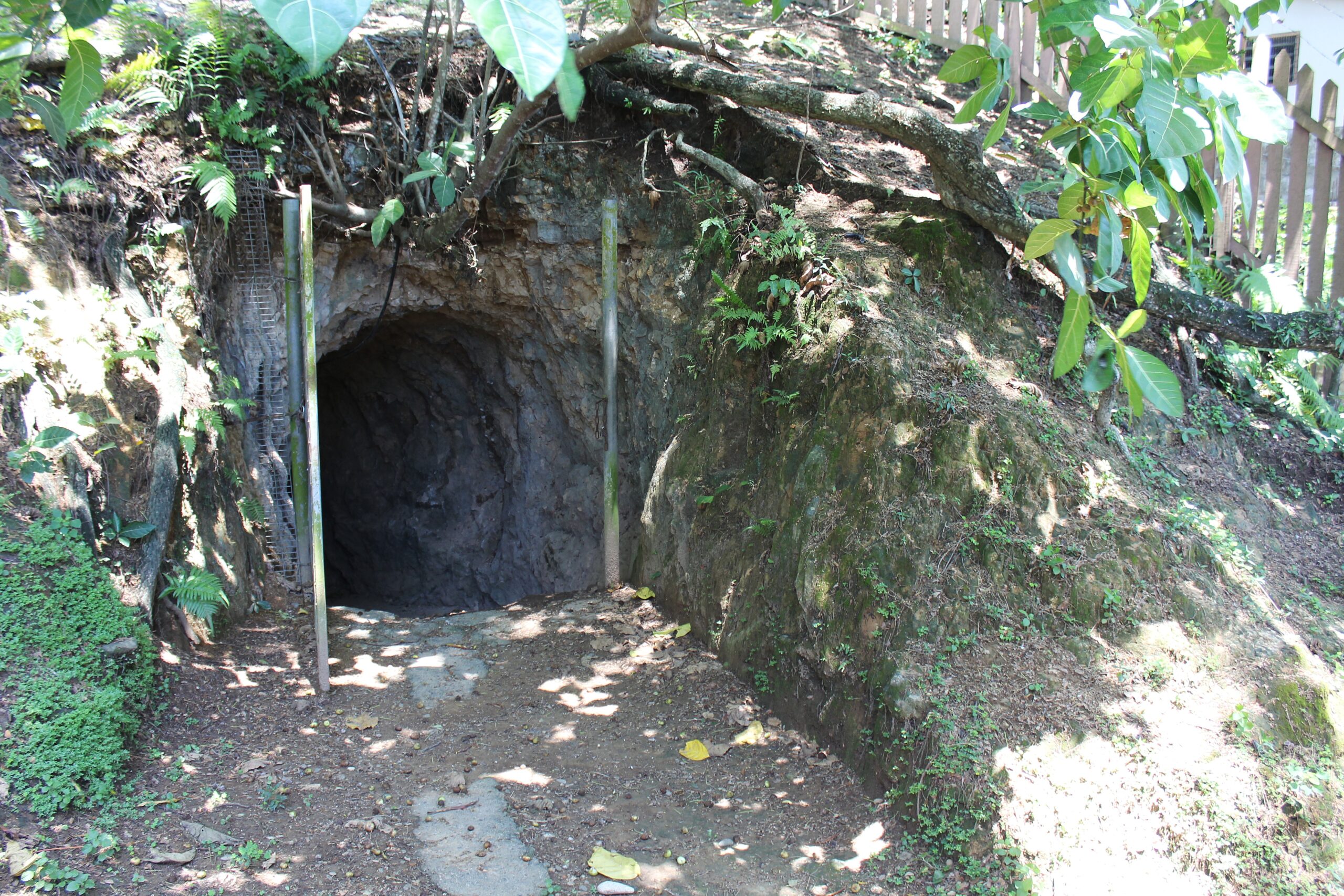
Comms center entrance
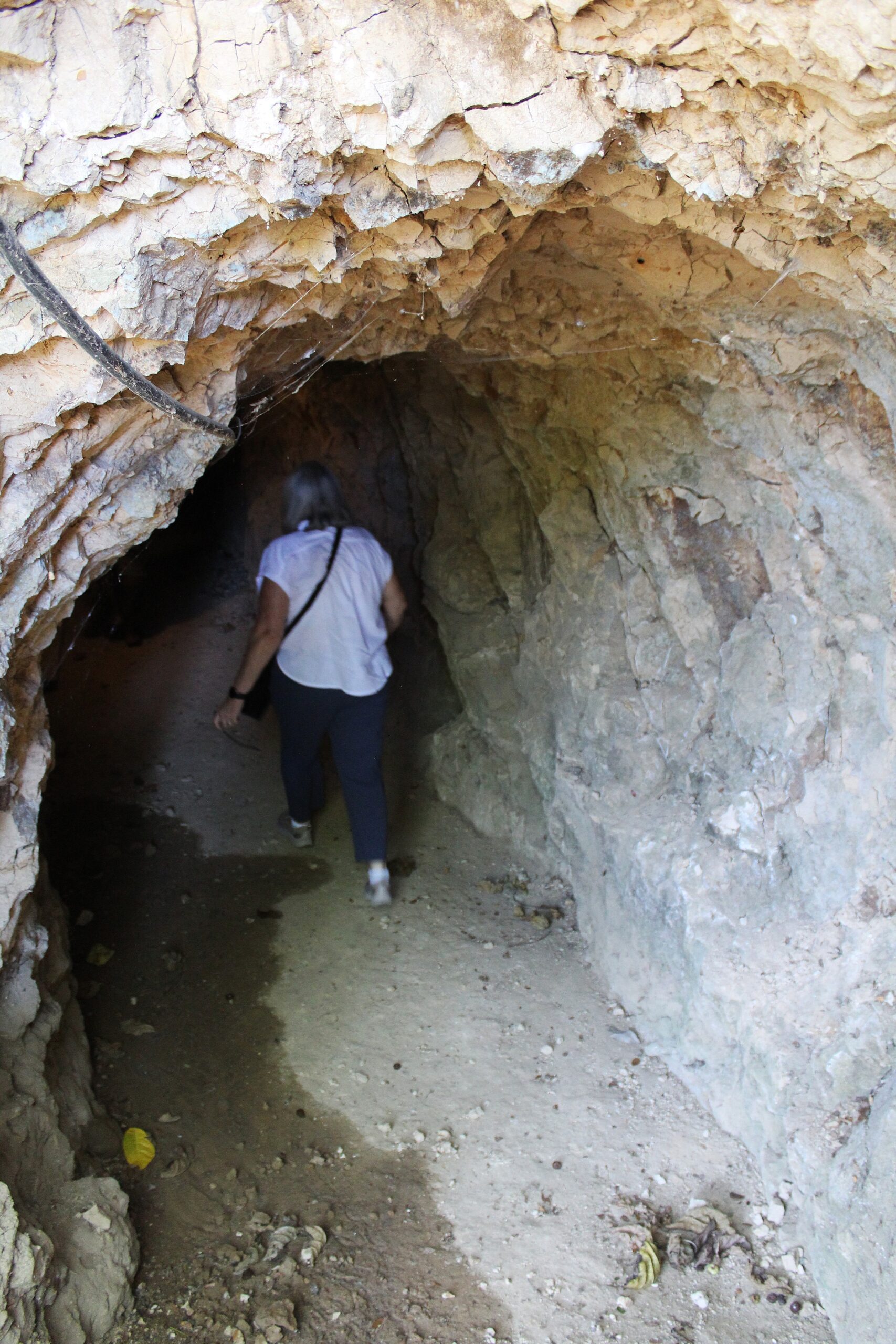
Mom-bear charging in yelling something about “Charlie”
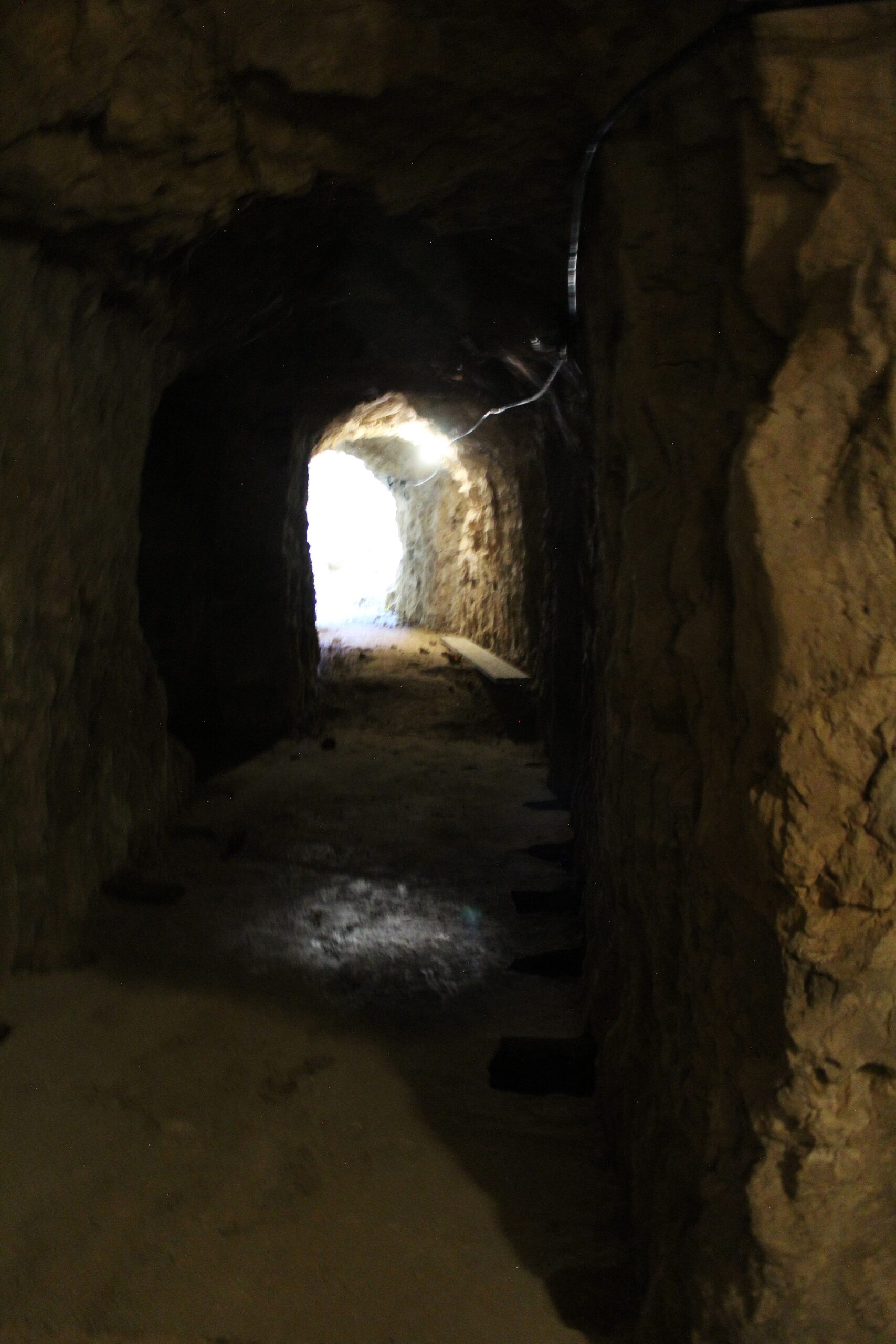
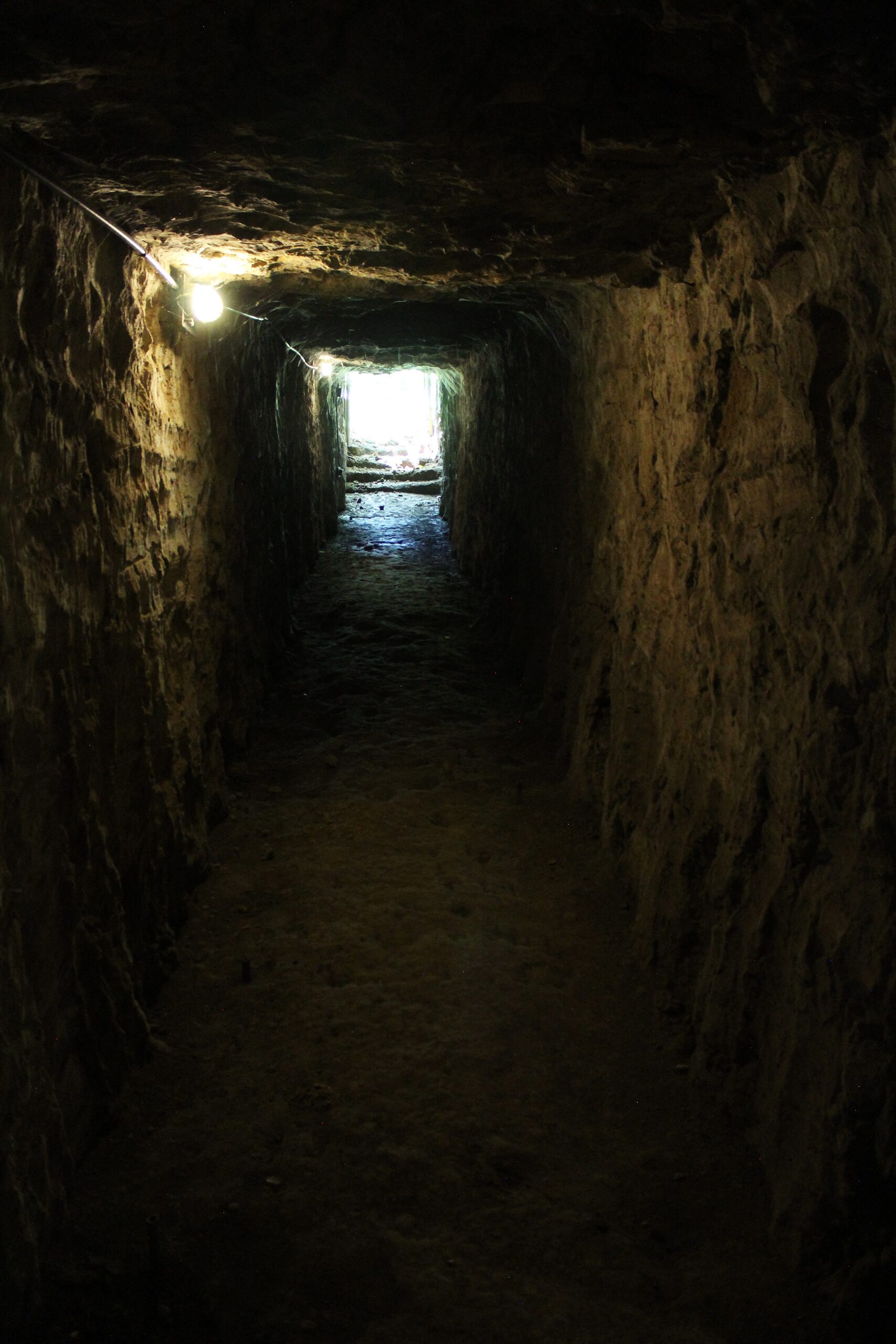
Last couple of sites we visited are the Japanese and American Memorials. Both memorial sites are built on areas where each side lost men. Even though the sites are well maintained, the road getting there isn’t. Hard to believe but worse than Warm Springs roads.
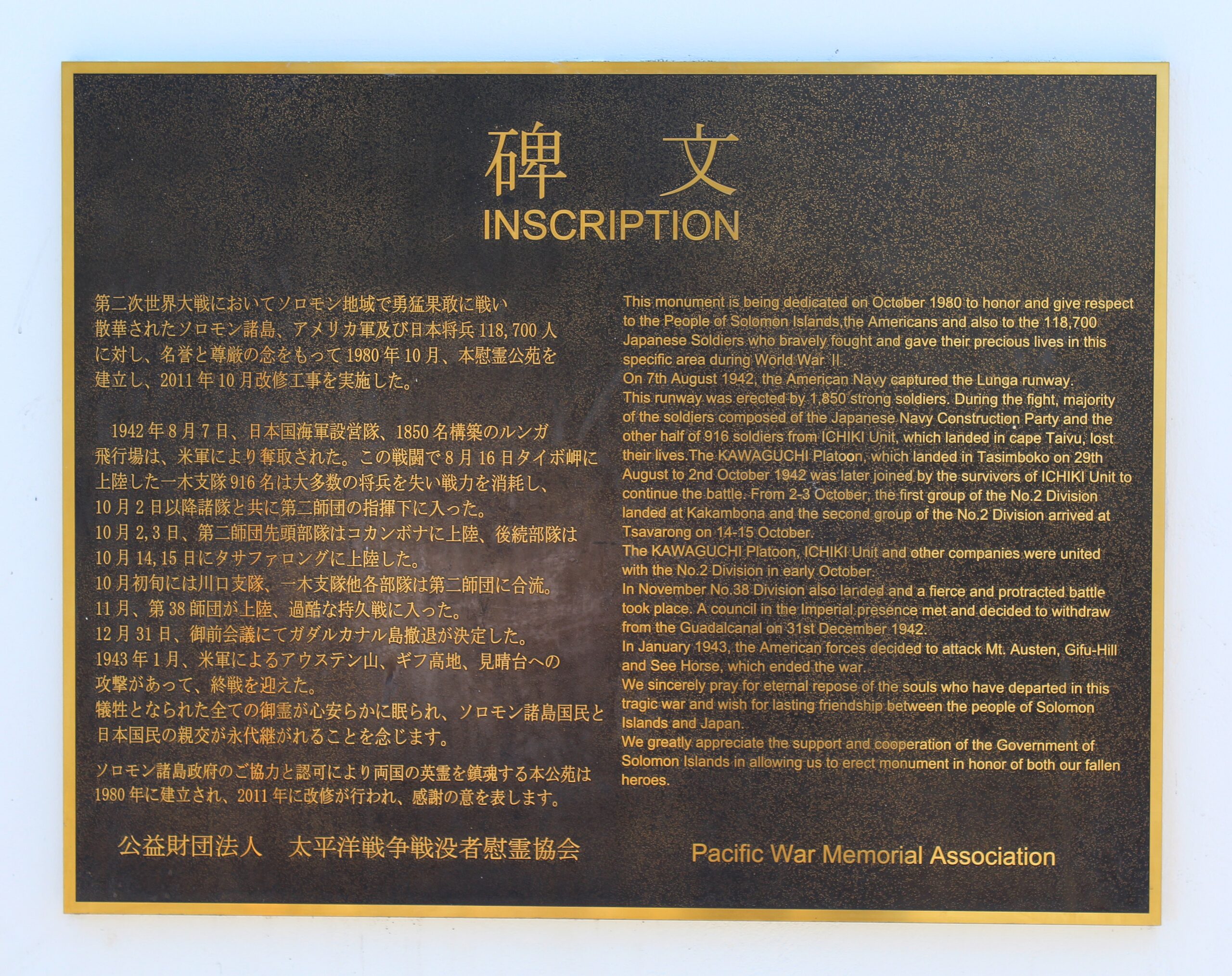
The Japanese Memorial is located on a hill used for targeting and comms during the naval battles between Savo Island and Guadalcanal, Hill #35 – Mt. Austen. That area became known as, “Iron Bottom Bay”, due to the number of ships sunk there. Close to 35 ships are resting on the bottom here in water 10 – 80 meters (32-260 feet) deep.
The memorial consists of four white concrete pillars. The space between the pillars overlooks Cape Esperance, Iron Bottom Bay. The site also has a bronze sculpture of a fisherman throwing a net, created by Seiichi Takahashi, a soldier that was killed on Guadalcanal. The sculpture was donated by his hometown in Japan.
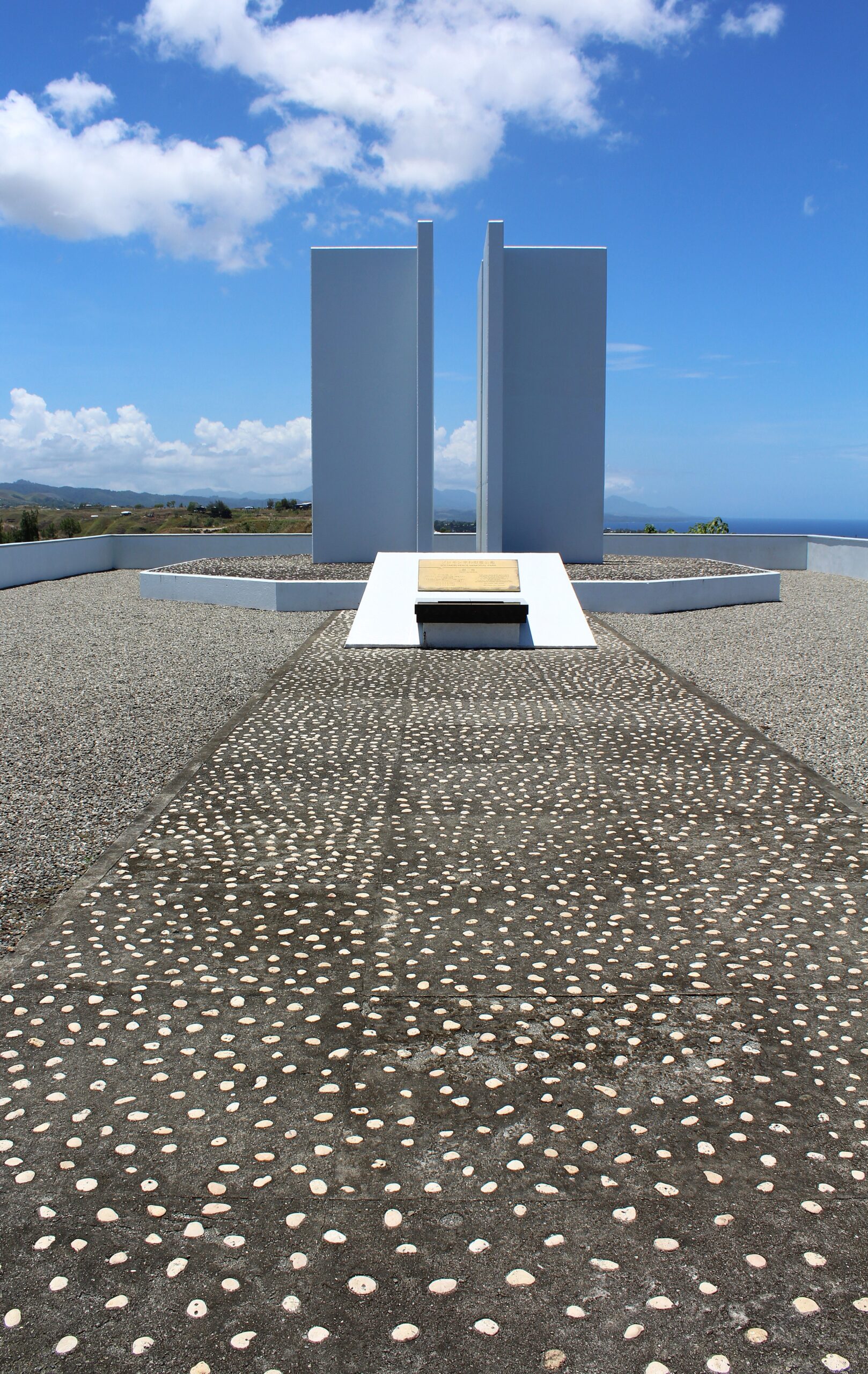
The Japanese War Memorial
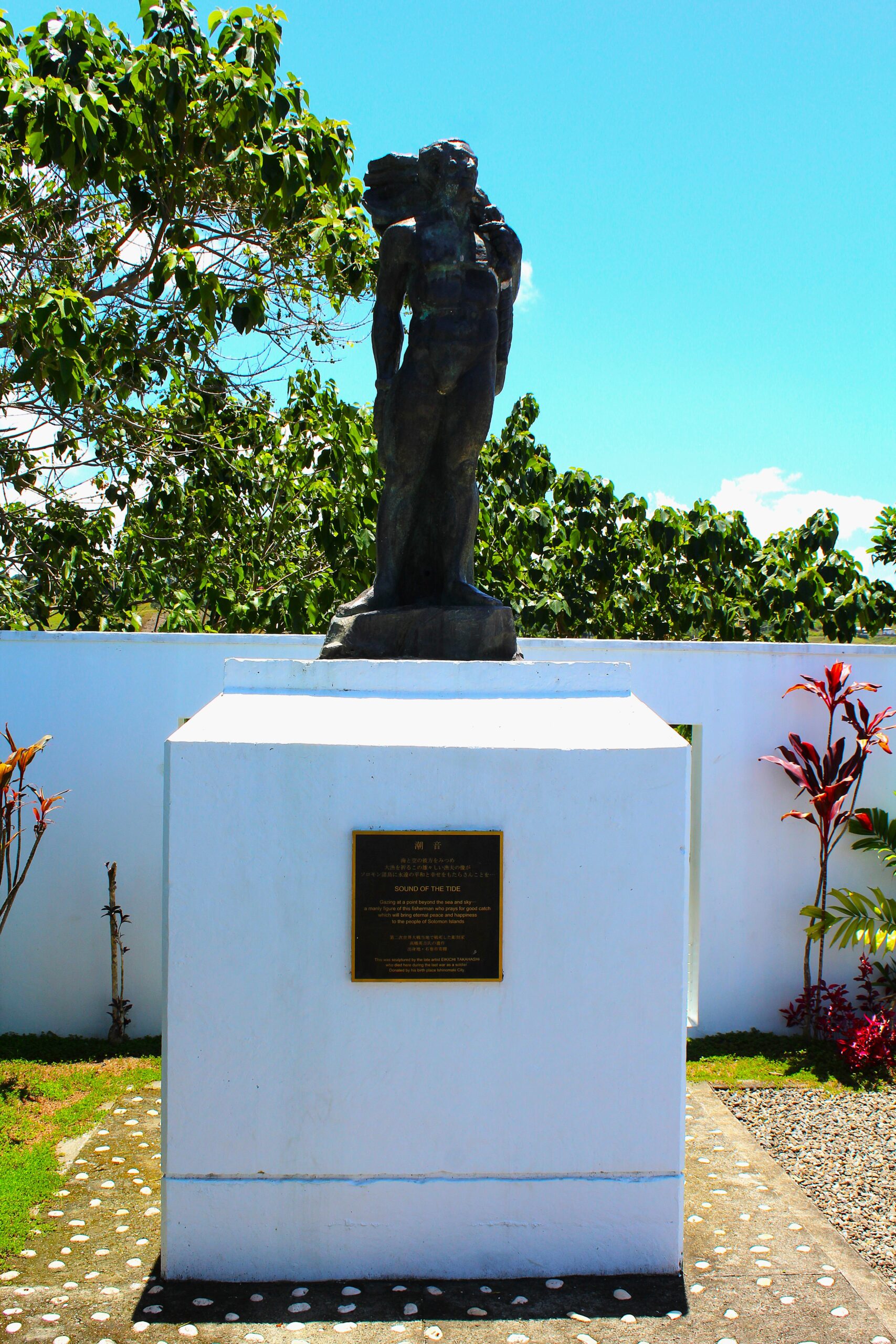
Sculpture by Seiichi Takahashi donated by his hometown
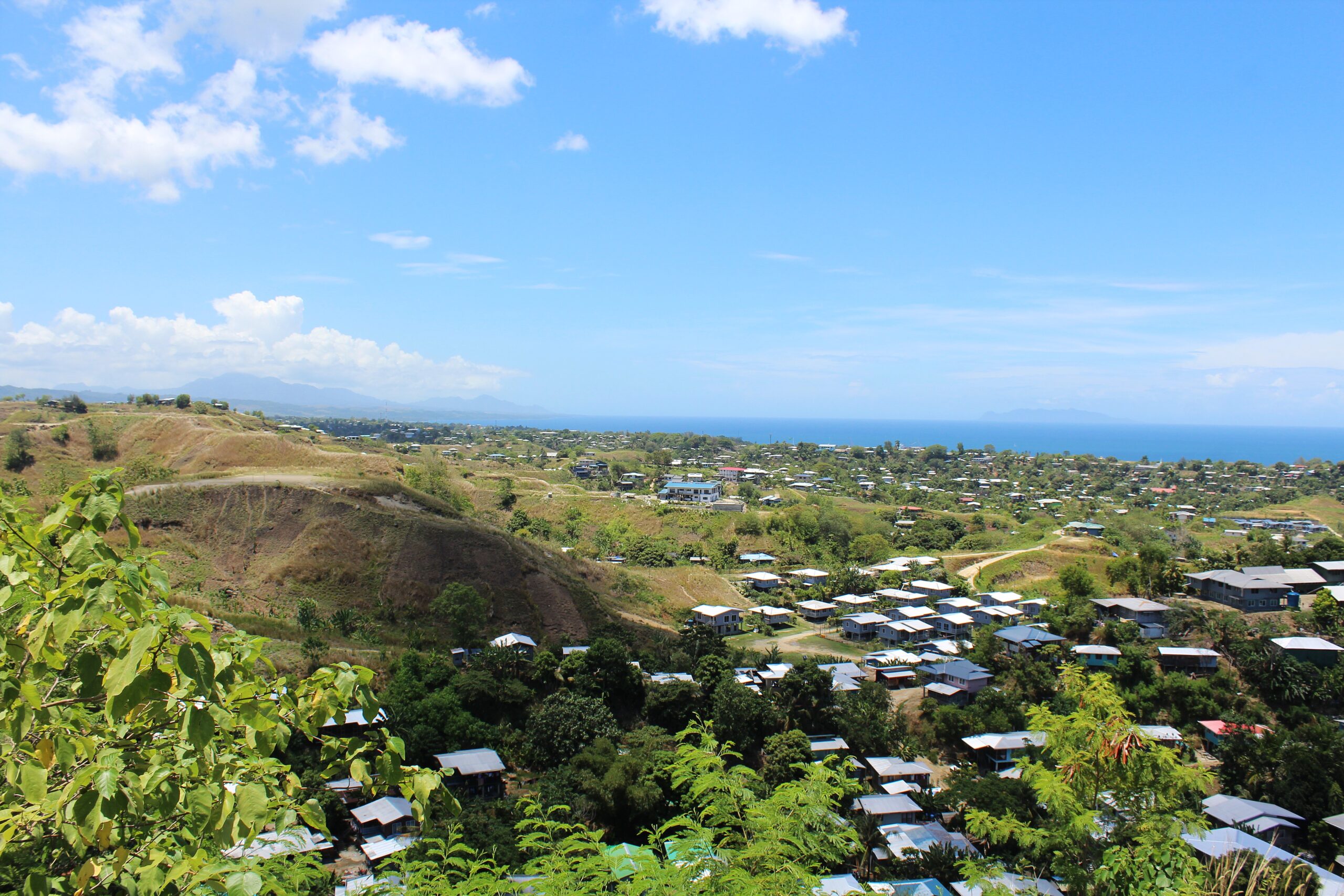
View from Japanese War Memorial towards Iron Bottom Bay
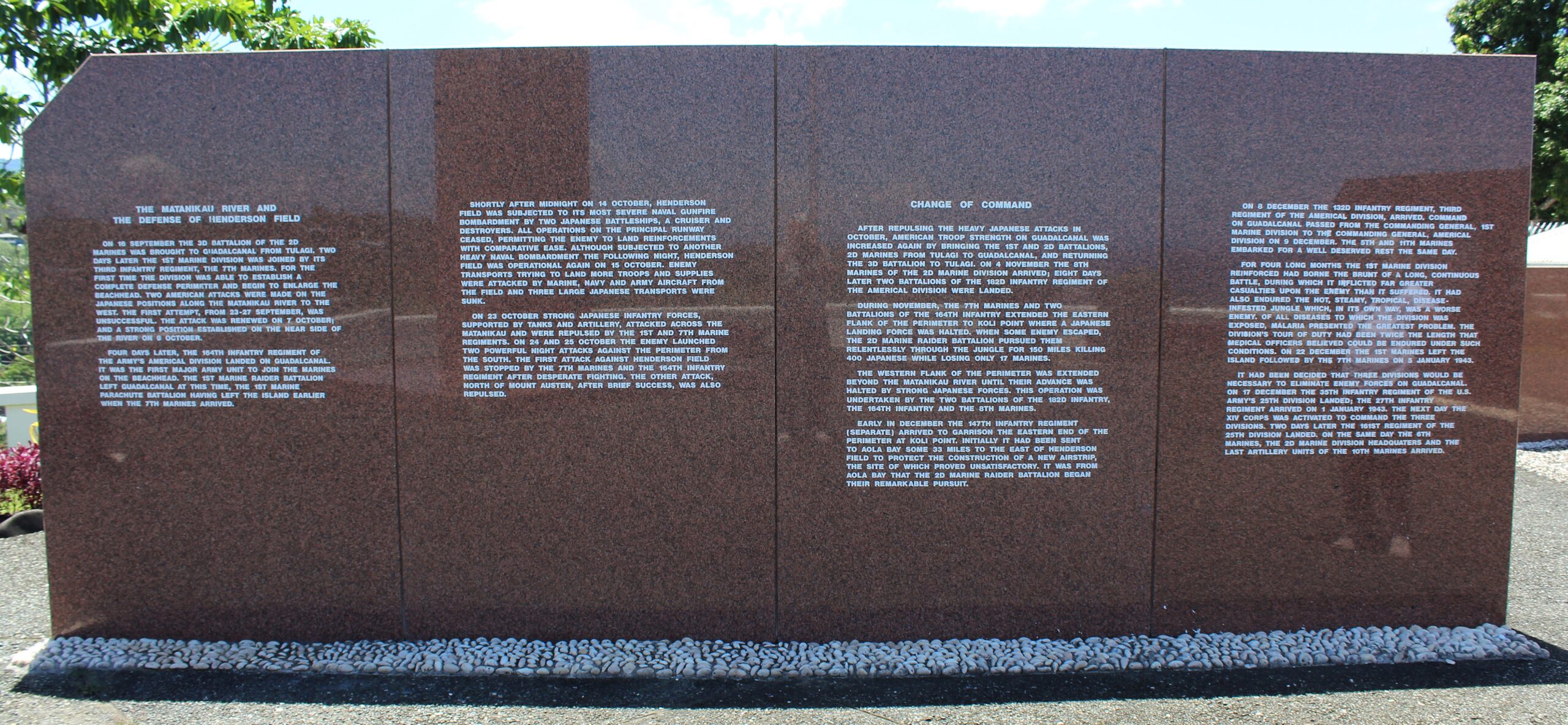
The American Memorial location is also on a hilltop, Hill #73. This site was selected because it has clear views of where major battles took place. But, during construction of the memorial in 1992, remains were found at the site. After DNA testing, the remains were found to belong to Sgt. John Branic who was killed on 19 August 1942.
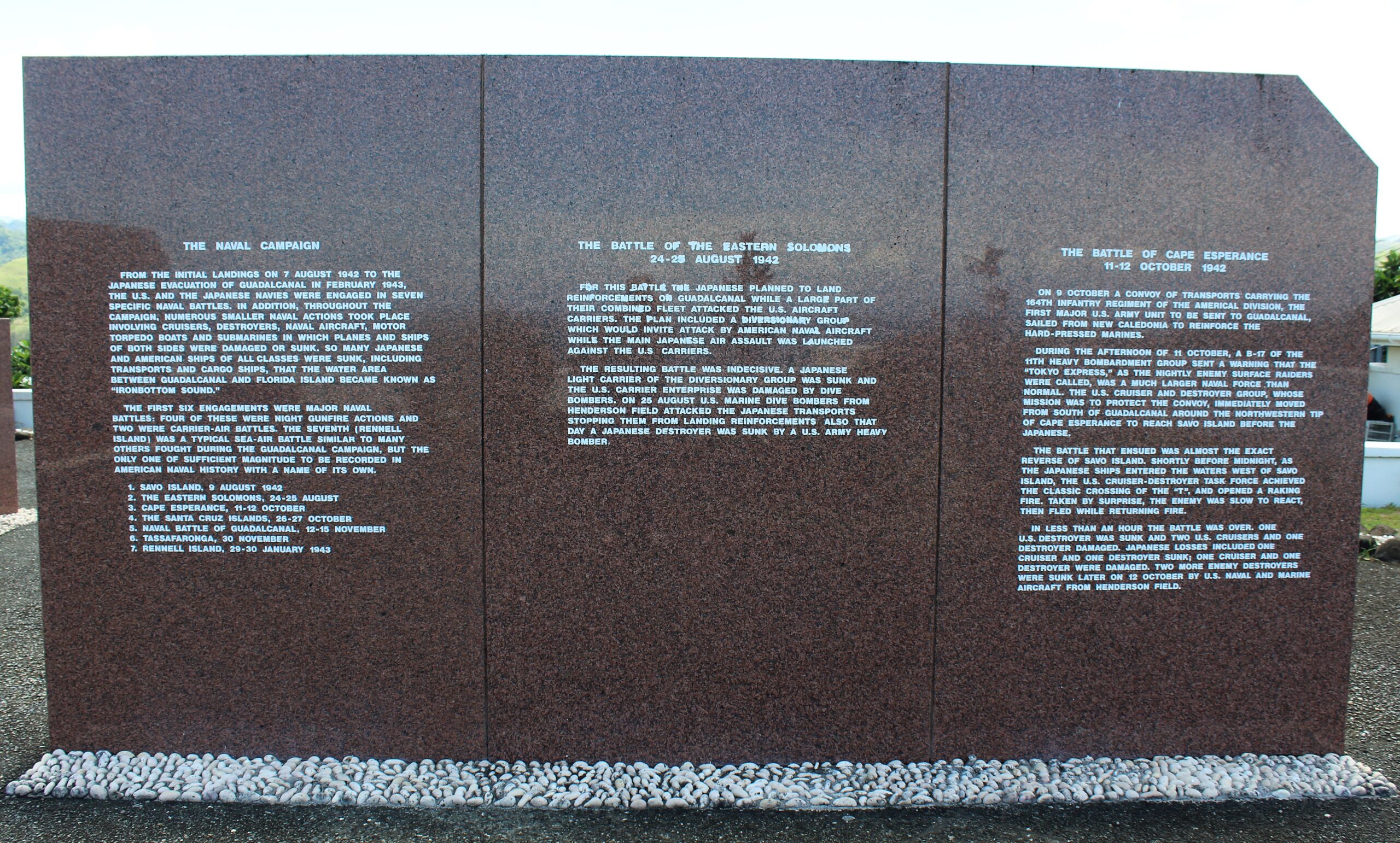
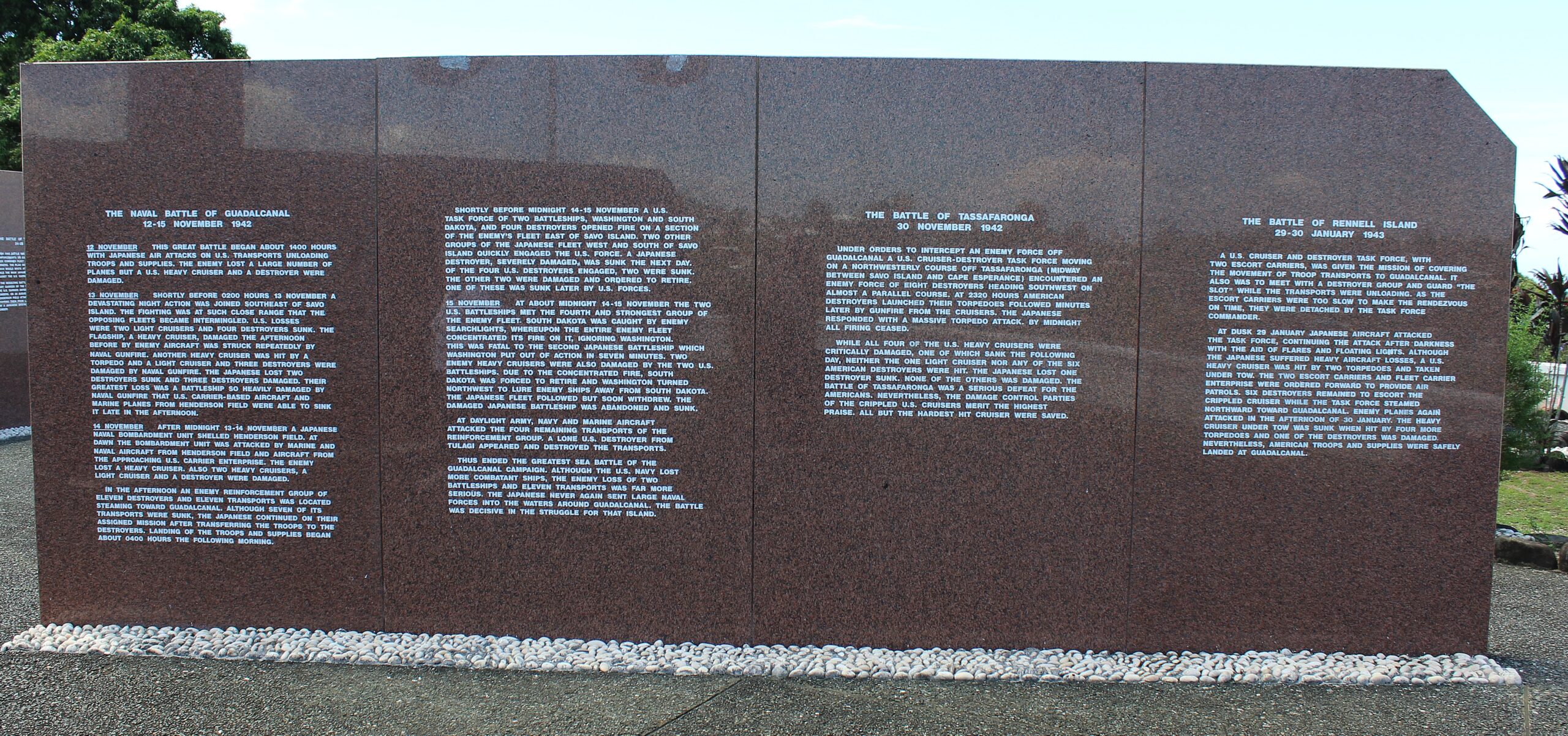
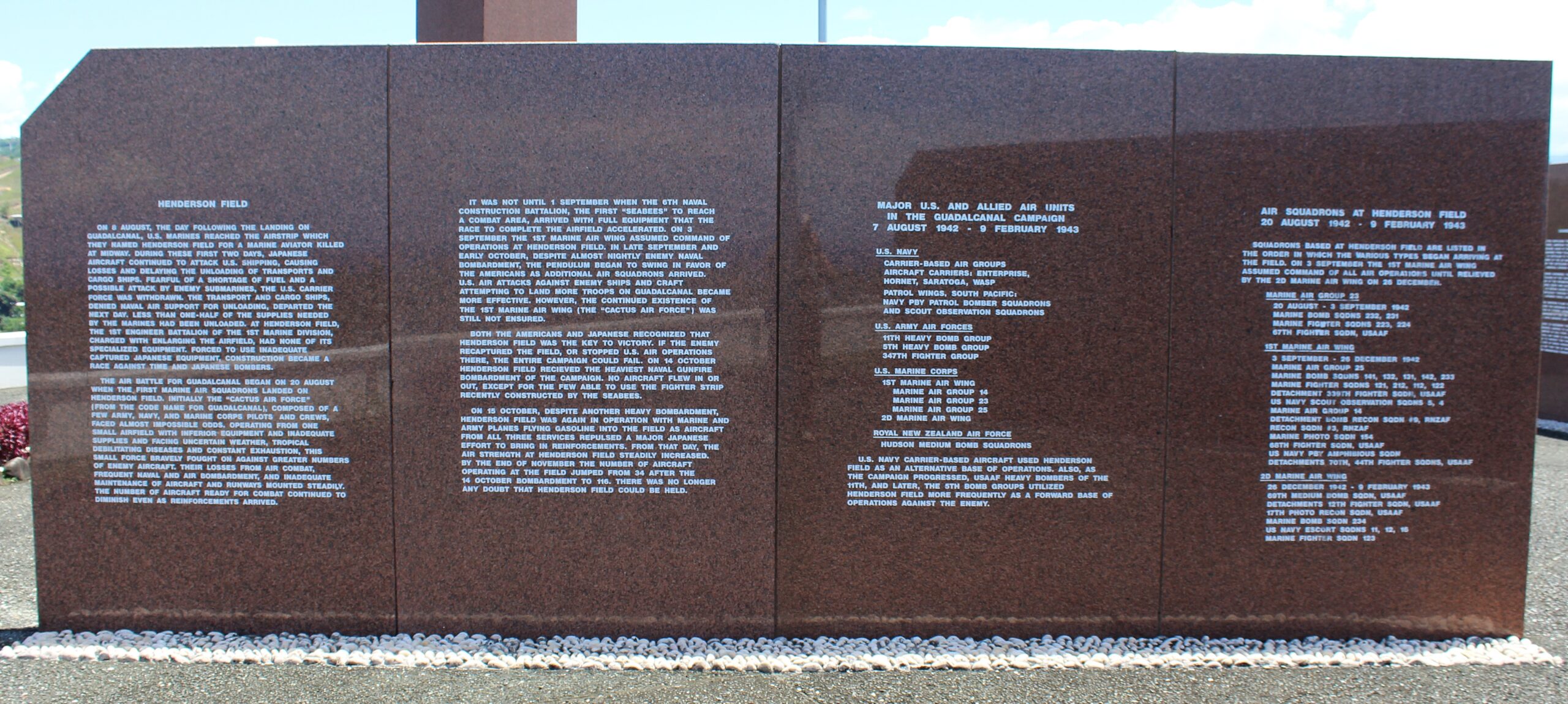
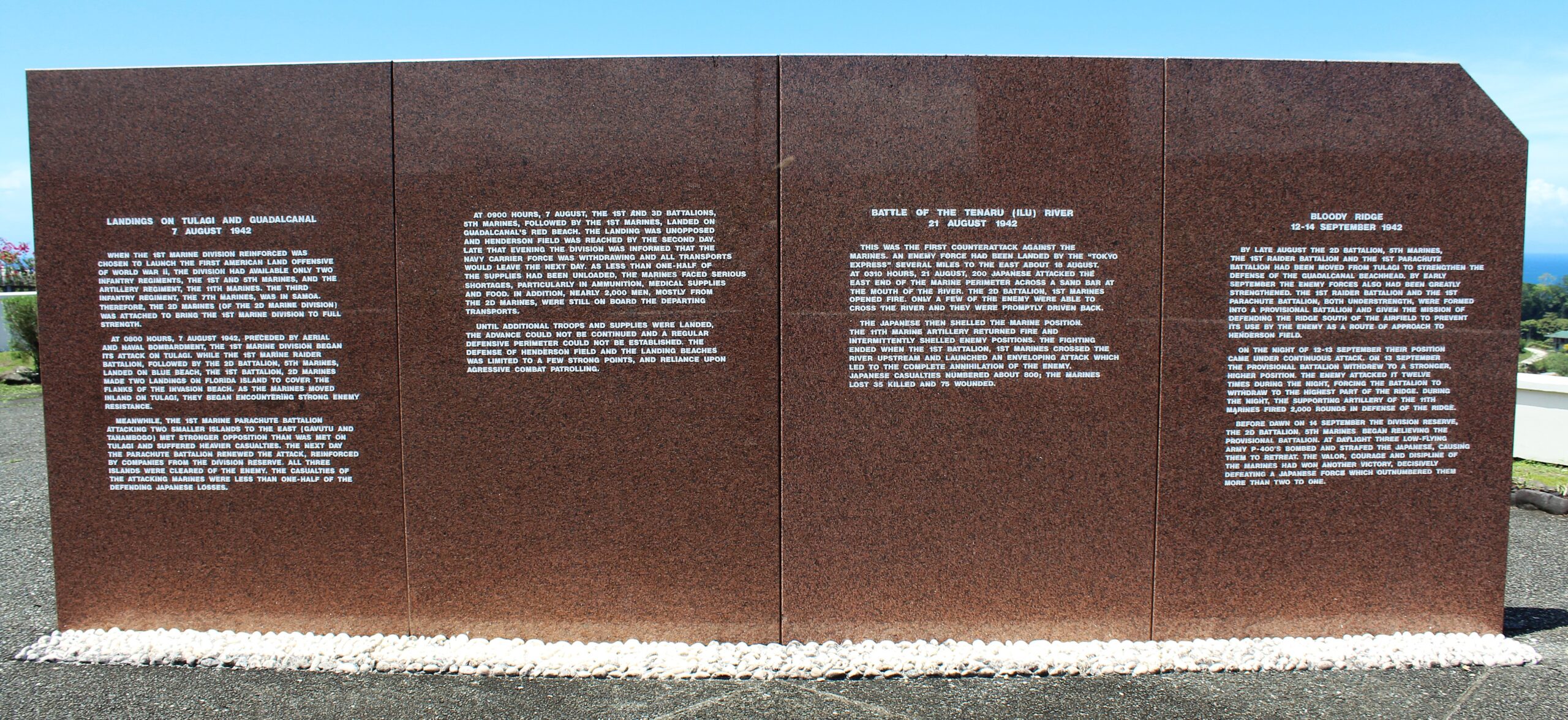
The memorial is comprised of 5 walls that detail the history of the Guadalcanal Campaign, with a large obelisk in the center, flanked by two flag poles with American and Solomon Island flags. In the center of the memorial is a tribute to the unknown soldier.
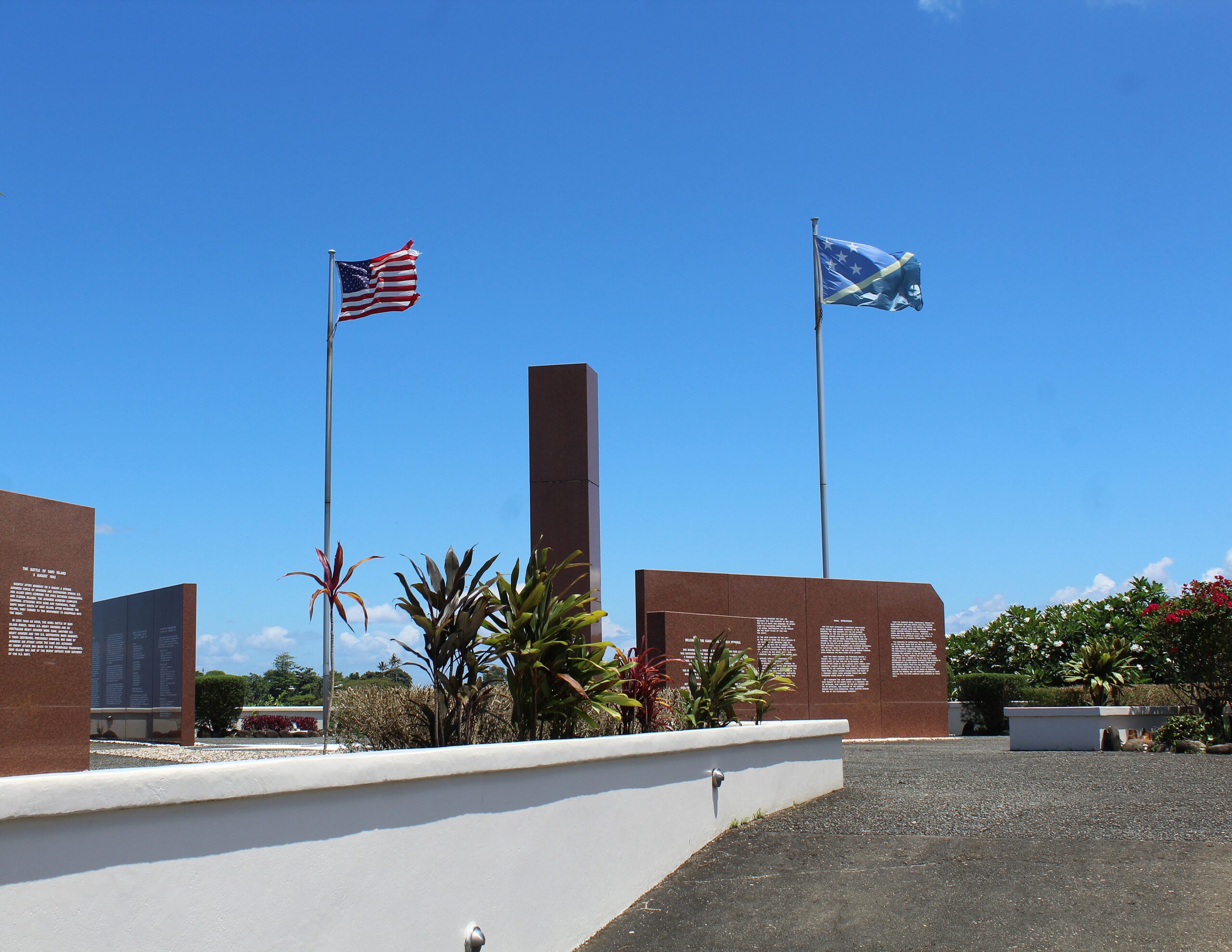
US War Memorial
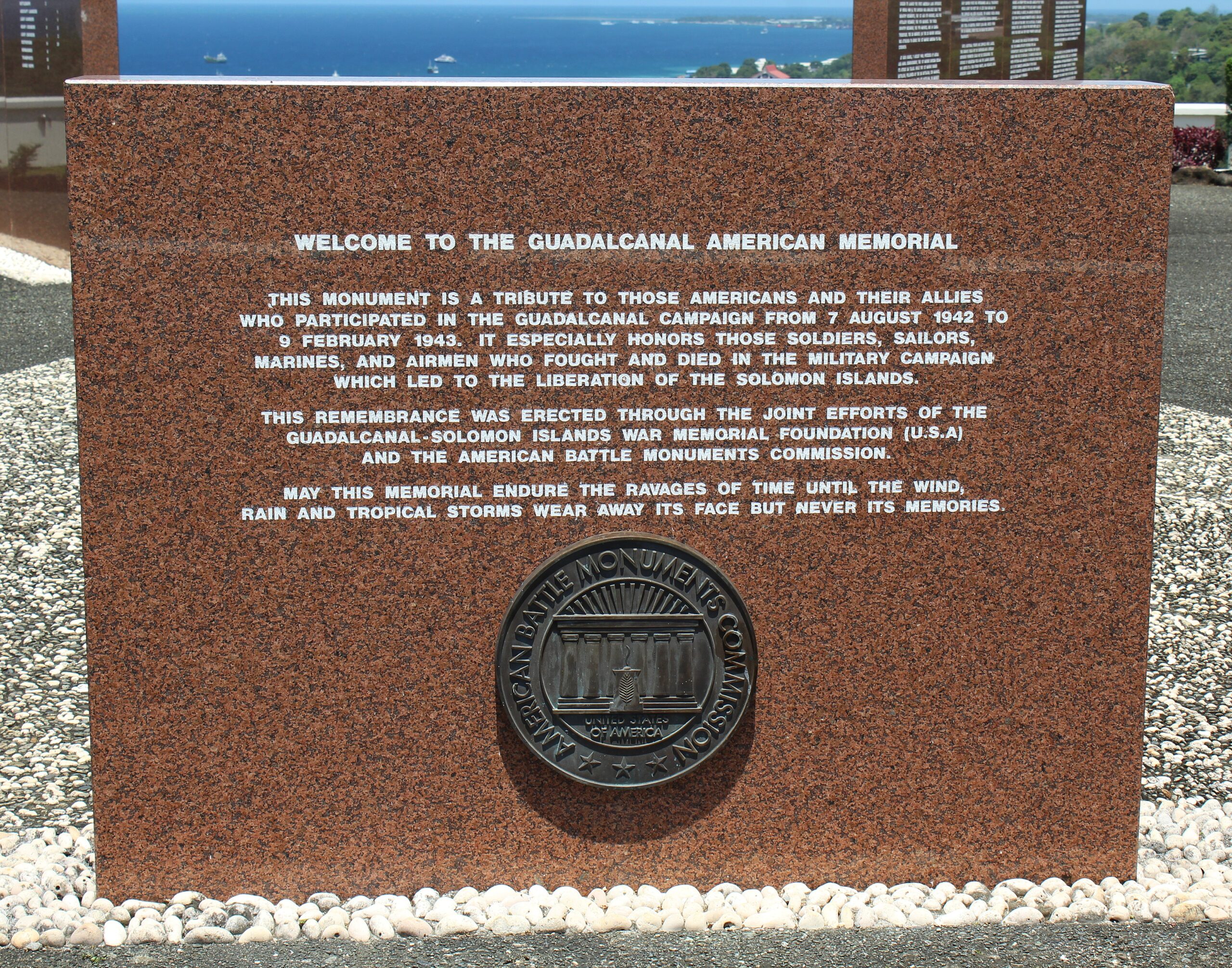
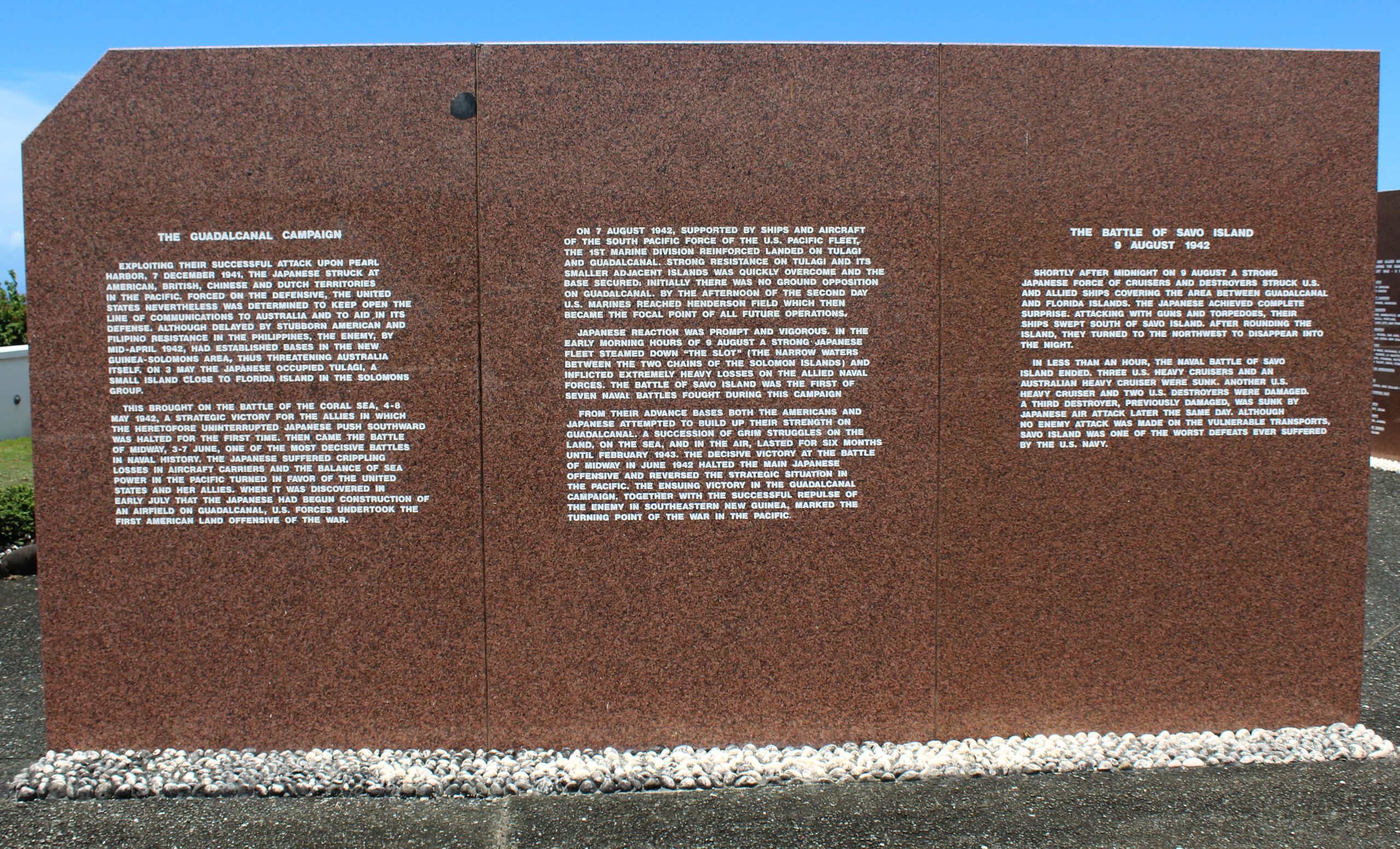
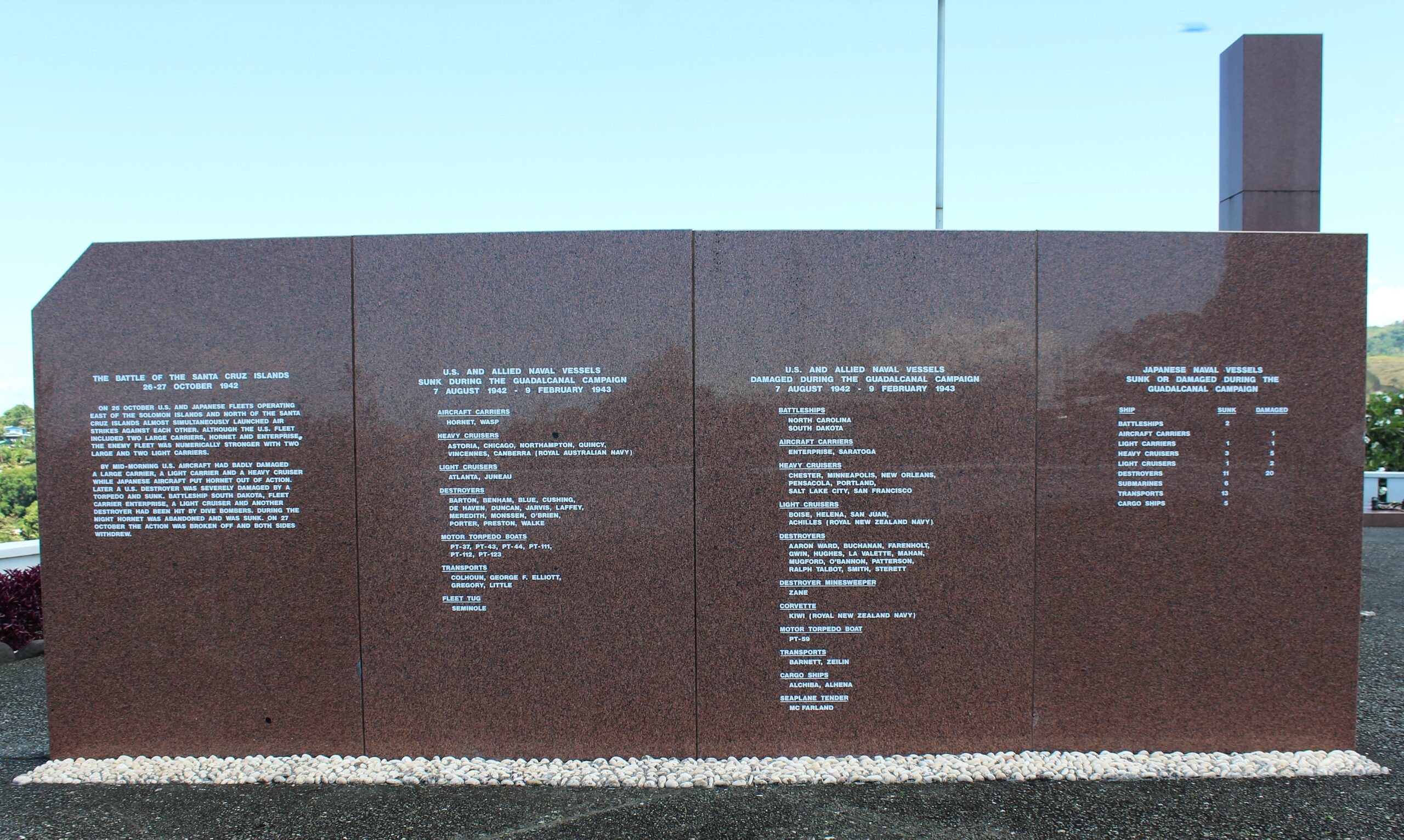
Our final stop was at the small quasi-museum located on the grounds of a 7th Day Adventist Boarding School. Not quite sure how that came to be but here it is. The static displays outside the museum are all that we can see today. Apparently, the curator is out and no one has access to the keys.
The static displays have obviously been here for a very long time. Major corrosion and rust have made some of the artifacts unrecognizable. The first aircraft we see is very unusual. It is a Bell P-39 Airacobra. Crazy design with a 12 cylinder engine tht sits right behind the cockpit. A 6′ long drive shaft ran to the propeller between the pilots legs. On the good side of this design, it left room fro a 37mm cannon up front. The cannon fire was synchronized with the prop. It was also one of, if not the first, fighter plane to have tricycle landing gear. Not a tail dragger! From the looks of the prop, this guy came in without landing gear.
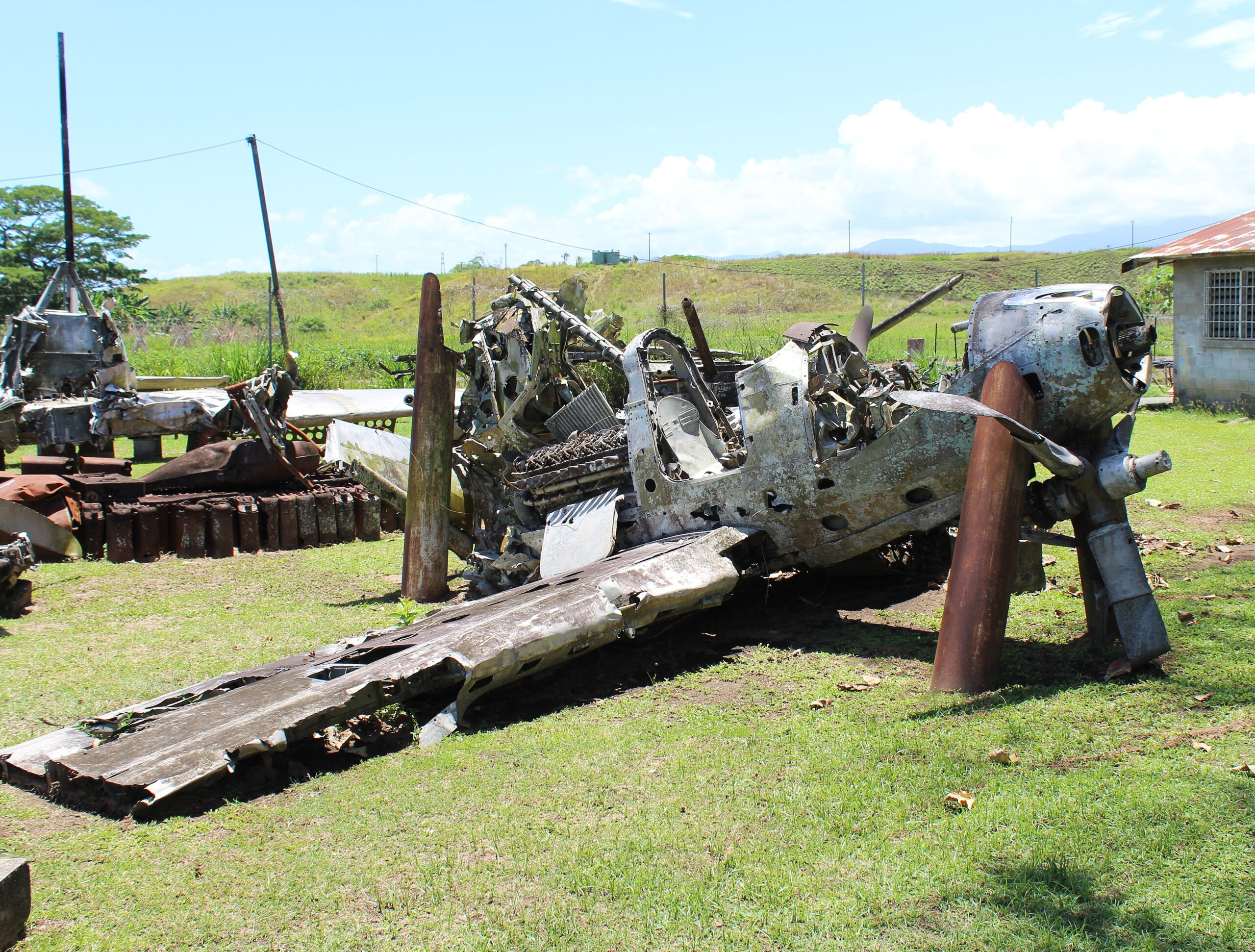
SBD-3 Airacobra
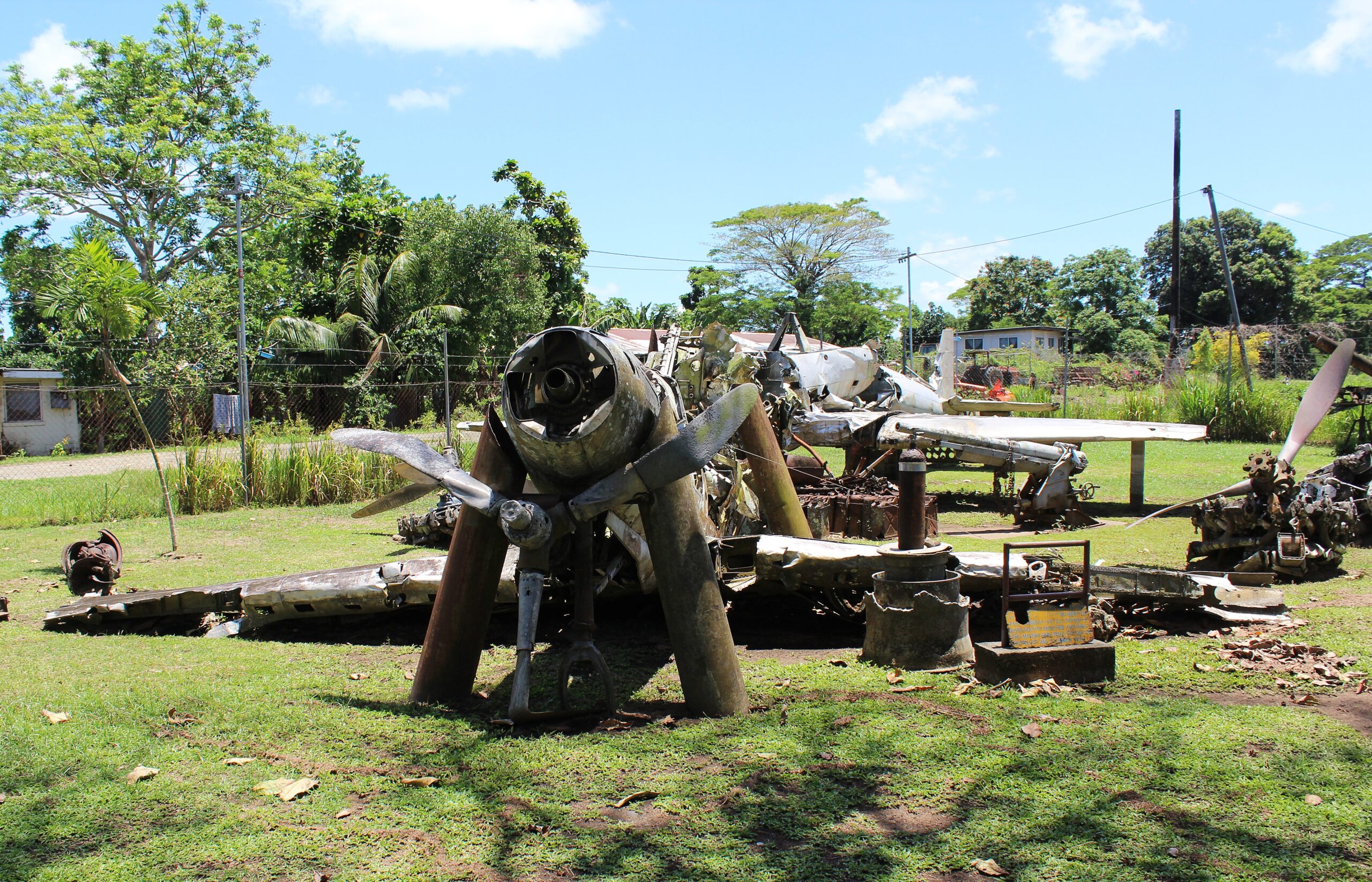
The second plane on display is a Douglas SBD-3 Dive Bomber. The entire front of the plane is missing so either it was cut off or this dive bomber didn’t pull up. This was the Marine Corp’s most advanced bomber. It could dive at an 80 degree angle, had 2-50 cal and 2-30 cal machine guns and could carry 1200# of bombs. Top speed was 250mph. This aircraft played a huge role in the victory at the Battle of Midway.
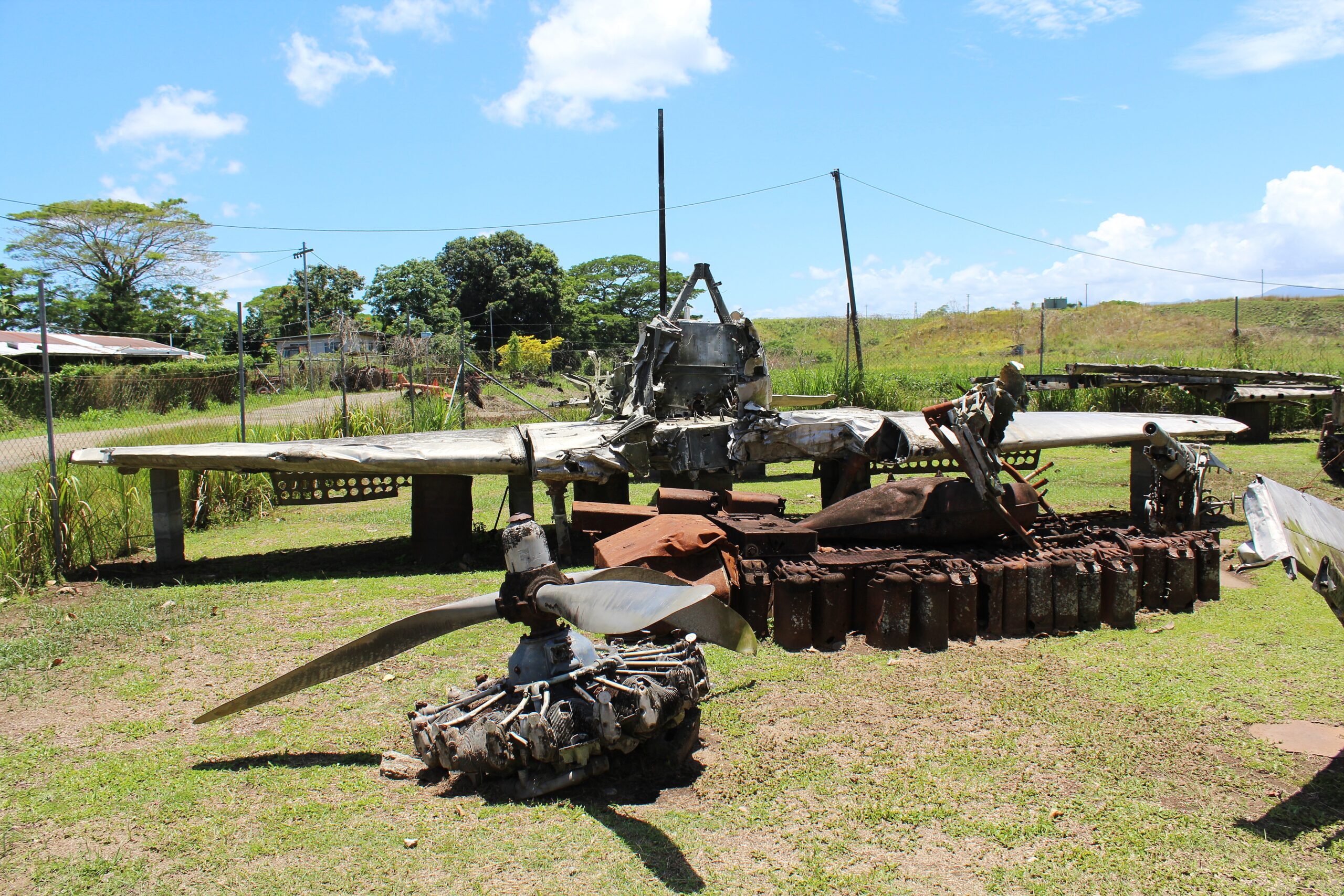
SBD-3 Dauntless Dive Bomber
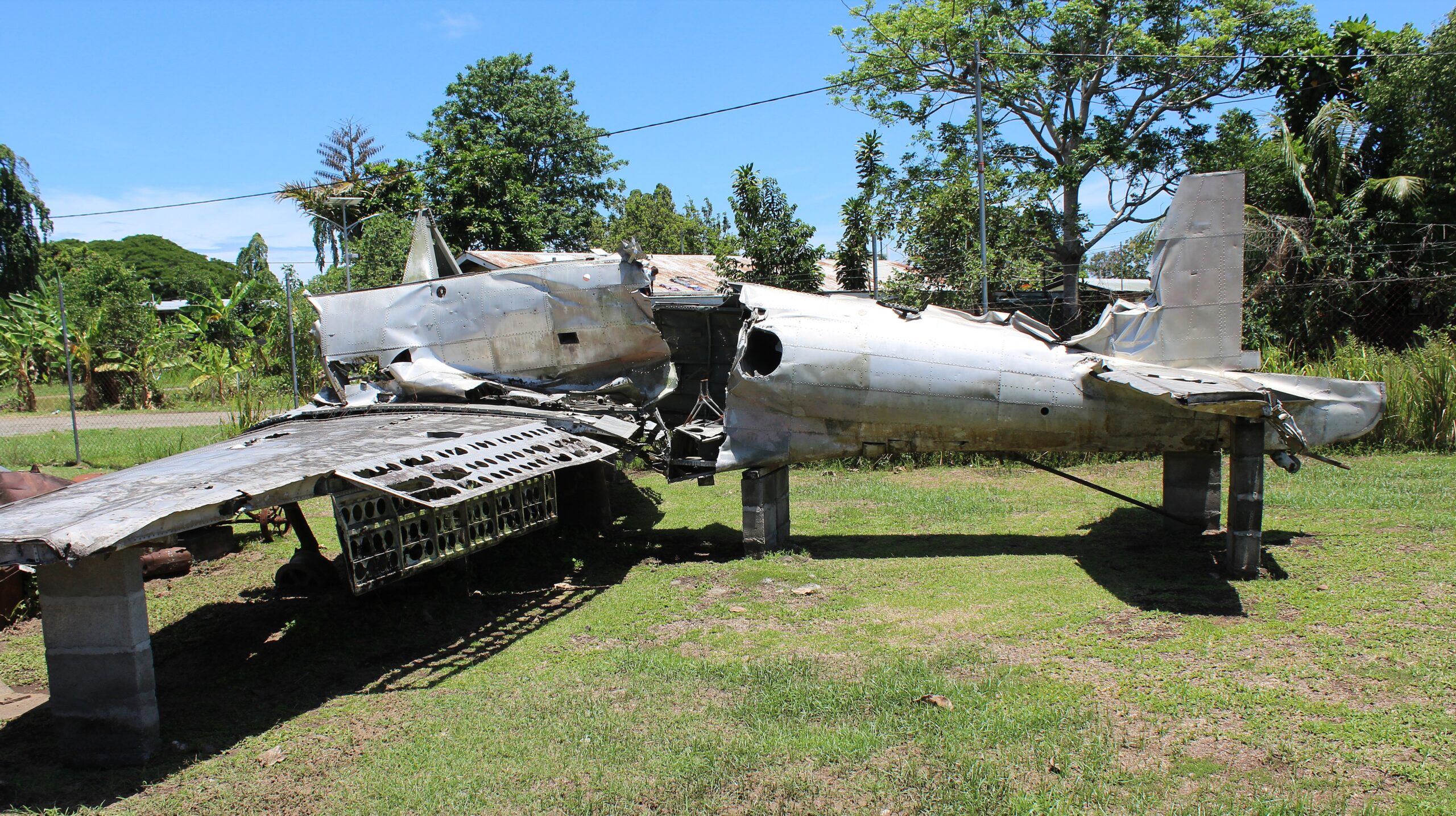
Dauntless Dive Bomber
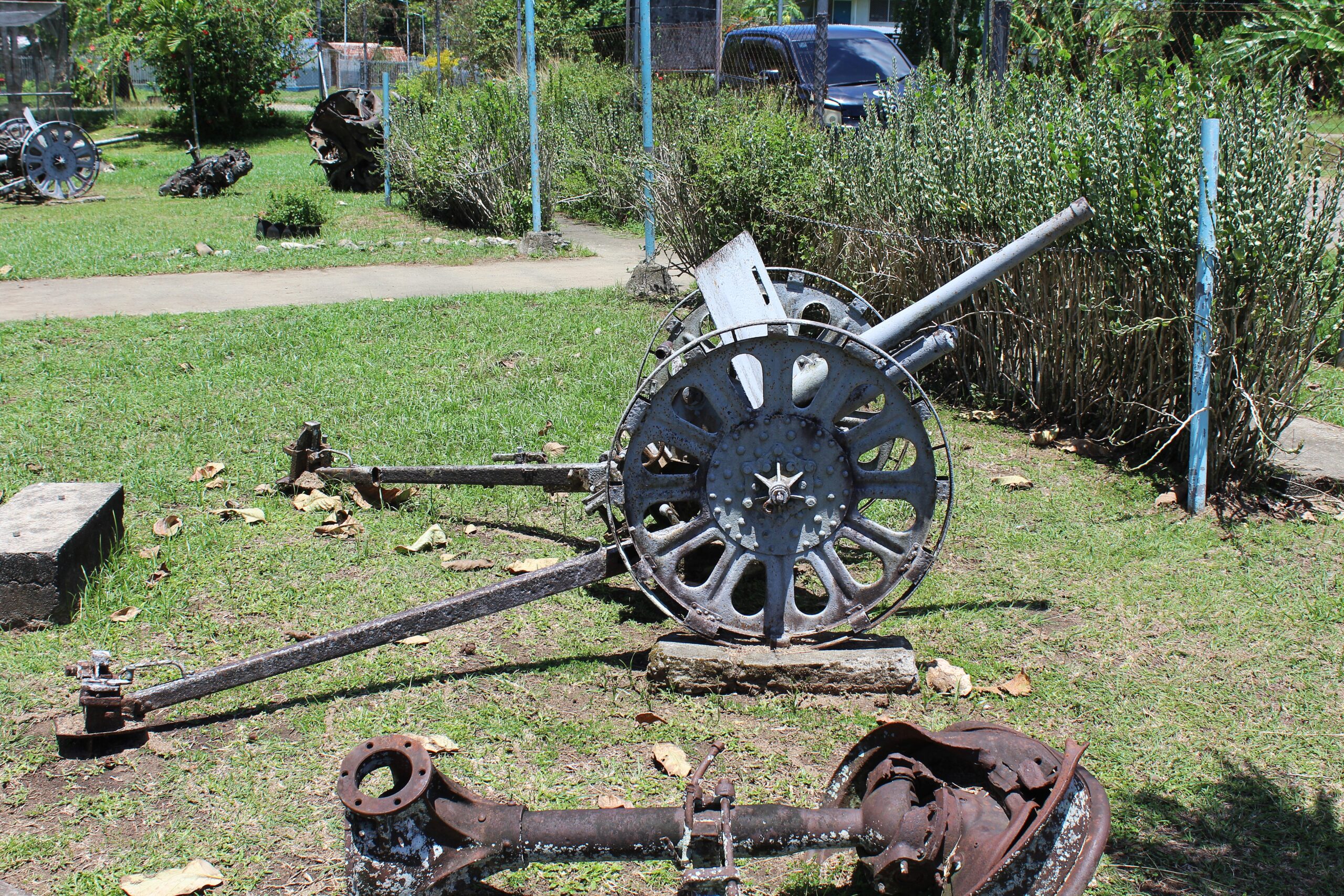
37mm quick fire cannon
All for today. Really interesting sites. It’s a shame the Pacific Theater doesn’t get the same attention as the European Theater. Most of these “museums” are nothing more than someone’s field, or a rundown building.A proper museum would be quite the tourist attraction, while paying respect to the fallen.