Wolf’s Lair
Beautiful day in Poland, clear, sunny, a little cool but no rain, perfect day to wander around the woods looking at shattered concrete structures. The drive to Wolf’s Lair is about 20 minutes from our hotel. Grabbed the usual provided breakfast (yes, again!) of powdered eggs, partially cooked bacon, yogurt, toast, and bad coffee to hold us through this morning’s touring. Makes you hungry, huh!
We arrived at the site, paid our 85 Zloty (or $23.05USD), grabbed our self-guided tour radio and headphones, and off to touring. This is a large complex; the total number of buildings varies depending on the reference but somewhere in the neighborhood of 200 is close. Of that, there are approximately 50 large buildings (bunkers, power stations, residences, offices, etc.) that are part in the immediate area. We will see about 24 of these buildings which make up the main tour. Most of the other buildings have either been completely destroyed or are scattered off the main park area. Welcome to Wolfsschanze.
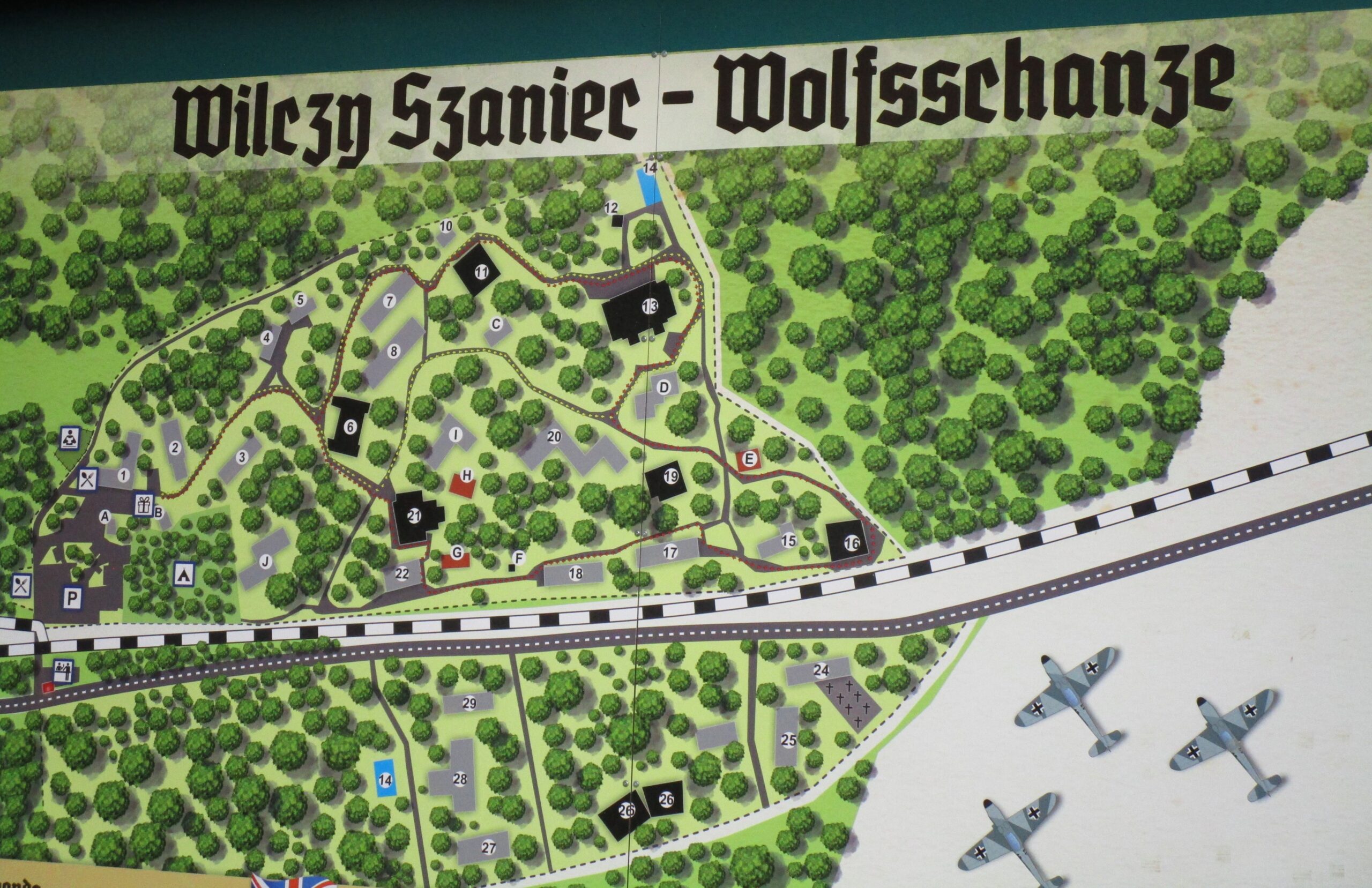
Wolf’s Lair complex, complete with train line & airport
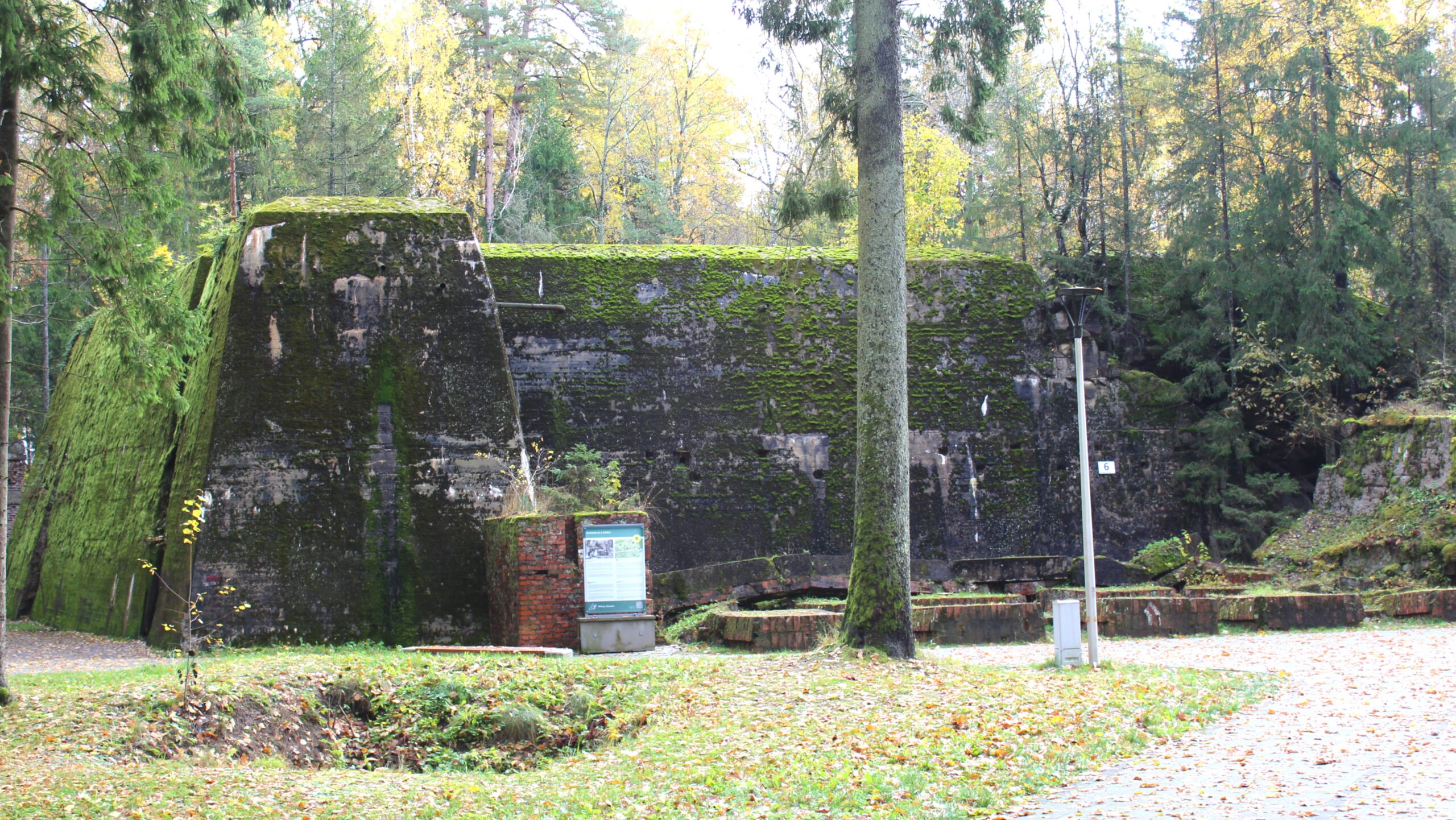
Visitor’s bunker. Wouldn’t you love to visit some place where you had to stay in a bunker!
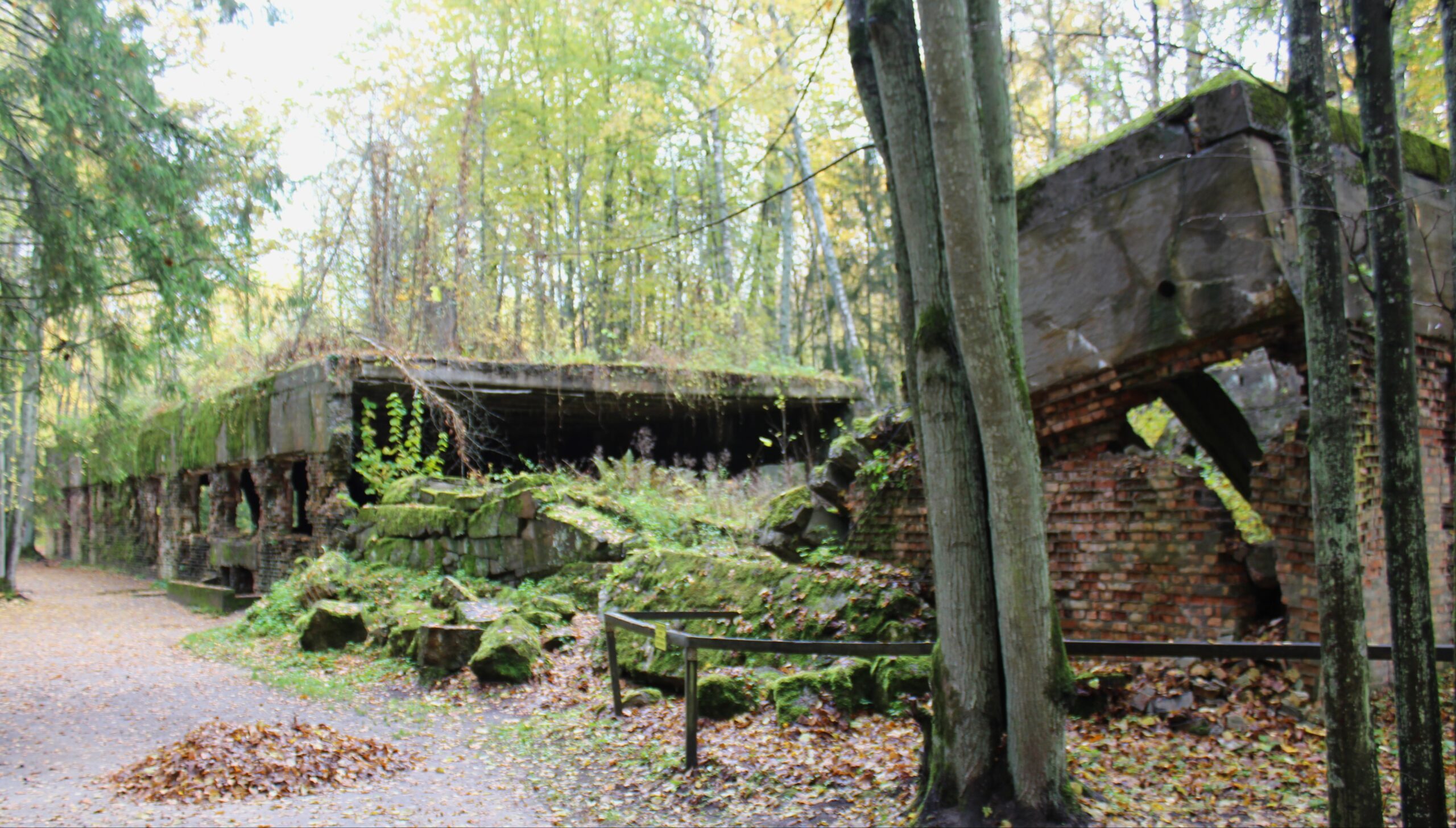
Stenographer’s building. No recording devices were allowed.
Bit of trivia. Phase I of the Wolf’s Lair complex started in Fall 1940 prior to the German invasion of Russia. The 200 or so buildings were completed by June 1941, just in time for Hitler to invade Russia. (Operation Barbarossa) Phase II began in 1942 to harden some of the structures; Phase III began in 1944 but was not finished due to Hitler and the gang hauling ass out of Poland.
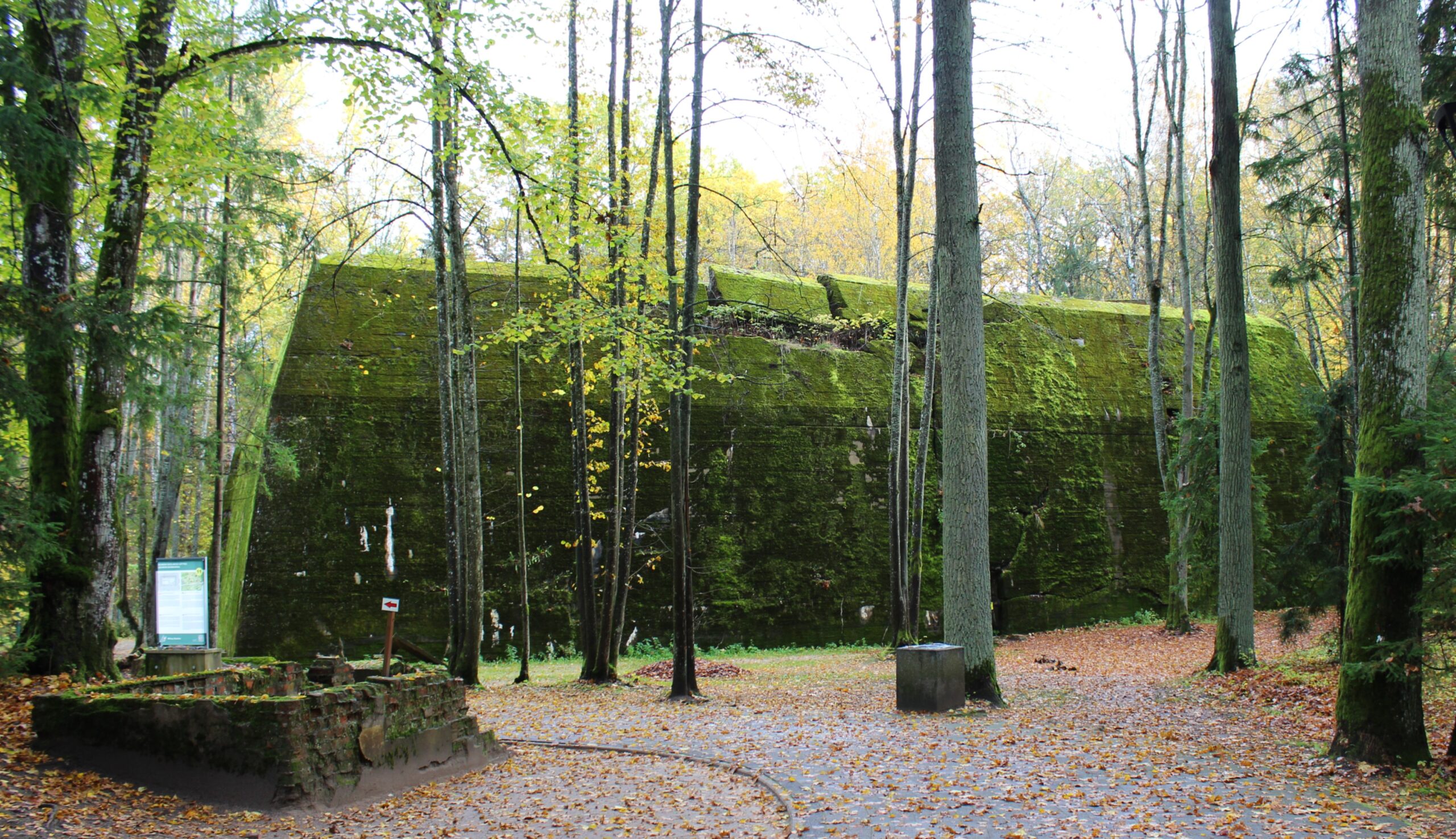
Martin Bormann’s bunker, Hitler’s private secretary. Committed suicide 2 May 1945 after his employer committed suicide.
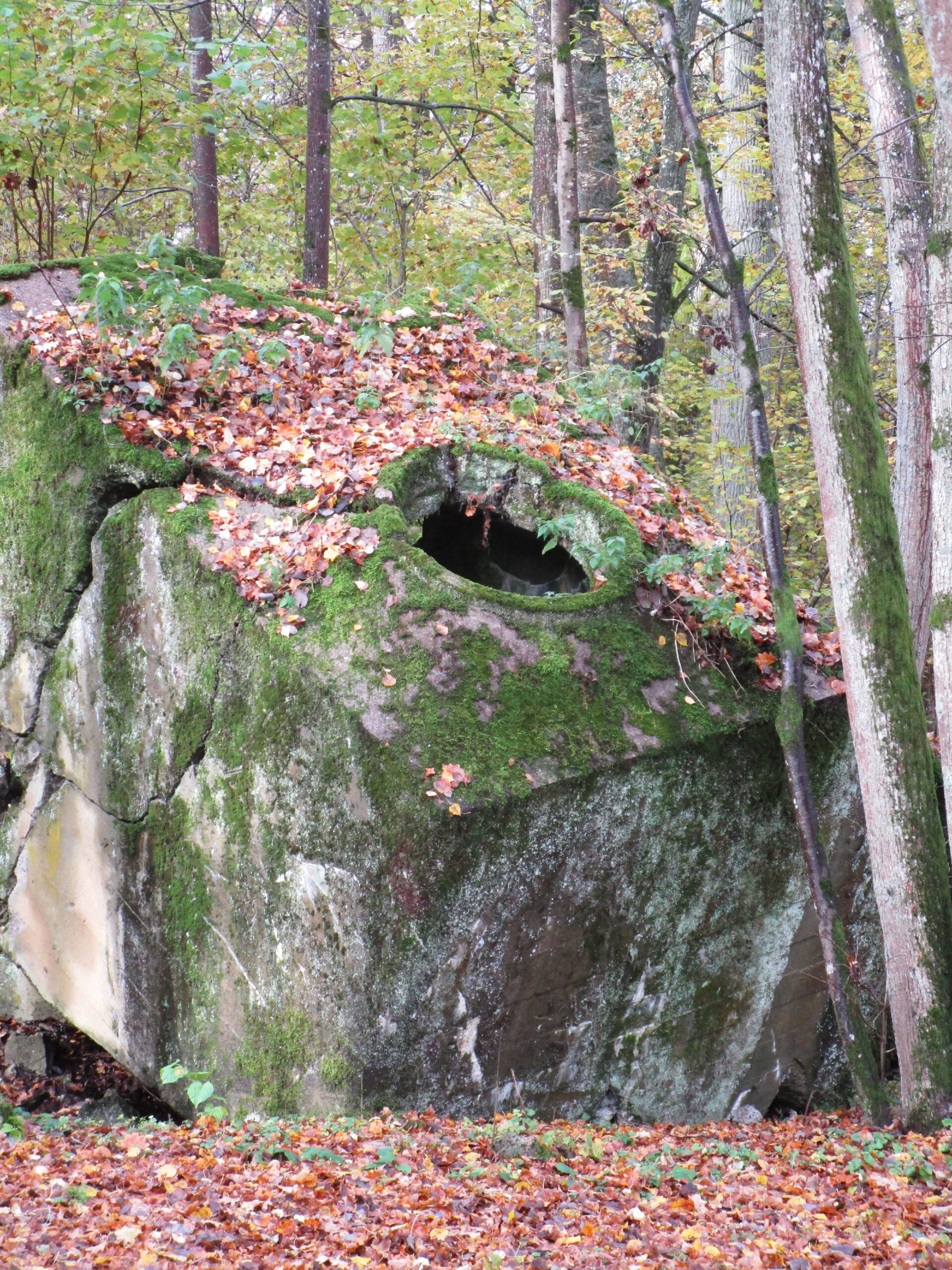
Remnants of an anti-aircraft bunker
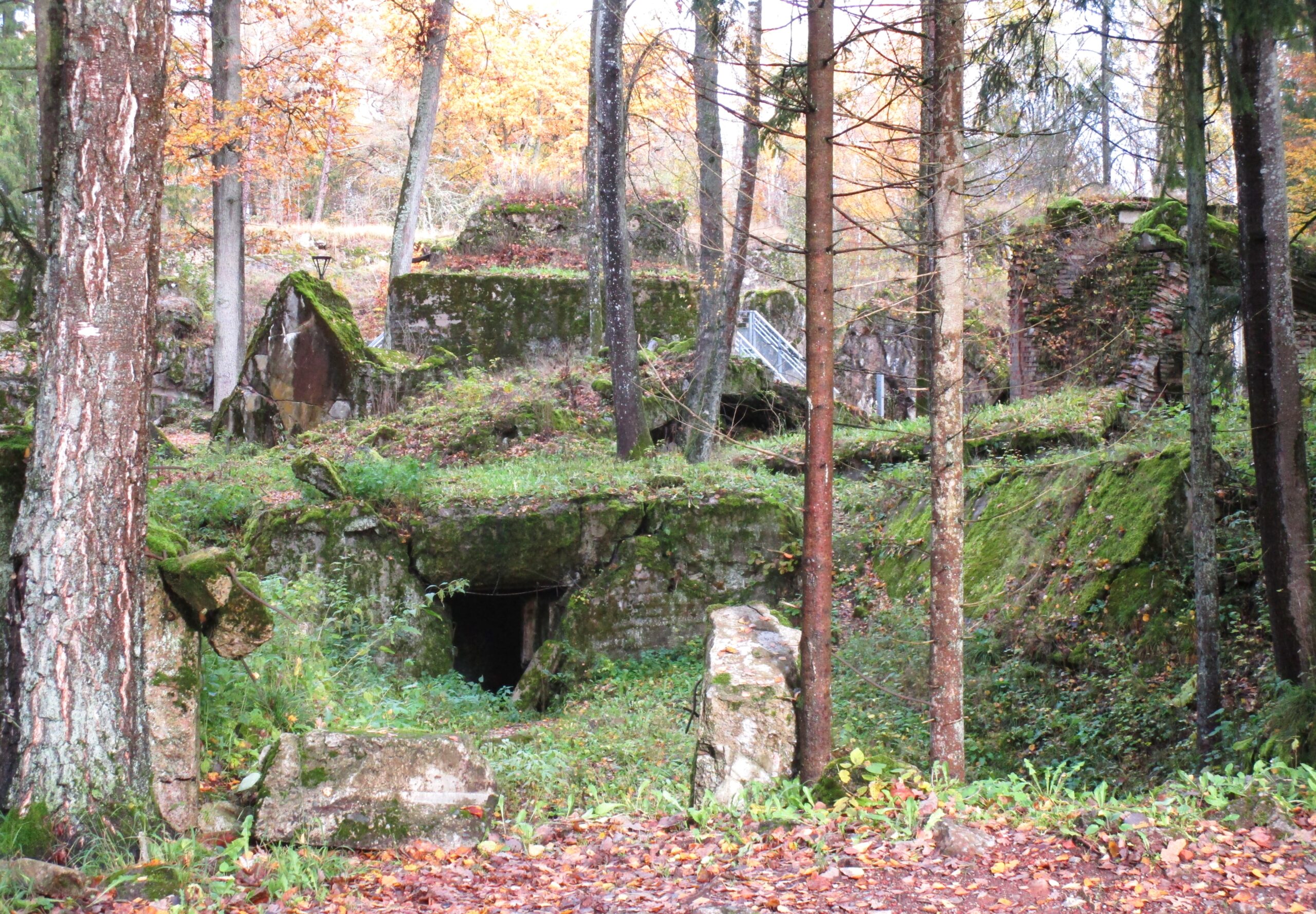
Very nice museum and well maintained. There is a level walking path, paved, through all the main building sites with automated commentary at each building so no need for a guide. The bunkers were massive and well protected against aerial attack. The walls of the Fuhrer bunker were 5 meters thick (16’) with steel reinforcement. The roof was 8 meters (26’) of steel reinforced concrete. There were also bunkers for the rest of Adolf’s gang, Goring, Himmler, Goebbels, his close buddy Bormann, and Jodl, the guy who signed the surrender in Reims. At its peak, it is estimated that 2000 troops worked at the WL. Quite a few of these bunkers are built using a double wall design. There is a “shell” surrounding an inner building that is separated by a layer of crushed rock to absorb shock from bombs. The outer shell is approximately 4 meters thick.
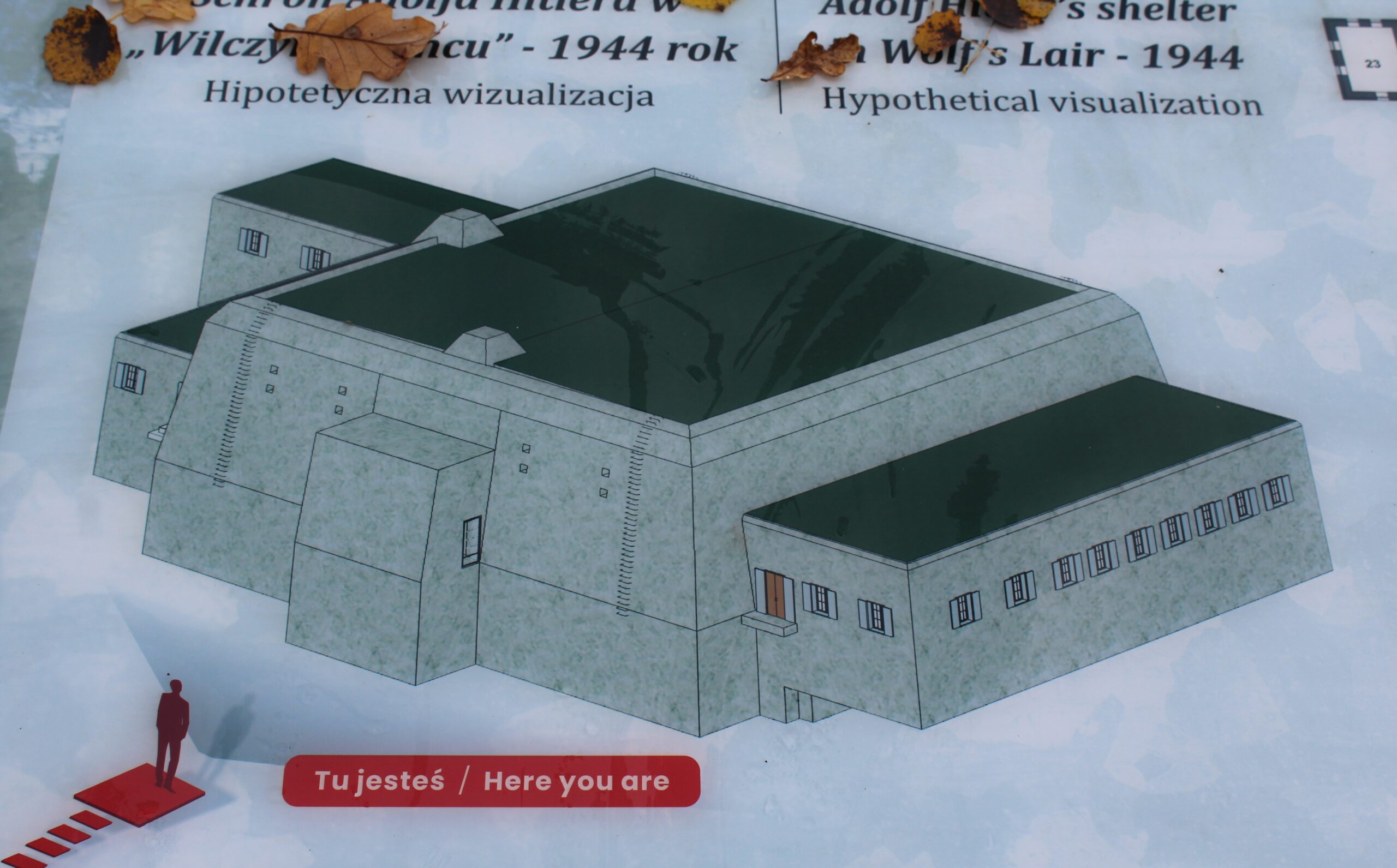
Hitler’s Bunker
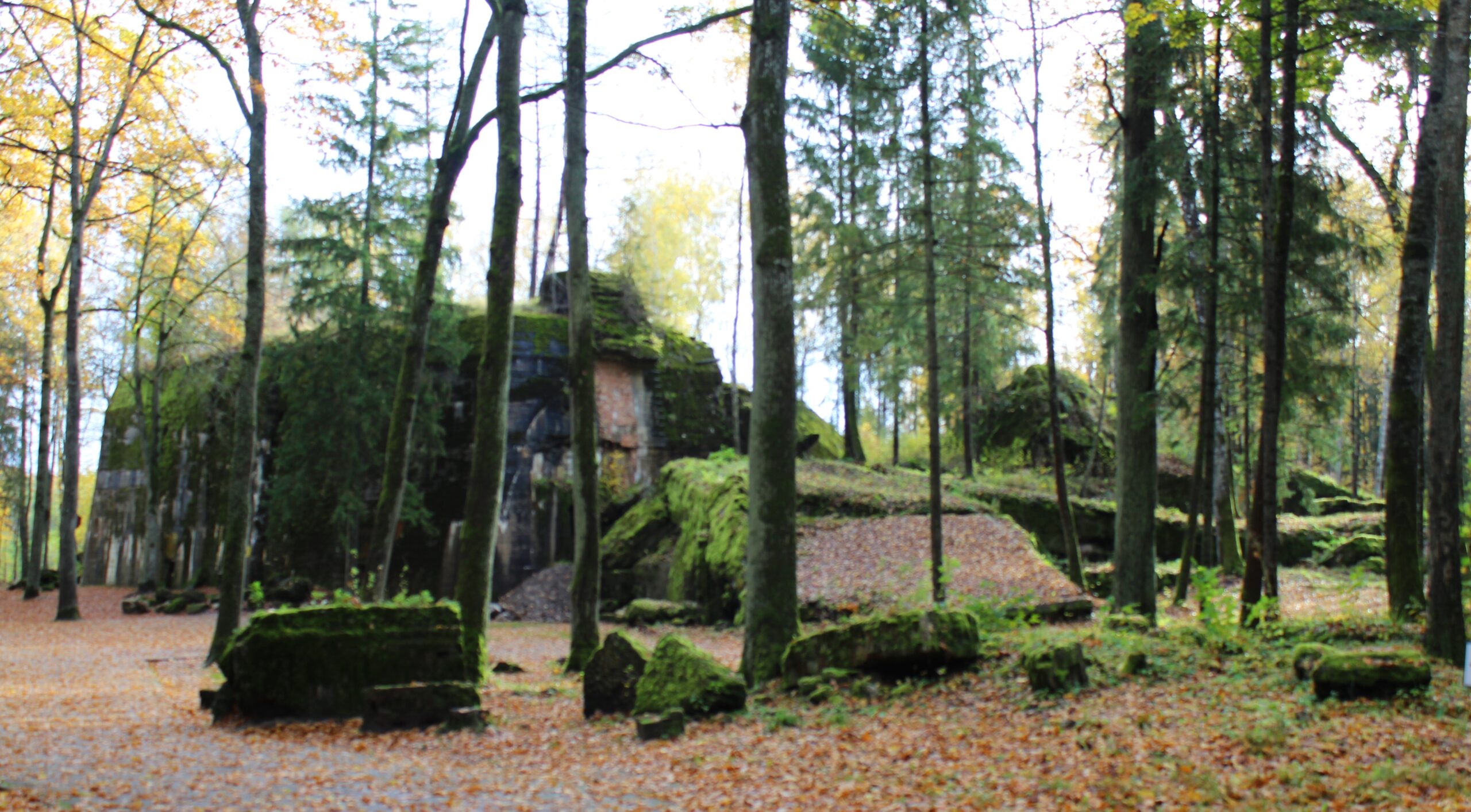
Hitler’s Bunker -now
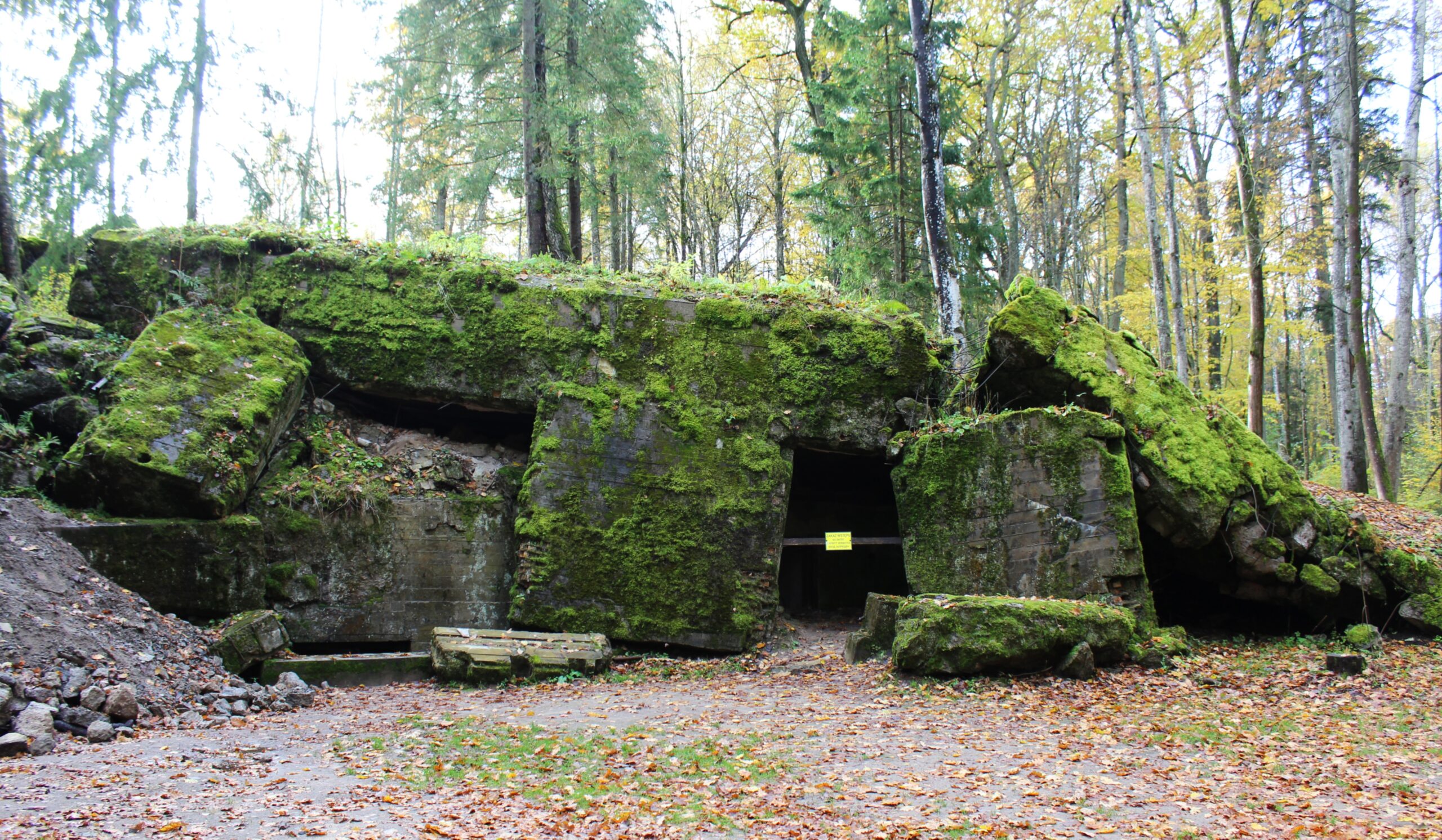
Hitler’s Bunker
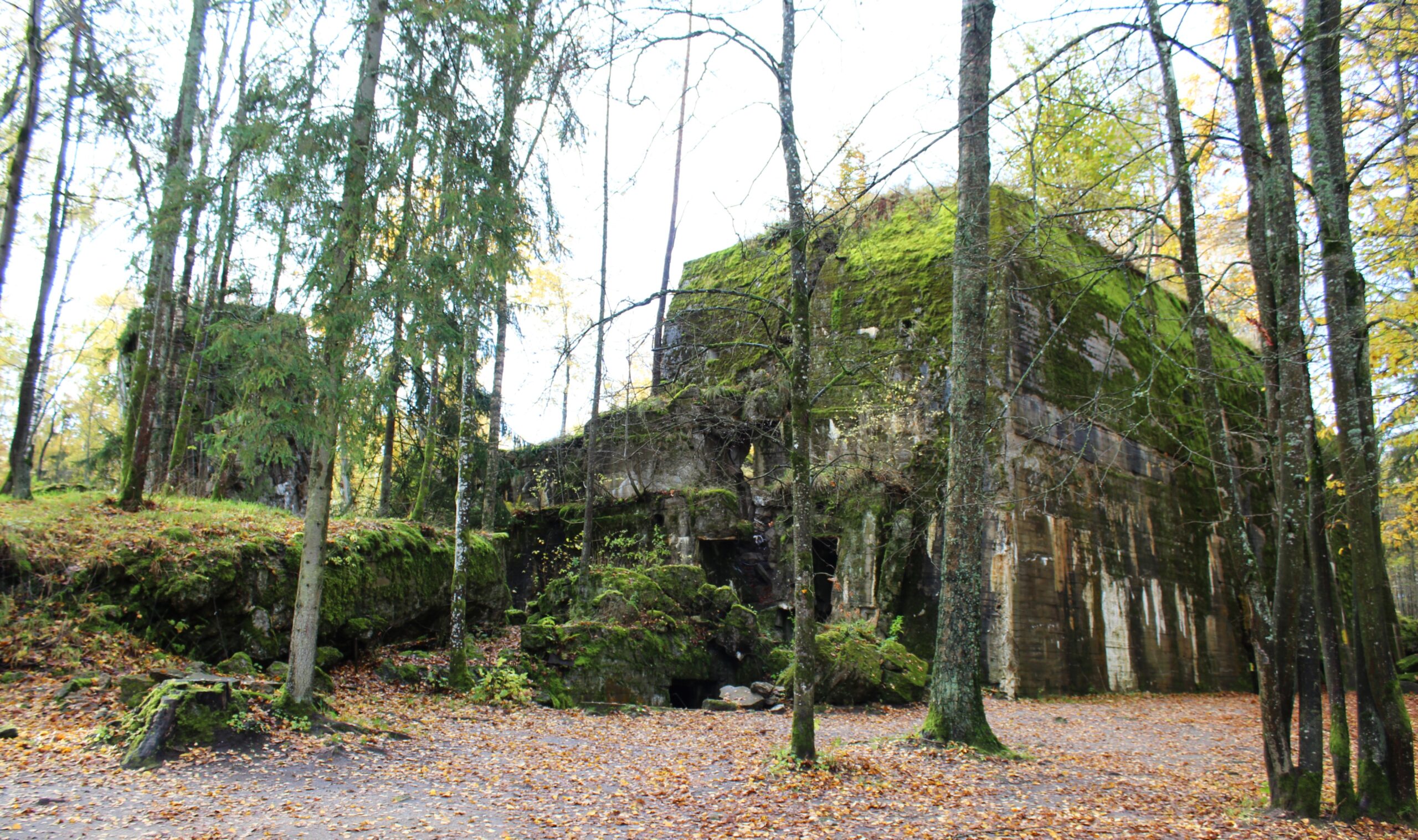
Hitler’s Bunker
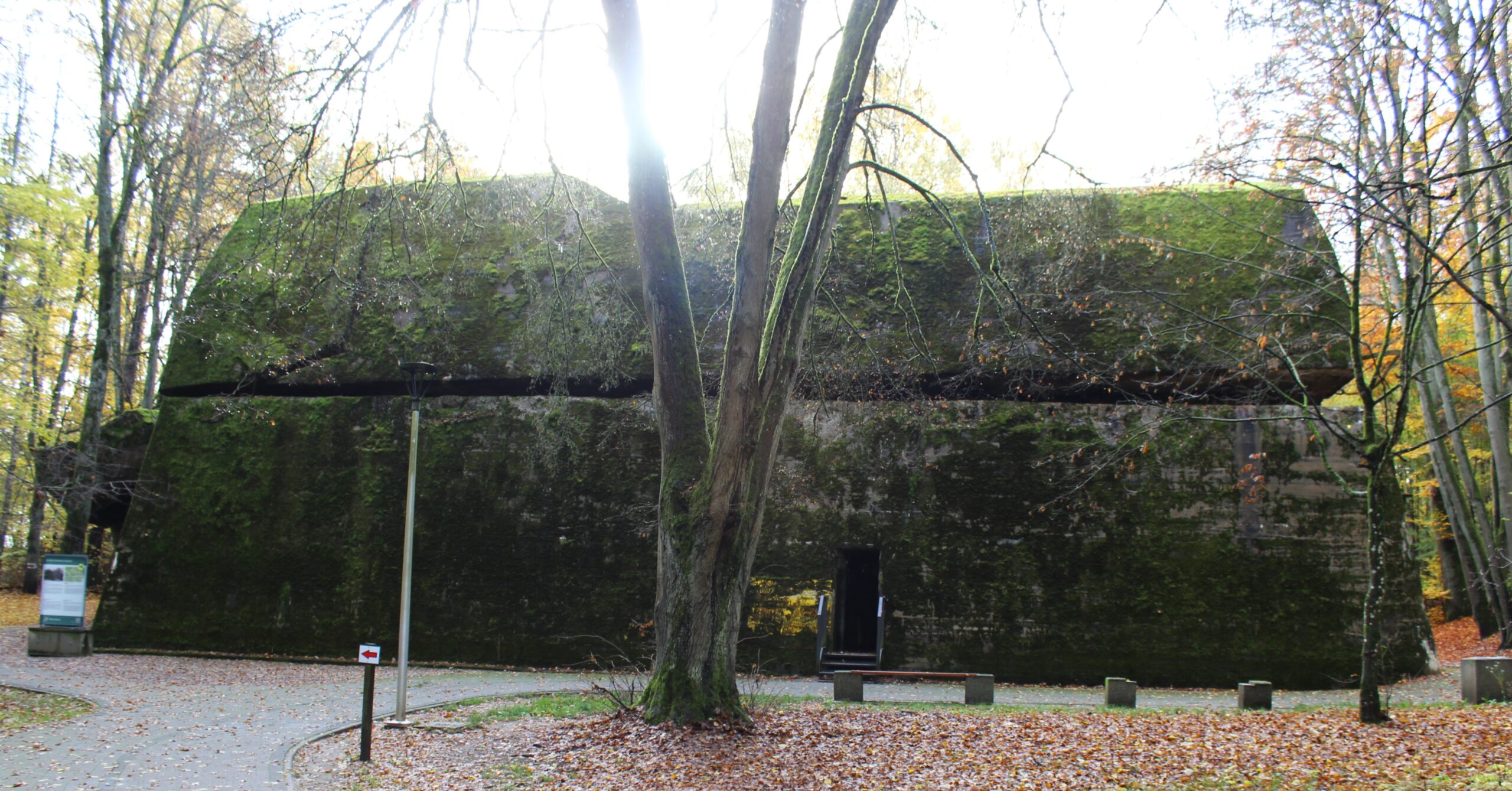
Goering’s bunker, Hitler’s #2 guy and successor if the Fuehrer decided to bow out.
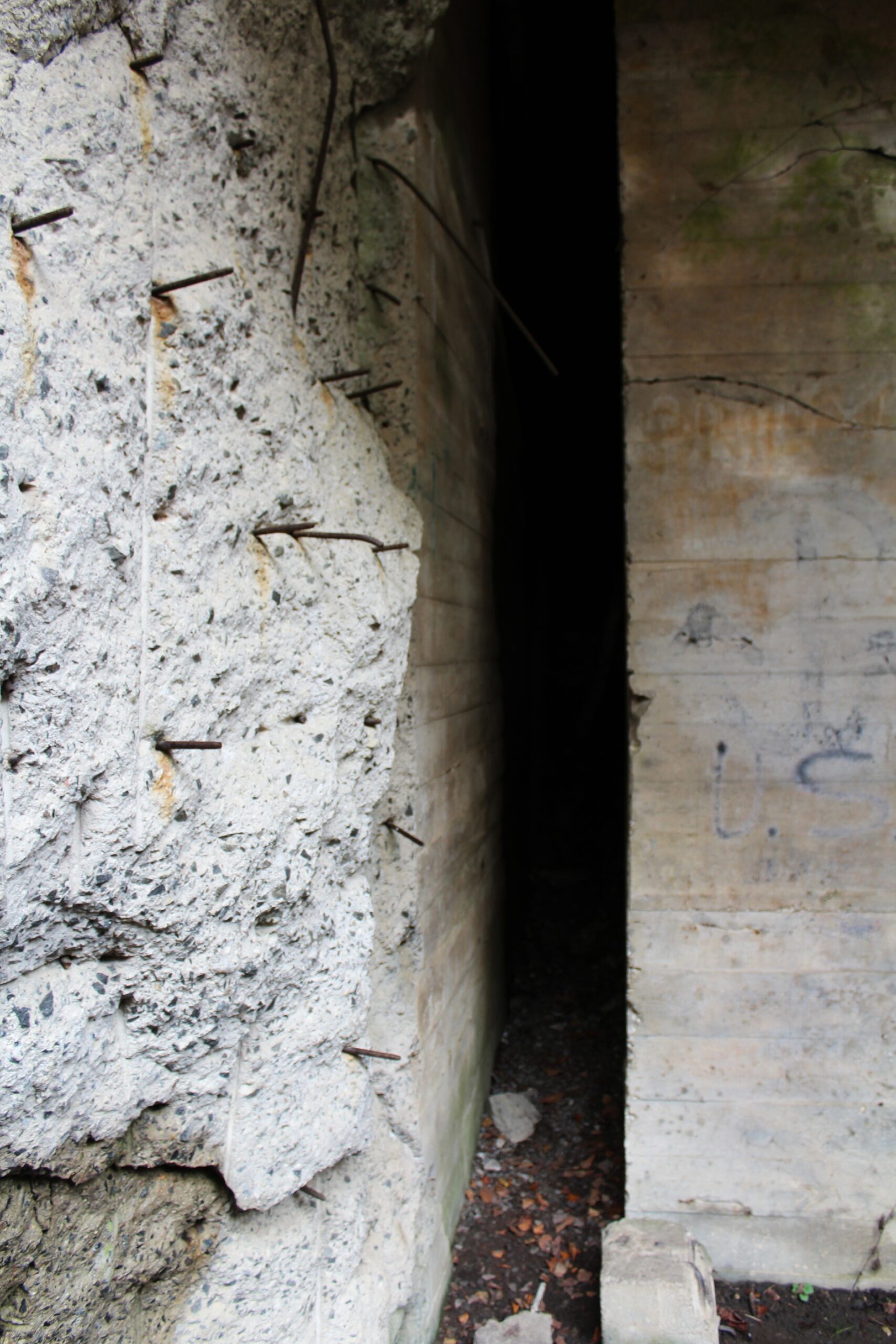
Goering’s double walled bunker
This was also where one of the most famous attempts to assassinate Hitler took place. On July 20, 1944, a young colonel named Claus von Stauffenberg, along with numerous co-conspirators, attempted a coup against Hitler’s regime, Operation Valkyrie.
Operation Valkyrie was originally created as part of a defensive move for the Nazi government in the event of civil unrest or an uprising by prisoners. This act would activate the German Reserve Forces to maintain control of the major cities and restore the leadership. Von Stauffenberg and his co-conspirators would use the Valkyrie order to overthrow the SS after the assassination of Hitler became public. Because of the “oath” taken by the German army and SS soldiers, it was believed that they would not support a change to the Nazi government unless Hitler was dead. So be it.
As part of the coup, Claus was invited to join a briefing session at Wolf’s Lair. He had been wounded in Tunisia by a fighter plane that caused him to lose his left eye, right hand, and two fingers on his left hand. This made him a “war hero” and an officer that Hitler would welcome to his briefing. Once at the meeting, he asked to be close to Hitler so he could hear him speak, claiming that he also suffered hearing loss in the attack in Tunisia. At 12:30pm Stauffenberg asked to use the restroom and left the briefing room to arm the bomb. Returning to the meeting, he placed the bomb under the table by Hitler. Minutes later he received a pre-arranged urgent phone call and left the briefing room. At 12:45pm, the bomb exploded but because it had been moved behind the solid oak table leg, it only injured Hitler.
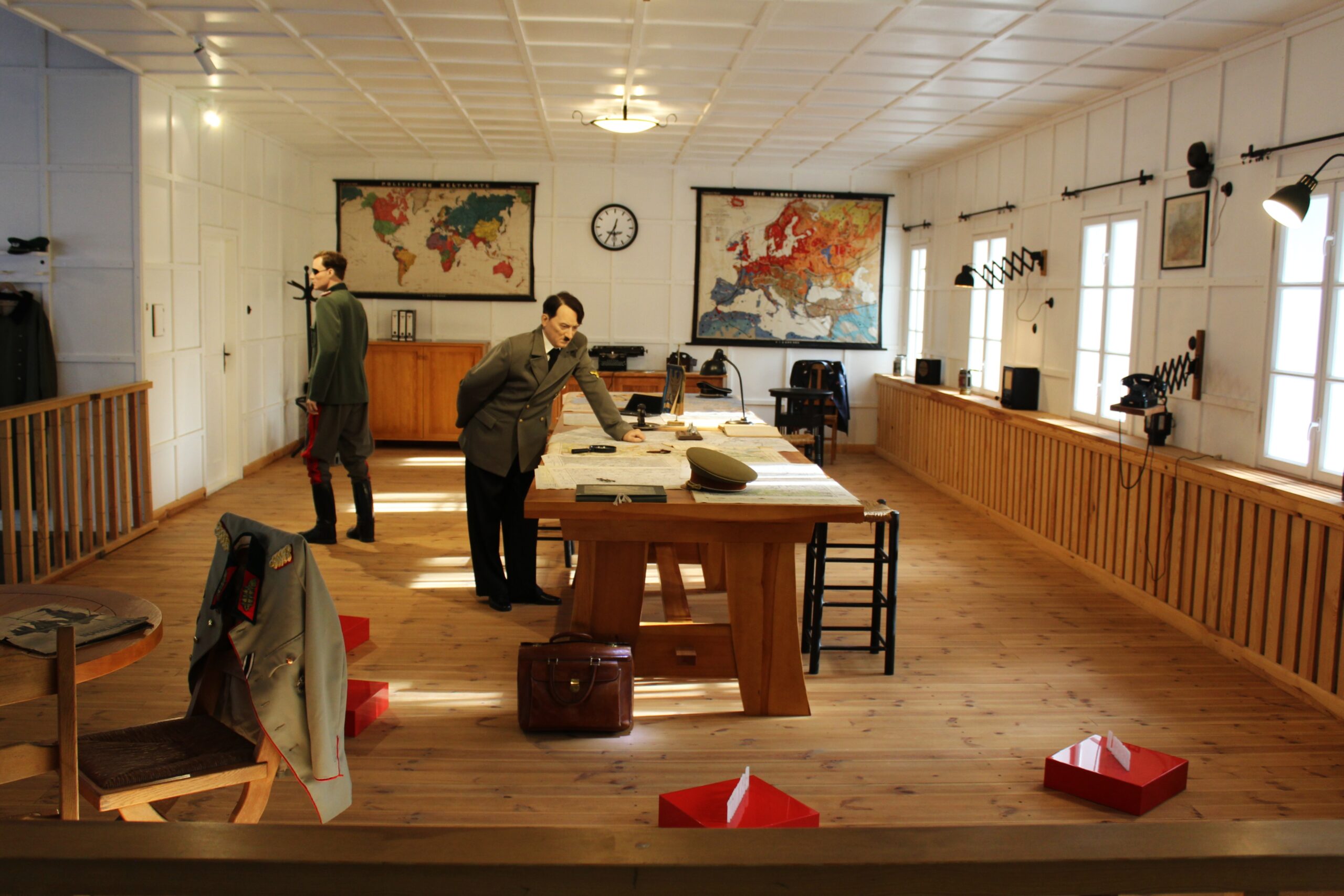
A re-creation of the briefing room as it was on 20 July 1944
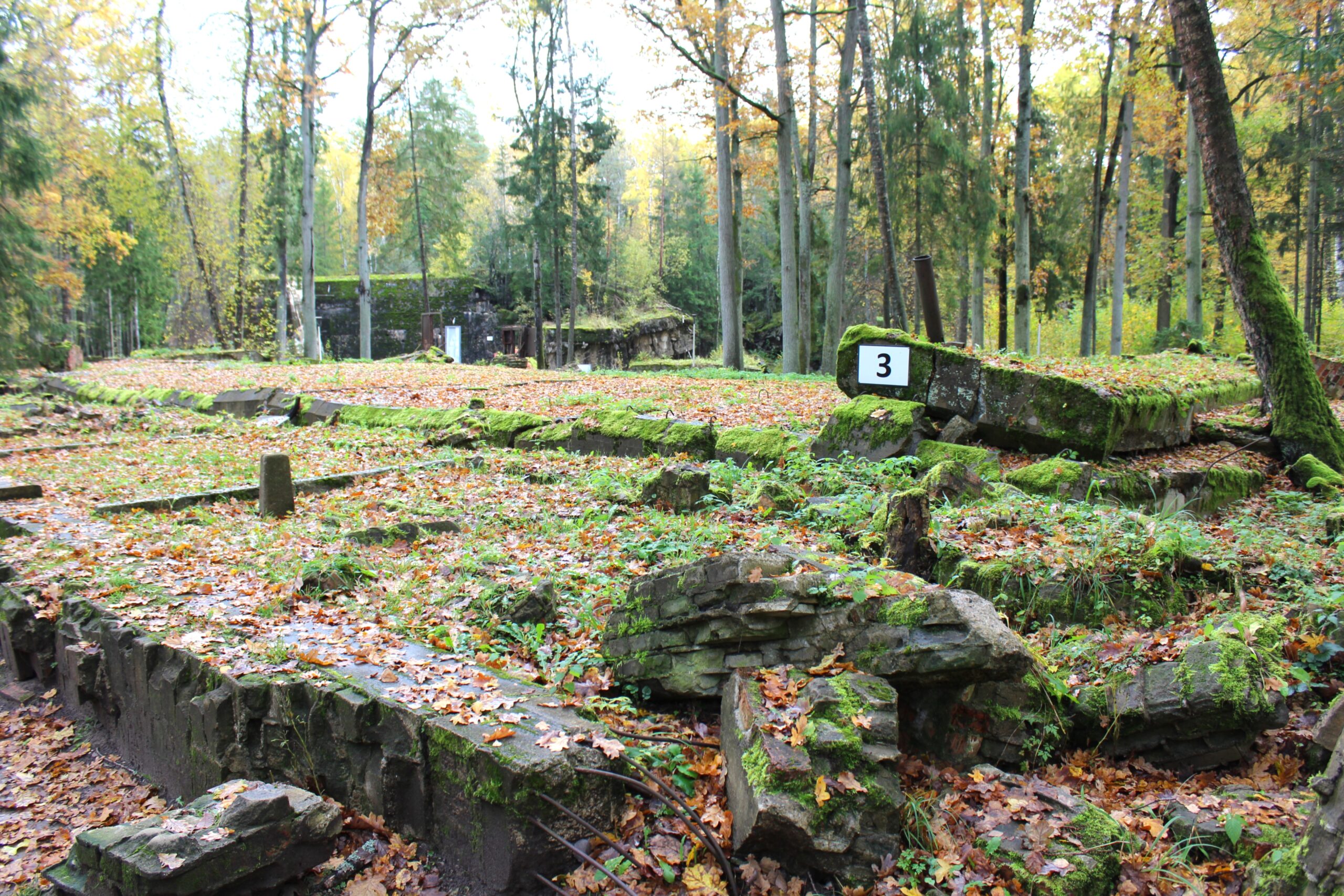
The briefing room building today.
Not knowing that their assassination attempt had failed, the conspirators attempted to set into action Operation Valkyrie. It wasn’t long before the truth became known about the attempt on Hitler’s life, and who was involved. Most all conspirators, and some not involved, were dead within 24 hours of the attempt. This included Field Marshal Erwin Rommel who, according to some, had only knowledge of conspirators and was not a participant in Operation Valkyrie.
Fast forward to November 20, 1944 and Hitler’s vamoose from Wolf’s Lair. The Red Army was knocking at the door of Adolf’s complex so it was decided it was time to bug out. Off to Zossen, near Berlin, and set up shop there to continue the battle. And since they would no longer need the Wolf’s Lair, time to blow it up. Field Marshal Wilhelm Keitel, the guy who signed the surrender in Berlin, ordered the destruction and mining of the complex. Over 8 tons of explosives were used in most bunkers. The result was the roofs collapsed and some walls fell but nothing much else happened.
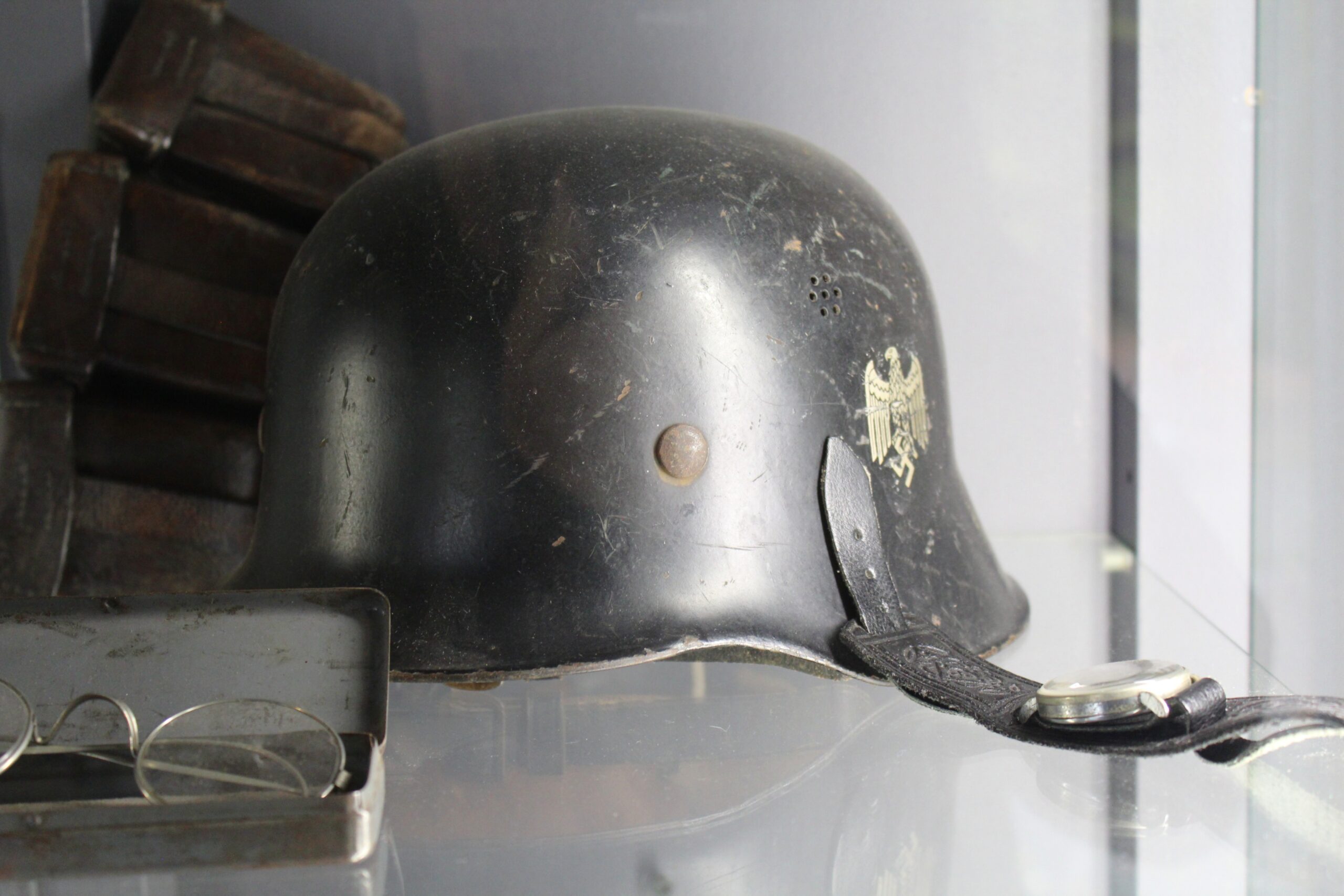
Things left behind
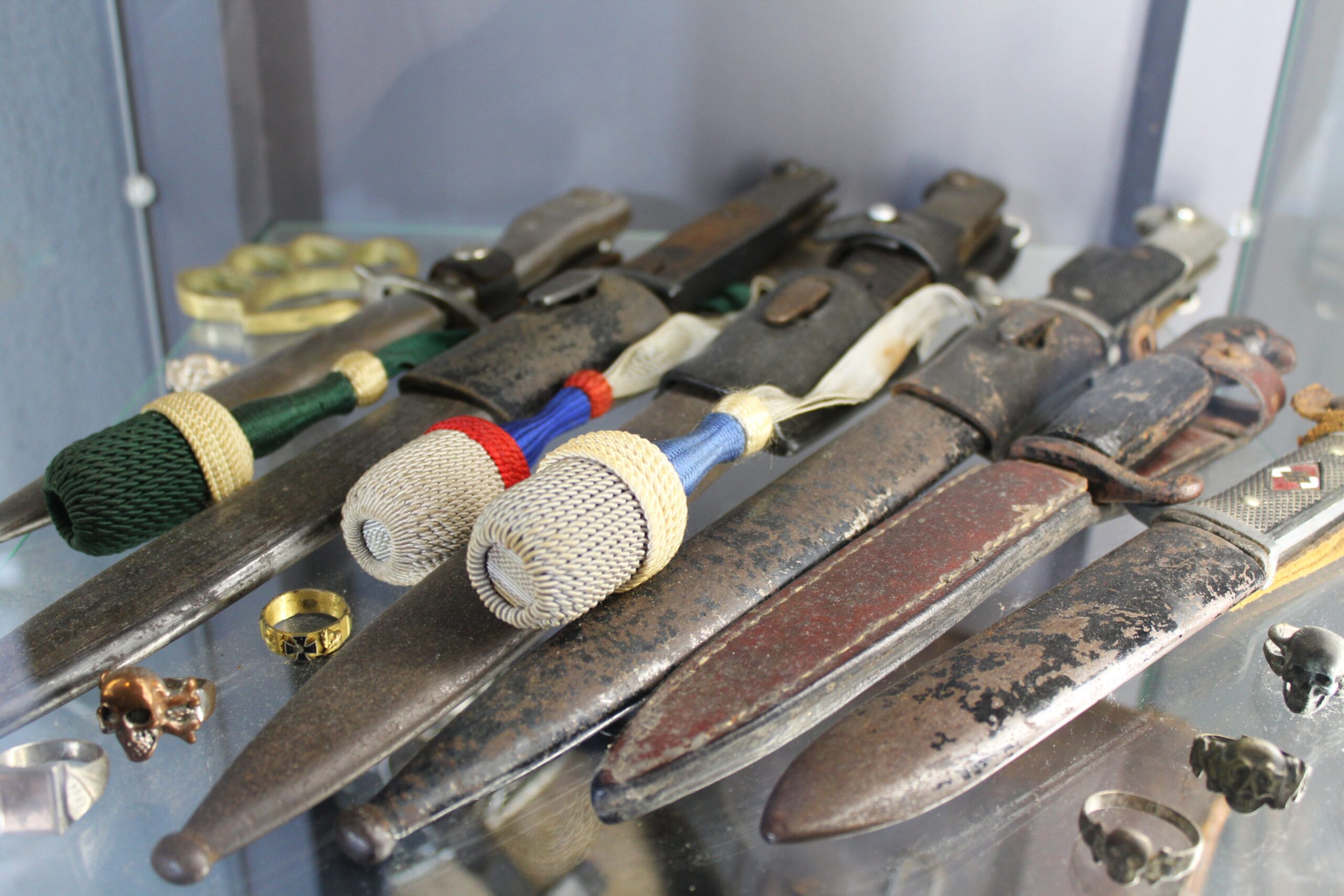
Hard to see but the rings with skulls are pretty cool.
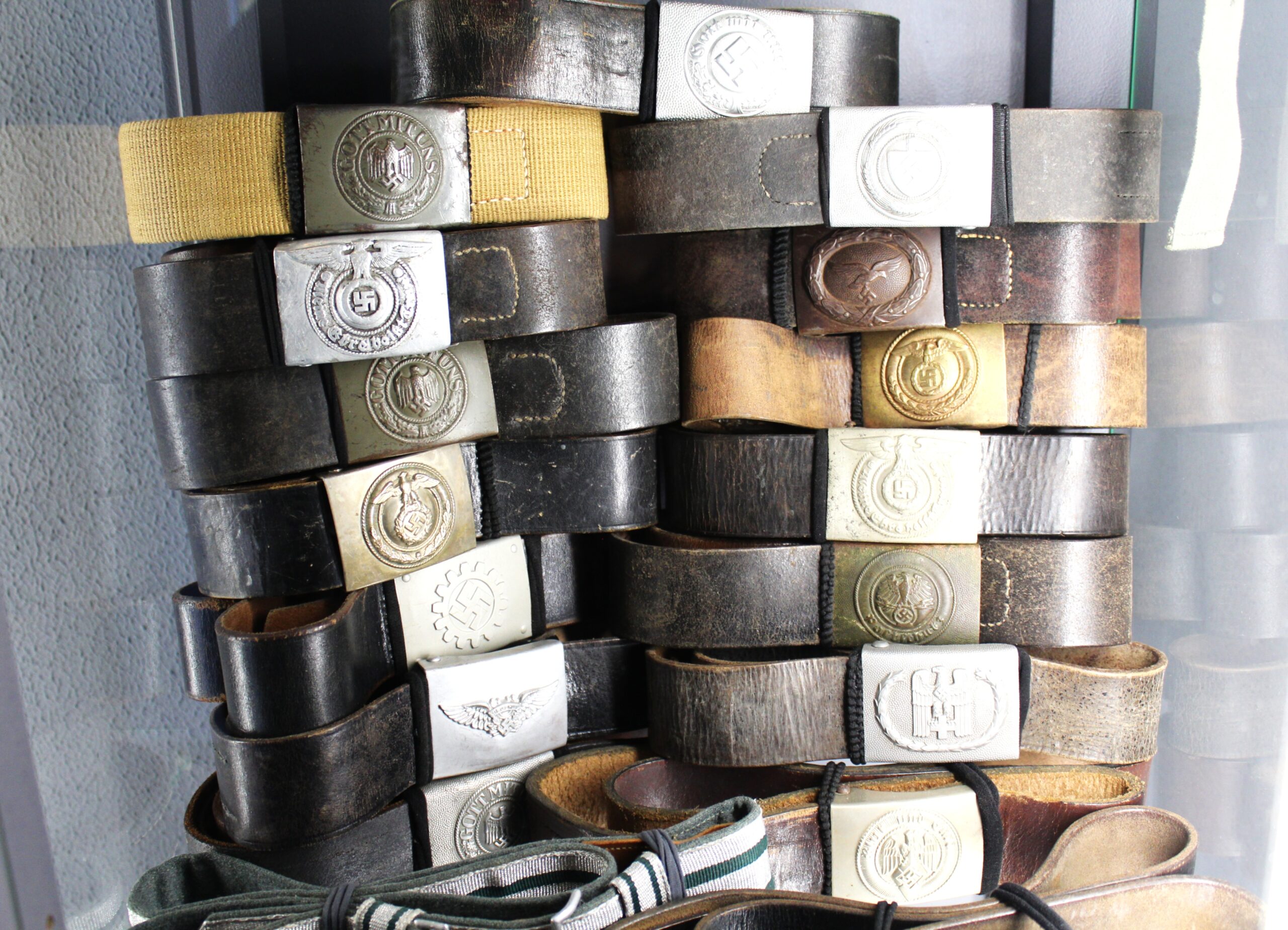
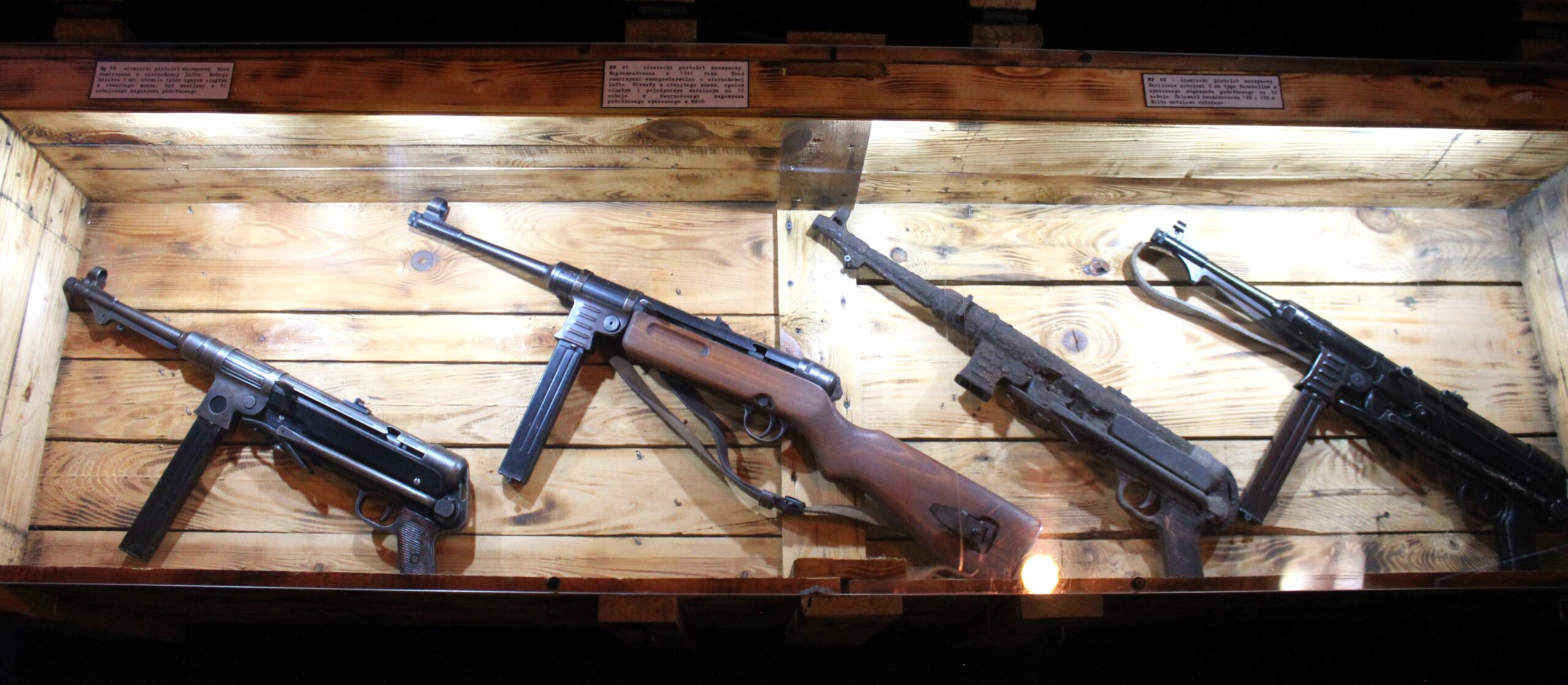
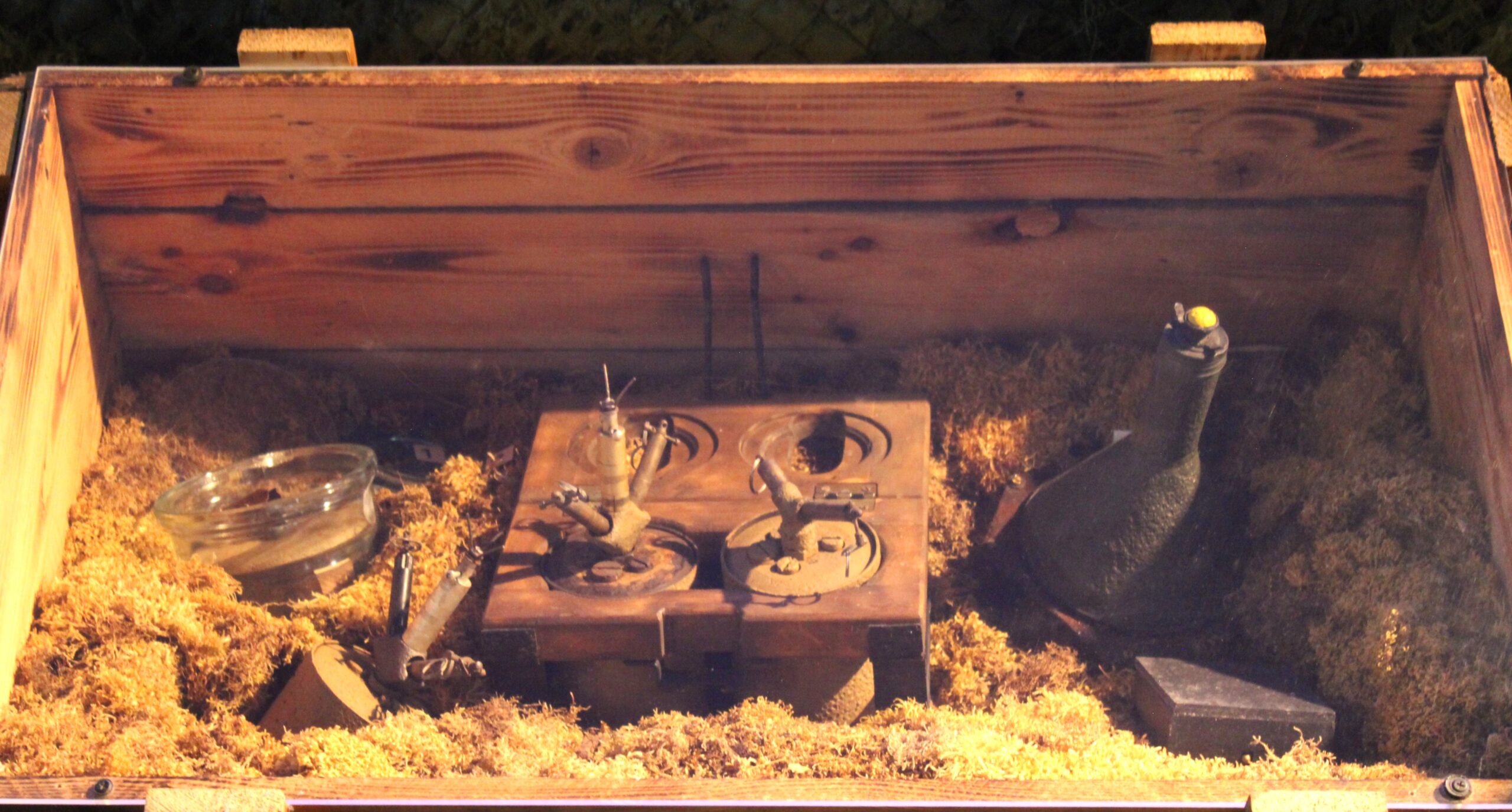
Fun fact: Keitel signed the surrender of Germany to the Allies in Berlin. (The Soviet Union demanded a second signing saying that their representative in Rheims, France did not have authority to sign.) Later, Bill was tried in Nuremberg for war crimes, convicted and sentenced to death by hanging. He requested that his method of execution be changed to firing squad. His request was denied.
In 1952, demining of the Wolf’s Lair complex was conducted by Polish sappers removing over 30,000 mines. Two of the sappers lost their lives removing the mines.
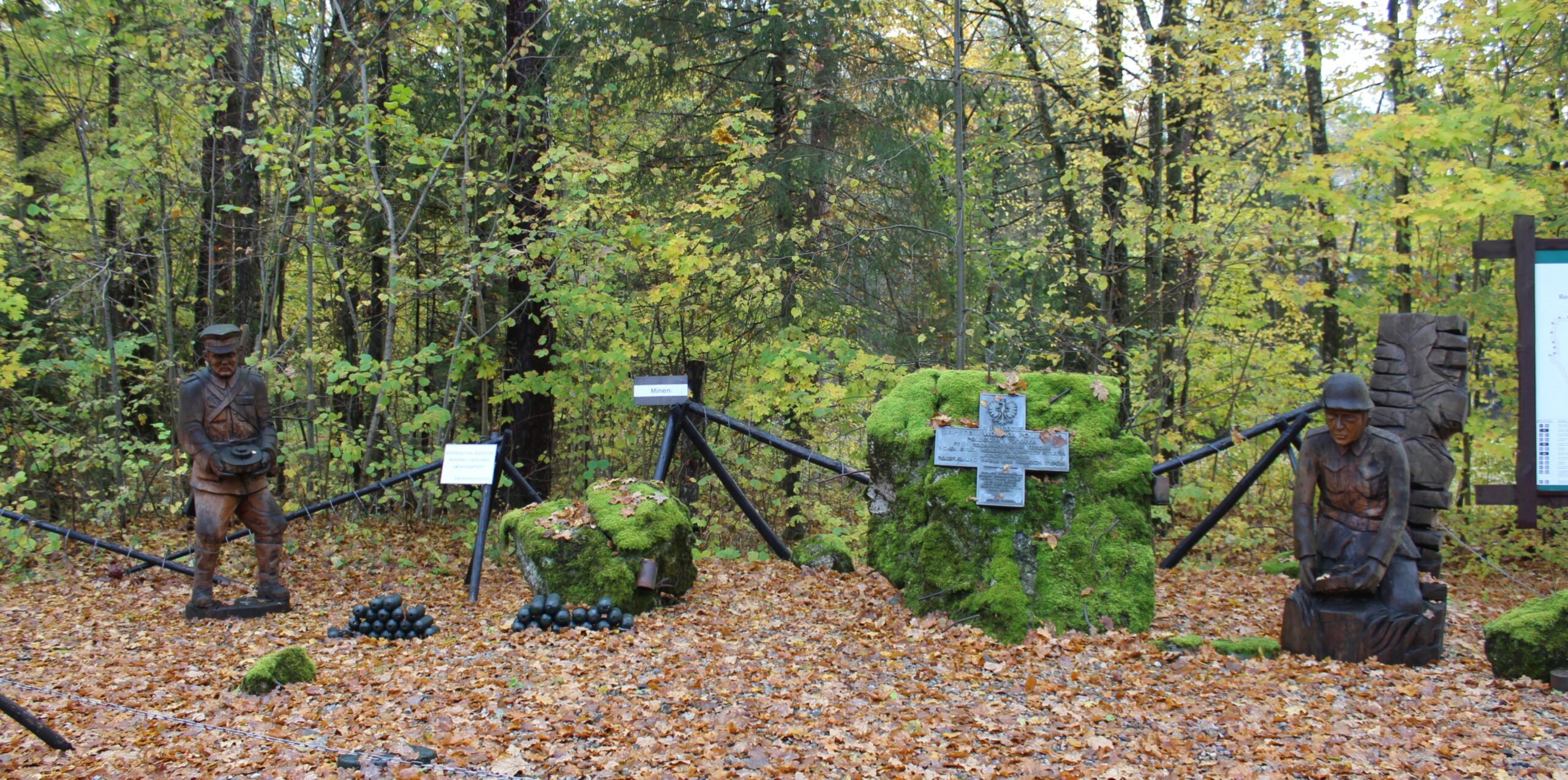
Memorial to the two sappers killed trying to remove the mines
Finished our tour now time to drive to our next home-away-from-home, Warsaw, Poland.