Krakow Salt Mine
Off to Krakow this morning for another adventure. The drive is a little over 3 hours so not bad. The only thing iffy is the weather, bit of fog, light rain and clouds predicted for the entire day. Oh well, can’t do anything about the weather so just relax and take our time driving. Temp is around 45F.
Rain certainly doesn’t seem to bother the locals. Passing us like we’re sitting still on the motorway at speeds well over 70mph. I guess when there is an accident, they just send the coroner and not an ambulance.
Because we’re arriving early in Krakow, we’re taking in a tour of the Wieliczka Salt Mine before going to our apartment. This mine has been in operation since the Middle Ages. Back then it was the largest salt deposit in Poland and critical to the economy of the area. During that time, salt was as precious as gold and used for trading more frequently than gold. The oldest salt working tools in Central Europe have been found here.
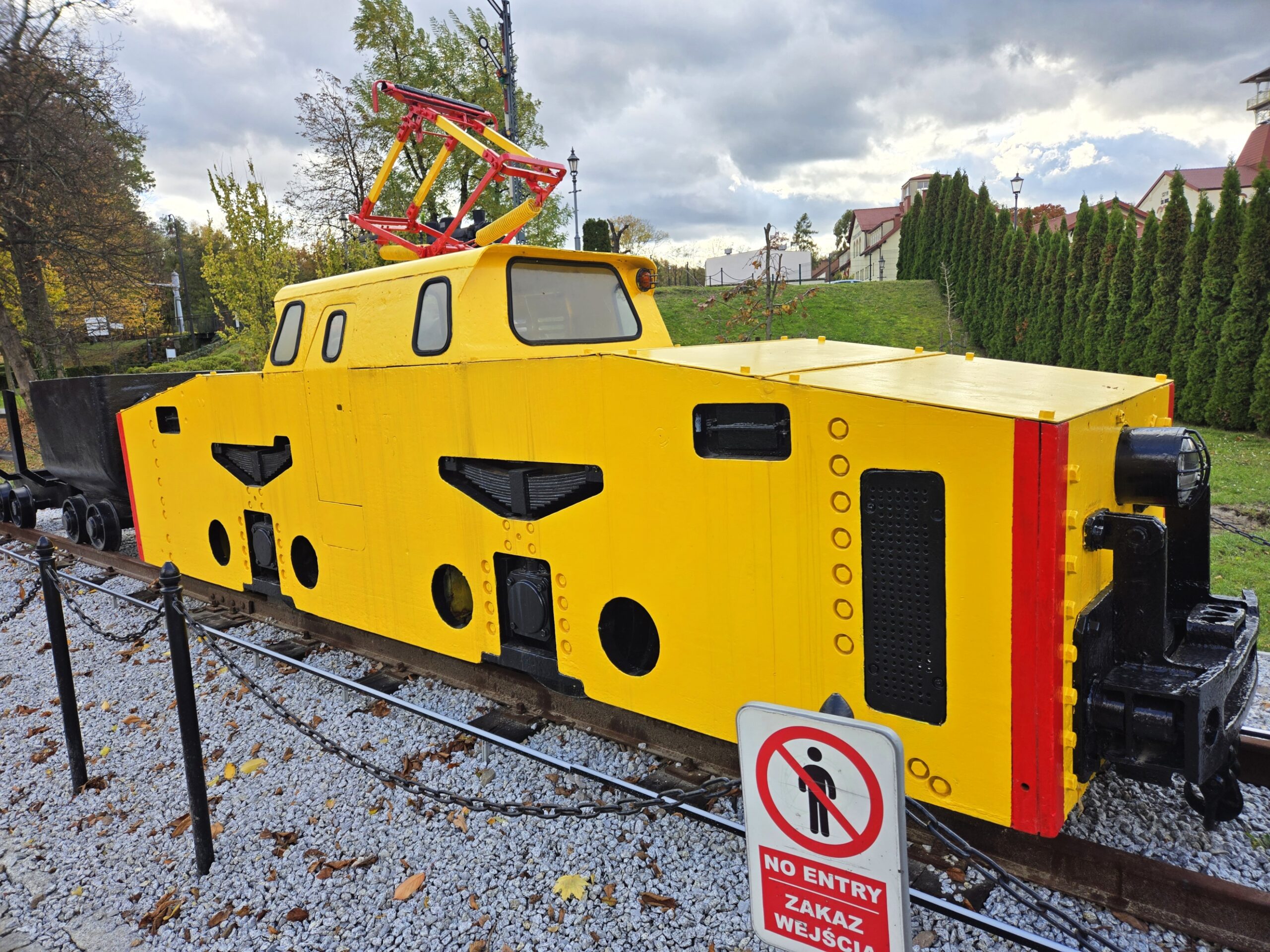
Replacement for the horse-drawn cars
The first salt mining was done by evaporation. Large kettles were setup and salt water from below was piped into pools that fed the kettles. As the water evaporated, there was pure salt left behind. This was such a major operation that soon there was a shortage of firewood. This shortage also affected the underground mining of rock salt because the miners couldn’t build box cribs to support the mine shafts. The decision was made to stop the evaporation mining and focus on rock salt mining.
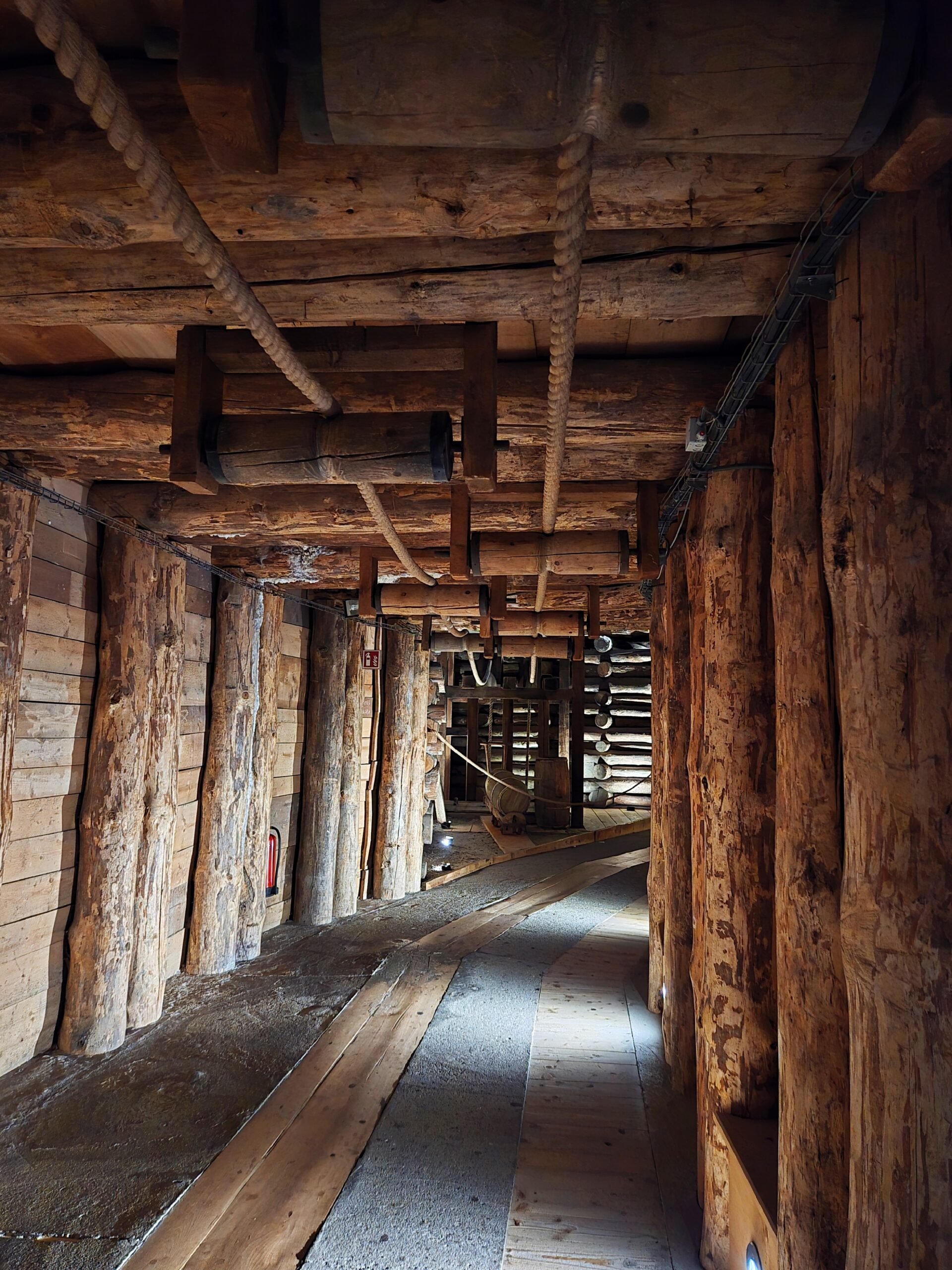
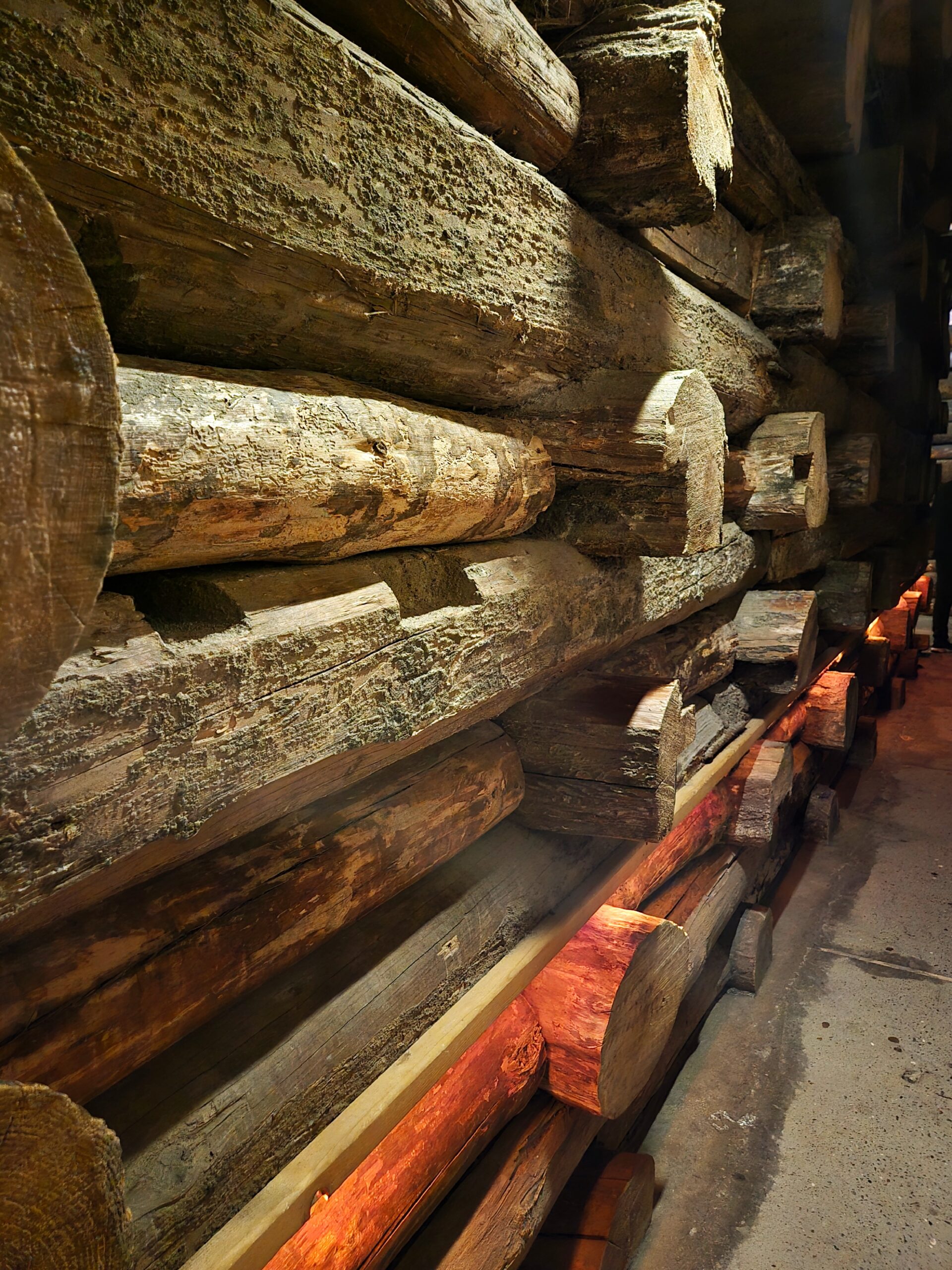
Box crib
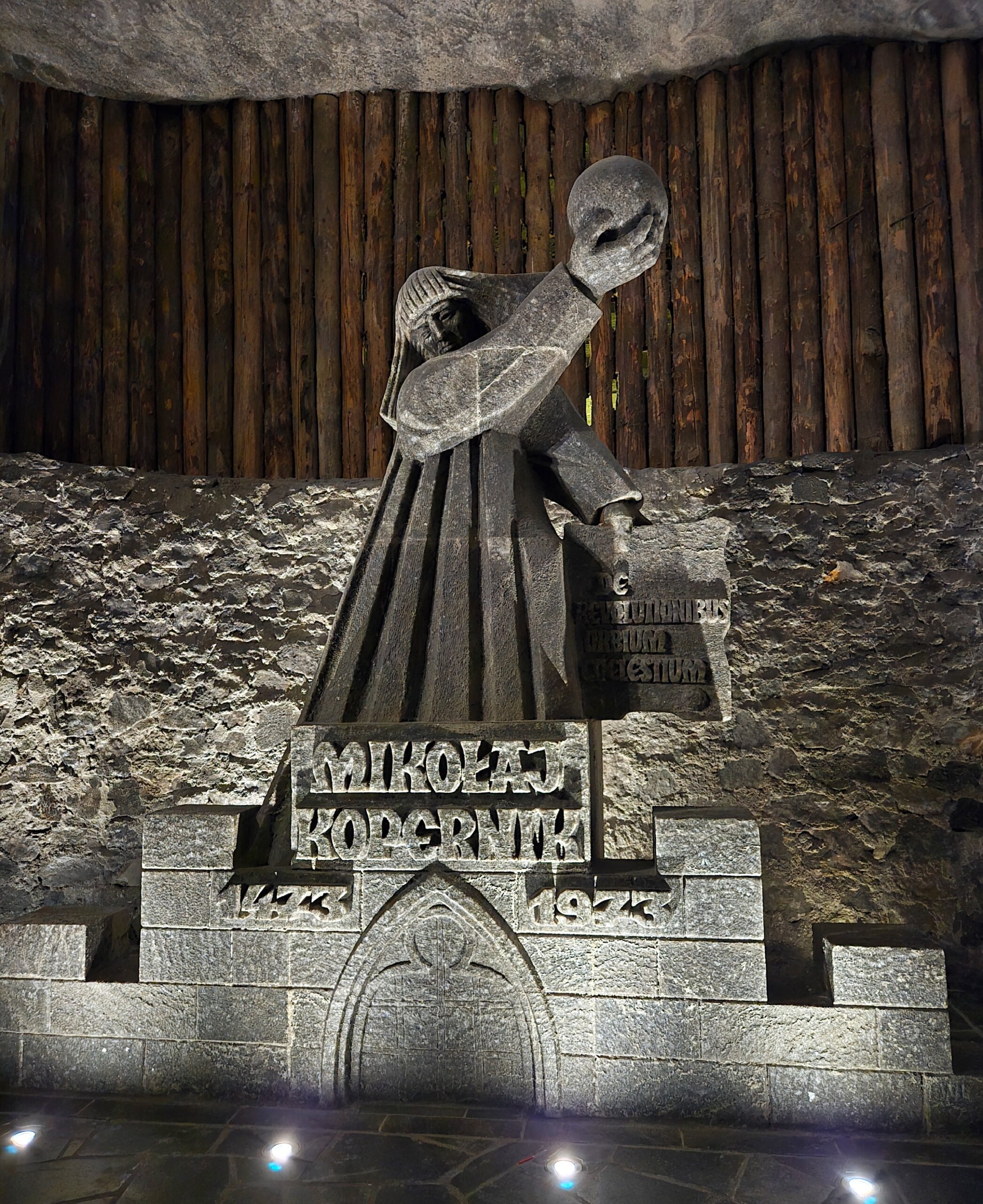
Hundreds of tunnels and shafts were drilled over the next few decades and the mine became quite an interest to people. Why not bring tourists in to see the operation? It is said, that the first tourist to the mine was Nicolaus Copernicus. Probably visited the mine around 1493, and in remembrance of this event, a monumental salt figure of the brilliant astronomer was set up in a chamber named after him. I’m sure you all remember him from science or economics class, right? Nick was the guy that modeled the solar system with the Sun in the middle instead of the Earth. (Bet he thought the Earth was round, too) He also devised the Quantity Theory of Money. No, not that the more money you have the more power you have, that was Donald Trump. Nick’s theory was that prices are directly proportional to the quantity of money in the system. Money depreciates in value when it is too abundant. Tell that to Musk!
Salt statue honoring 100 years
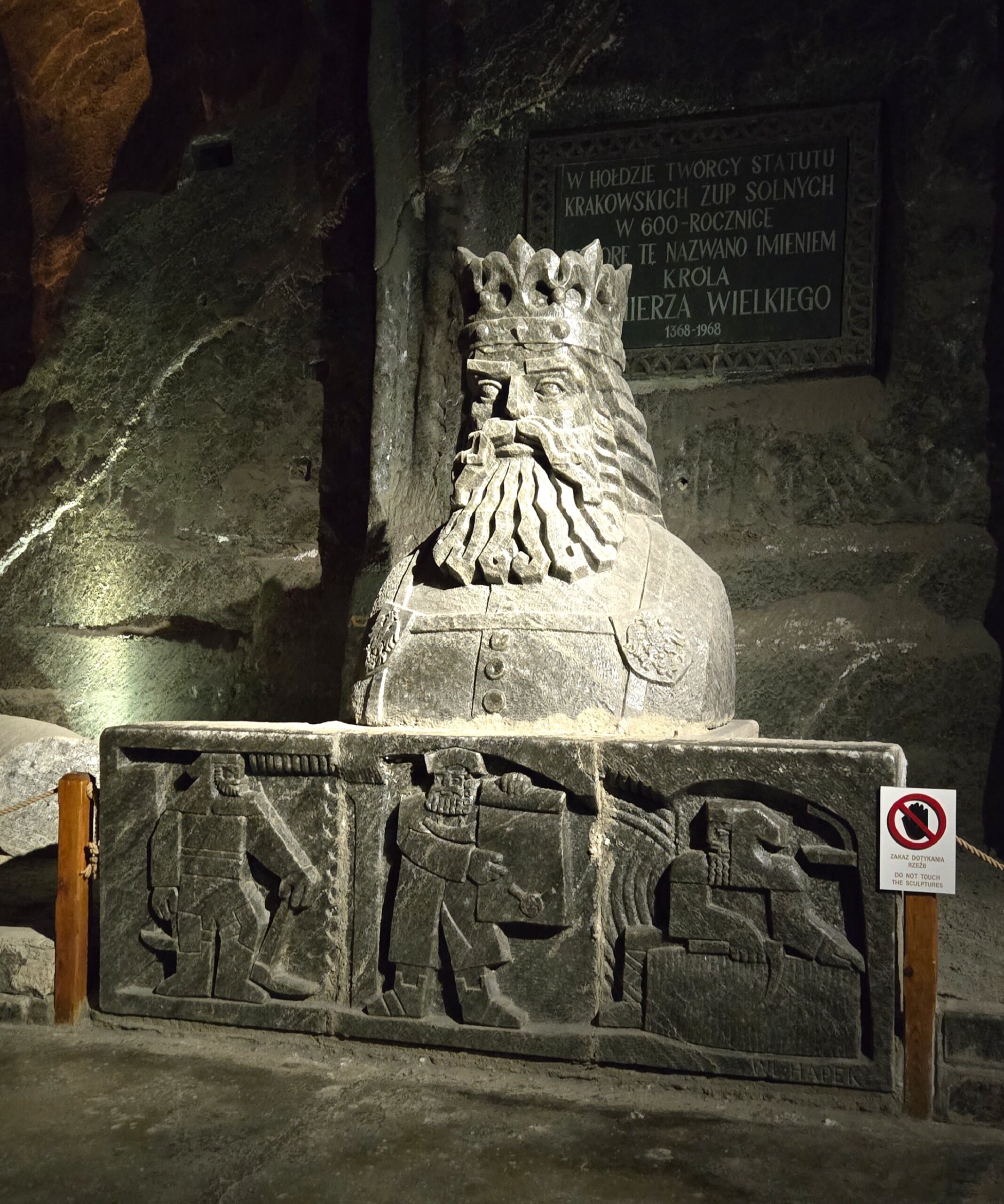
Salt statue honoring Copernicus
Moving along through the 16th and 18th centuries, the mine changes from seasonal to a full-time operation. Miners now worked in the mine full-time instead of taking off to work the fields during planting and harvesting.
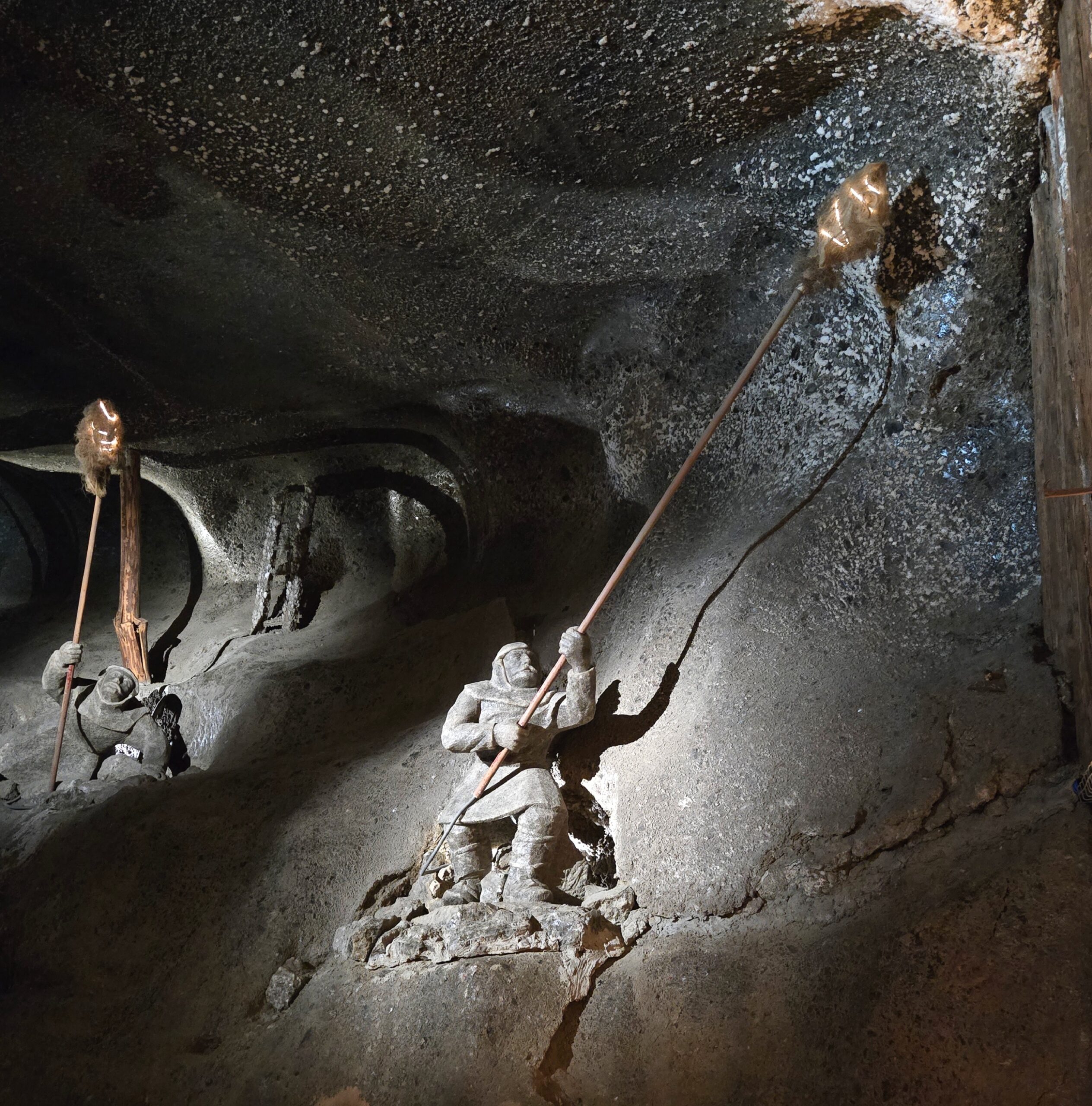
Checking for methane gas
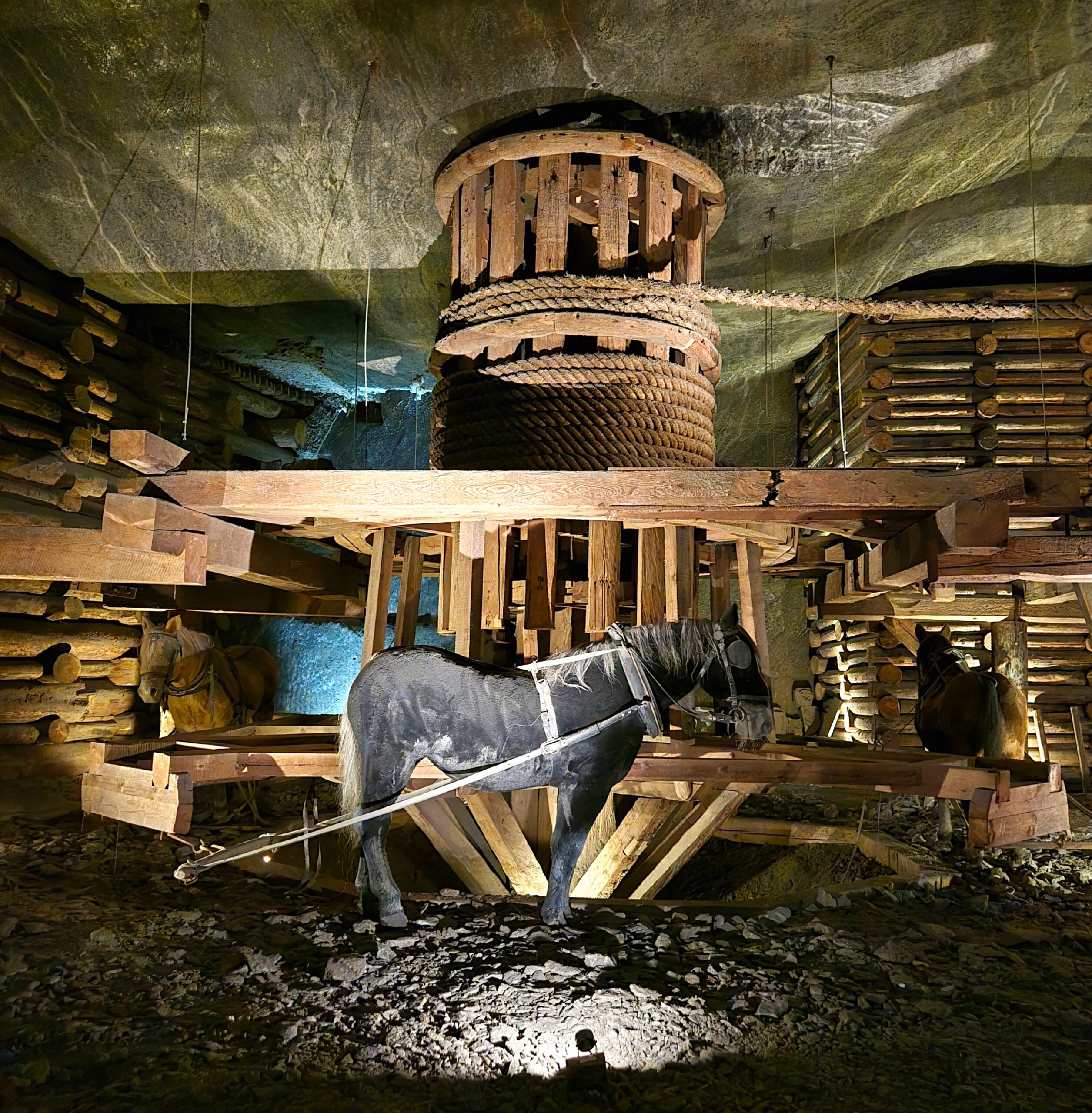
Horses usually went blind due to the dust and constant darkness
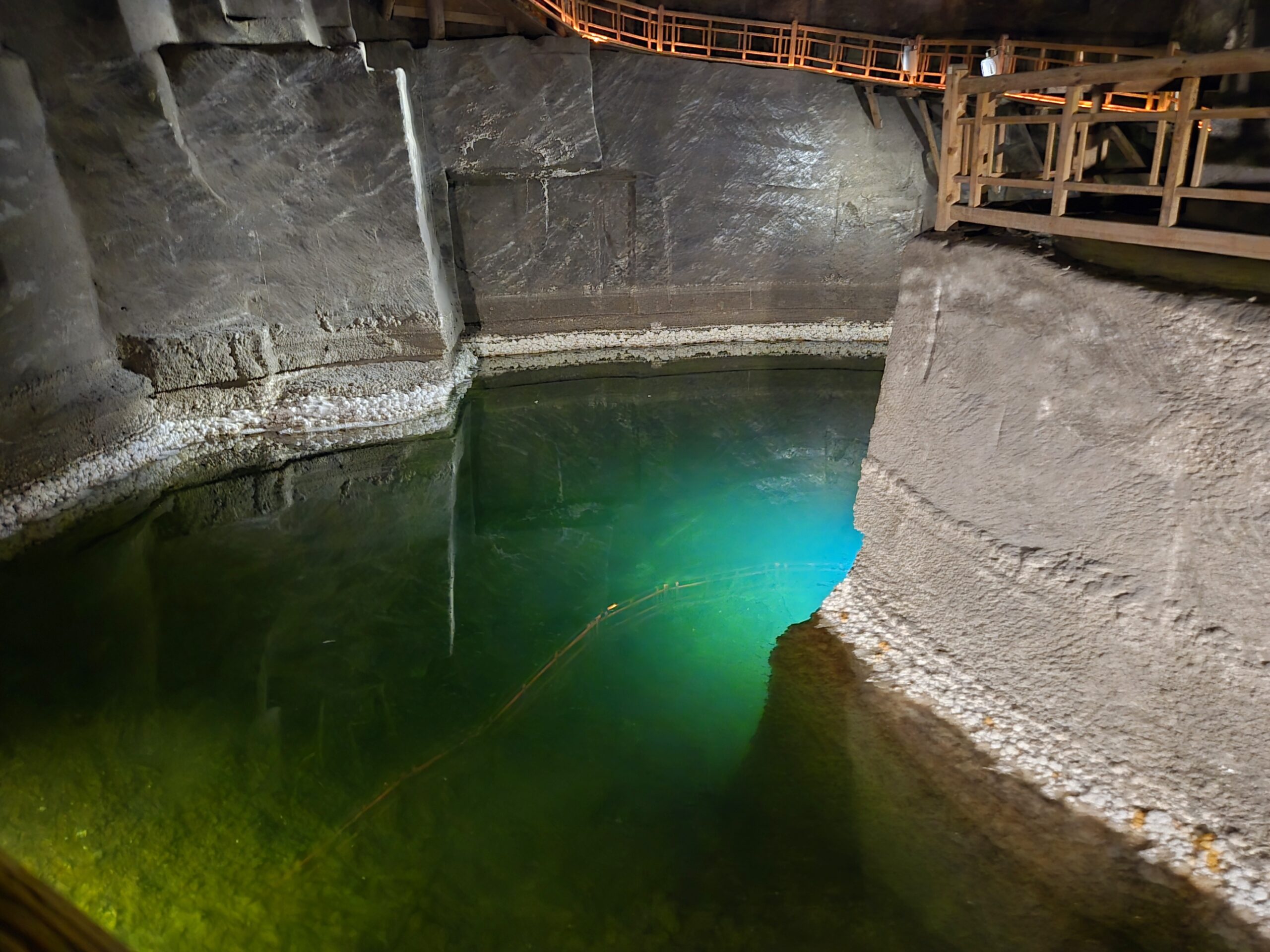
Salt lake (not Utah)
Starting around 1770, the mine became a tourist attraction. Some parts of the mine were sectioned off and opened to the public to come see what an amazing place it was. Lit by torches and riding carts pulled by horses, tourists could see the works done by not only miners, but artisans. Giant galleries, statues, and coves were carved into the salt, there were boat rides in the underground saltwater pools, even a “Devil’s Drop” using a rope and basket to lower visitors at a “sometimes too fast” rate. By the late 1800’s tourist visitation had reached the amazing level of several dozen per month! By 1918 however, that number rose to close to 120,000 per year!
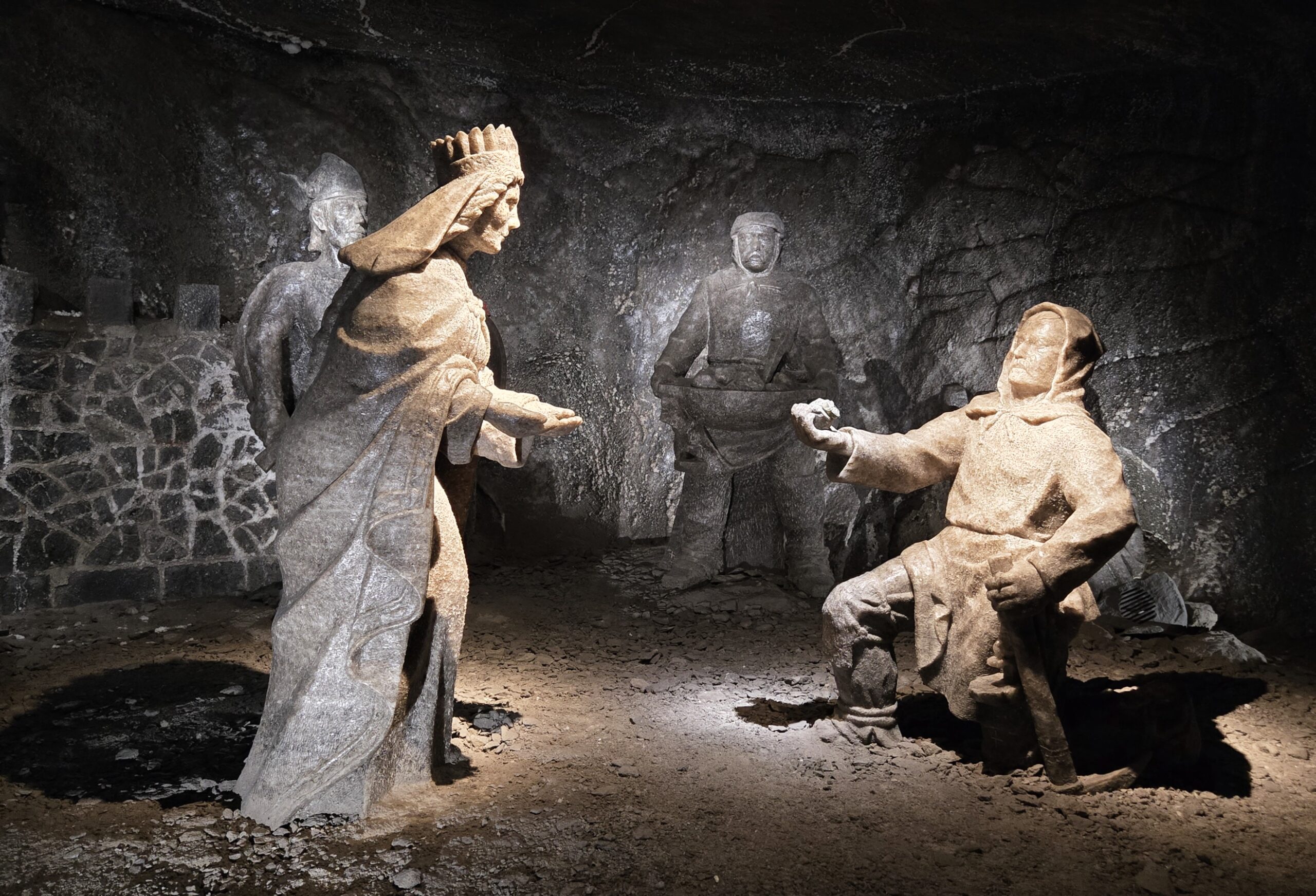
Salt statues
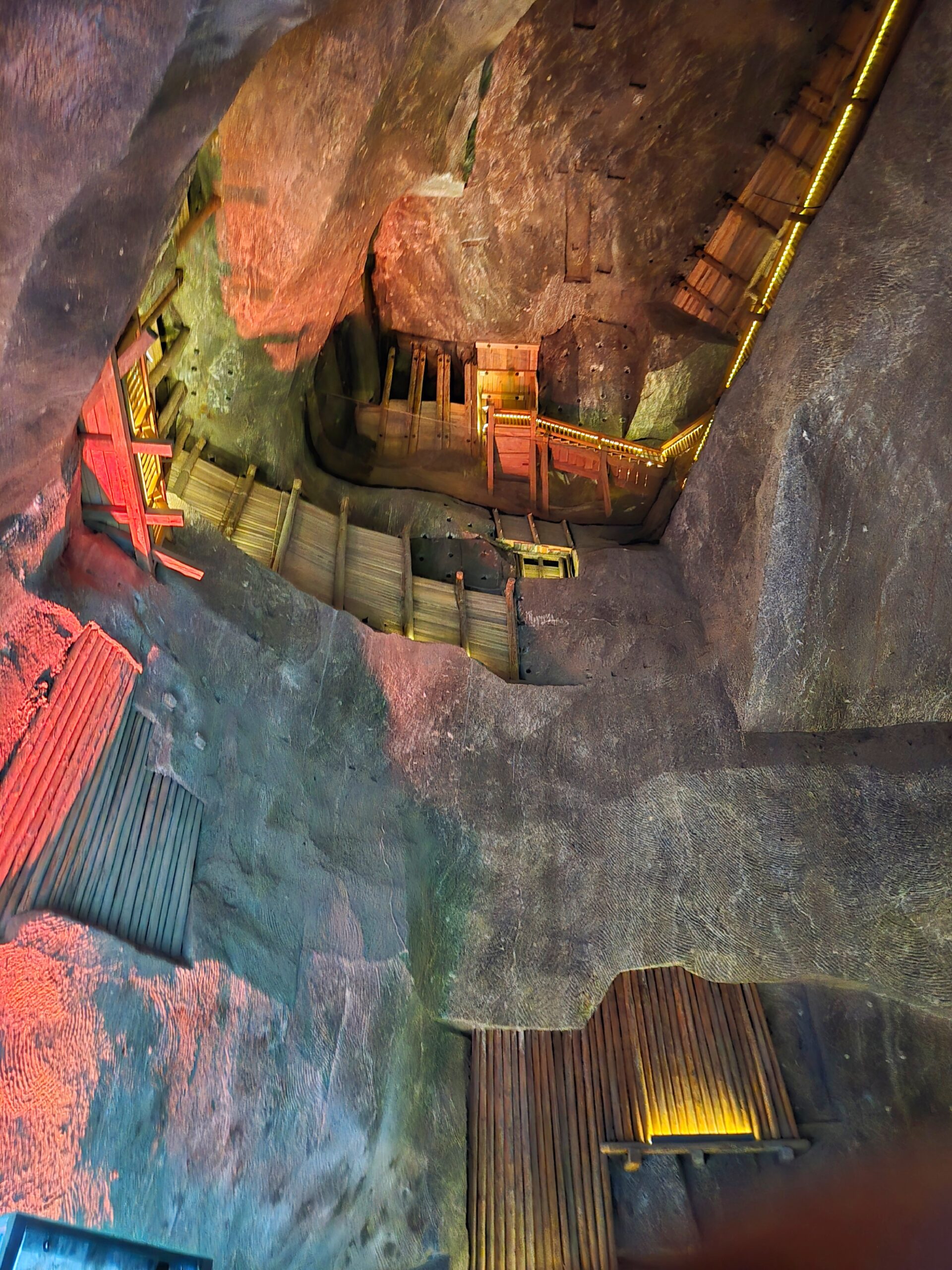 By 1945, a new mining technique had evolved using water to dissolve the salt, then pump it to an open area to let the sun evaporate the water, leaving the salt. New process??? That’s what the research says. Anyway, the mining of rock salt ceases and tourism becomes the main source of revenue.
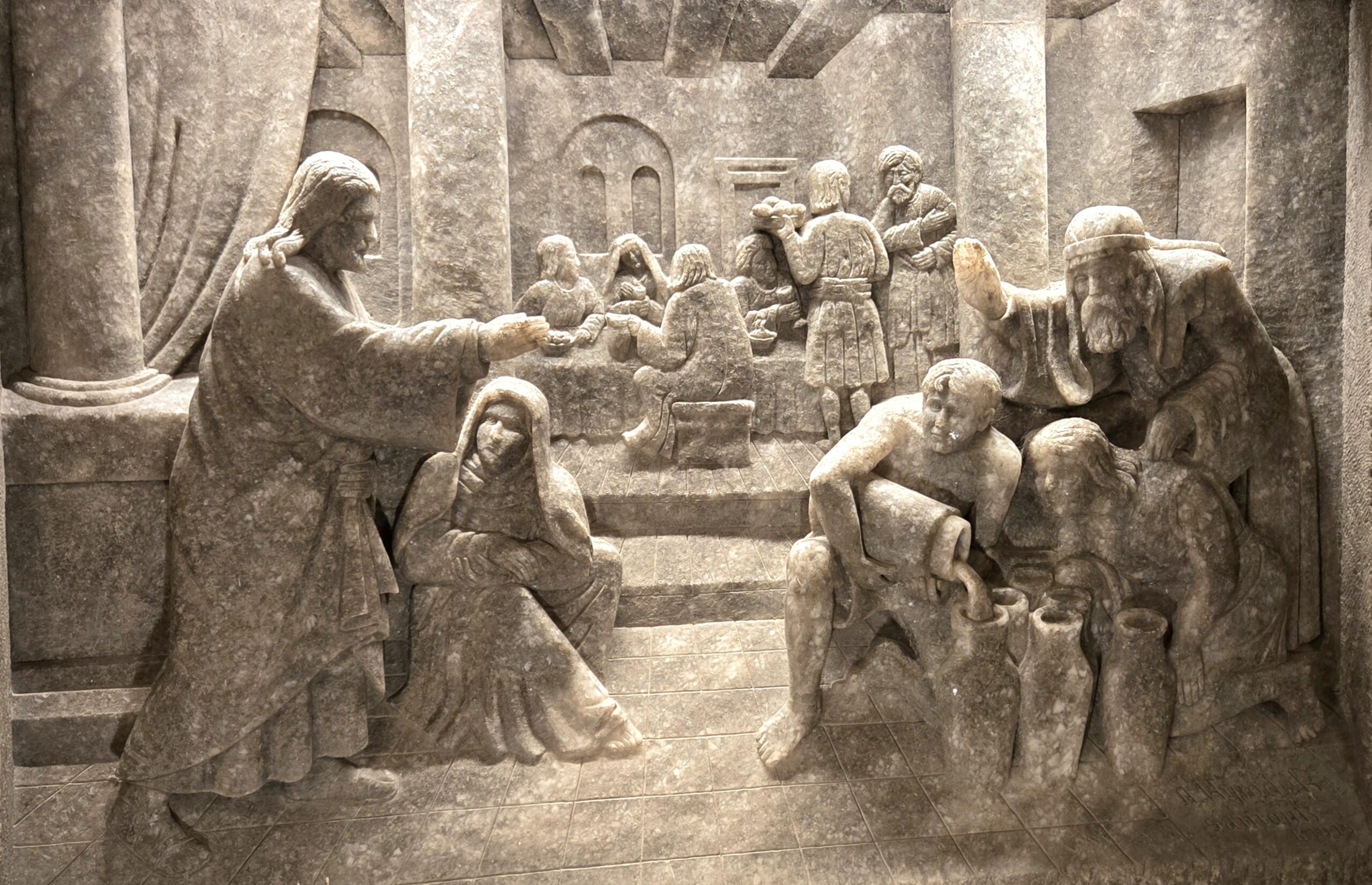
There is one special site located within the mine that is a must see for anyone coming here, St. Kinga’s Chapel, which is located 101 meters (330’) underground. The St. Kinga’s chamber which has an area of 465 sq. meters and a height of 11 meters, lit by salt-carved chandeliers and decorated with a variety of works of art. All, including the altar that happens to be several hundred years old, is carved from solid salt. The chapel was given its name in honor of Polish saint Kinga, who is also the protector of salt miners. The Chapel is still in use for church services, weddings, and concerts with seating for about 400 people.
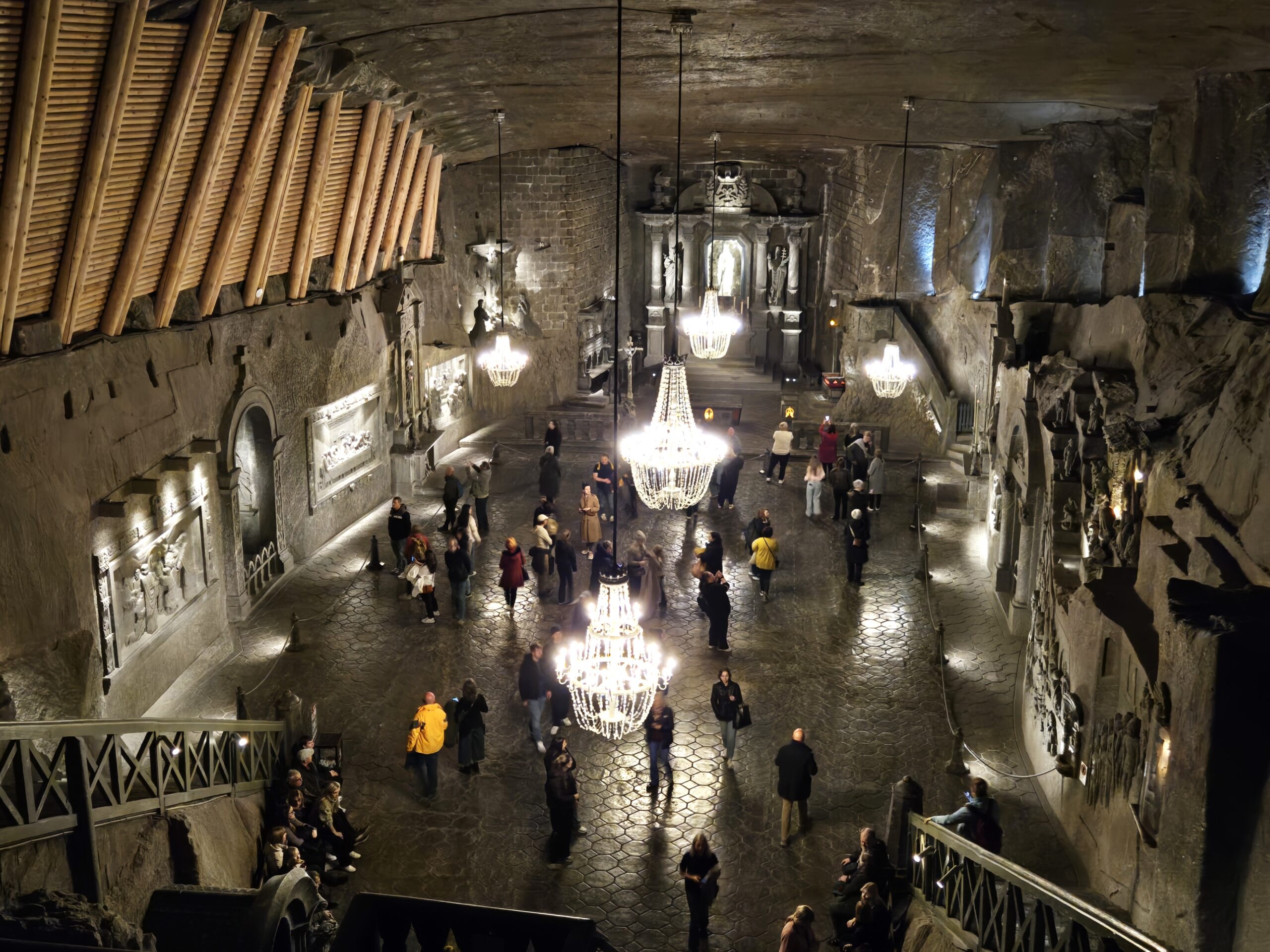
St. Kinga chamber
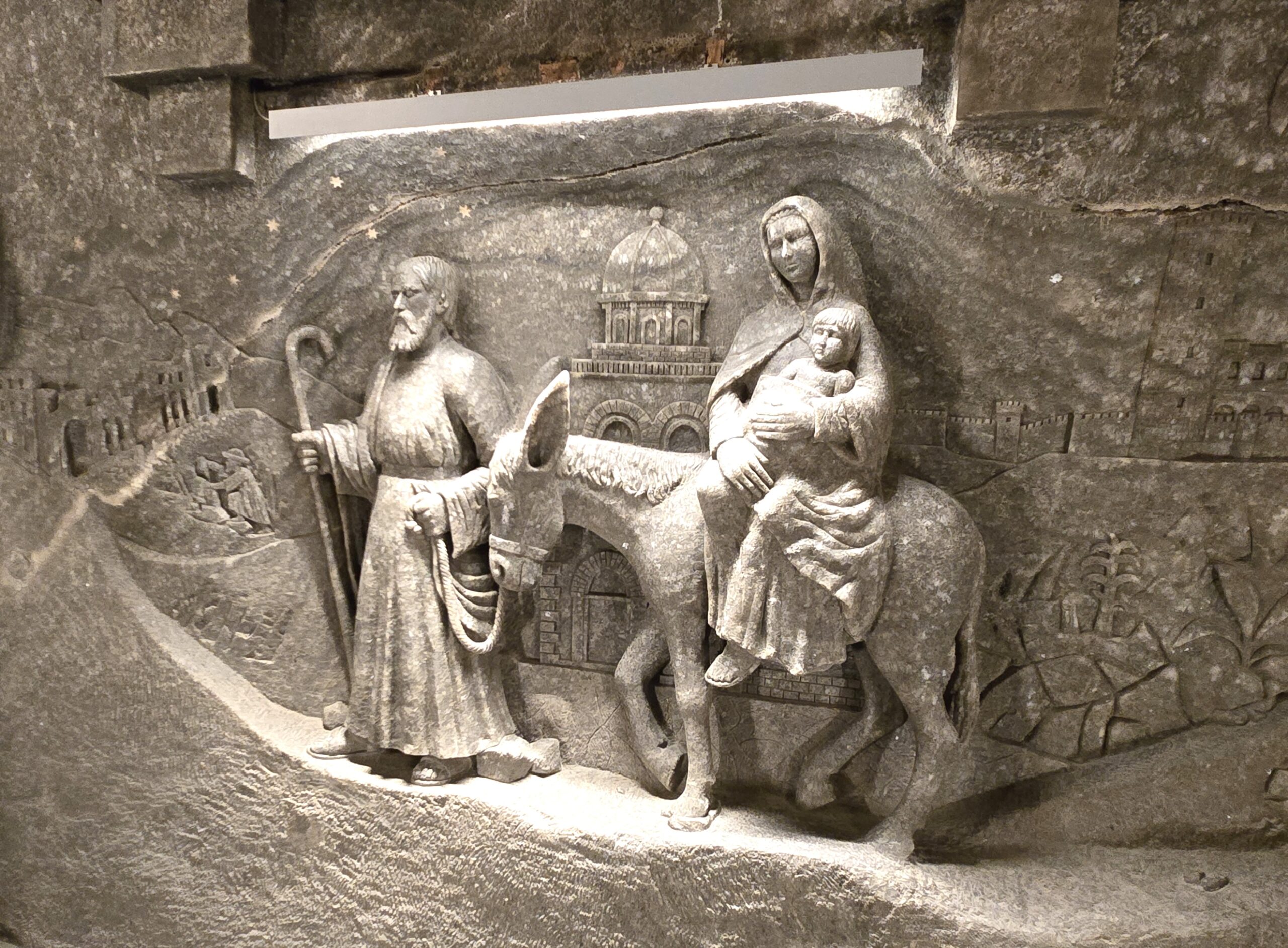
Mary & Joseph escaping to Egypt
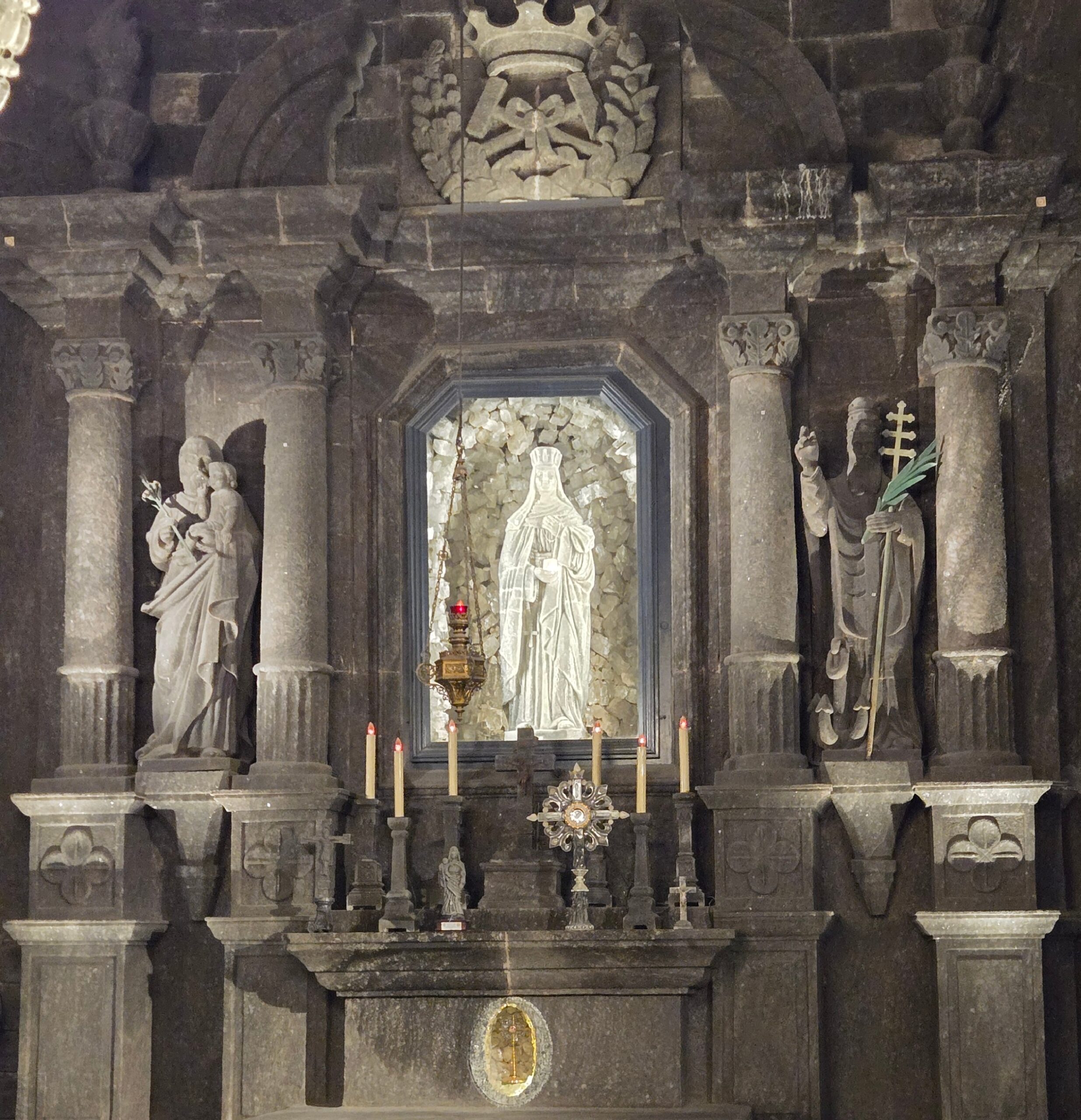
Altar
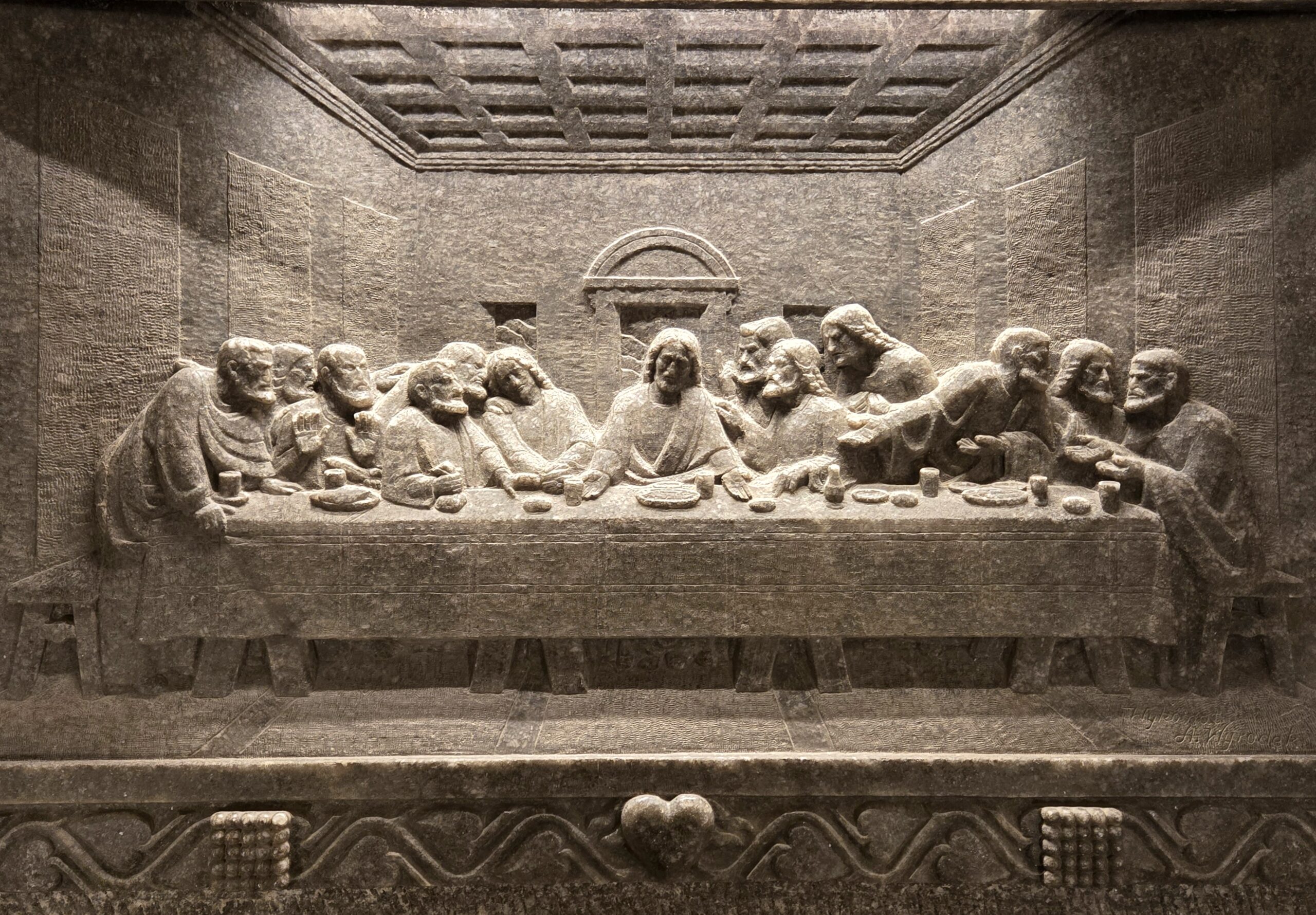
Last Supper
 That was our intro to Krakow. Climb down 840 stairs to the bottom of a salt mine, and (fortunately) take an elevator back to the surface. Lots of steps, lots of walking. Now time to drive into Krakow and check into our apartment.
Miserable, in a word! Raining like crazy and so much traffic that the normally 30-minute drive turned into 2 hours! The worst, Krakow city center is surrounded by a park and all roads around the city center are 1-way. We found our apartment which turned out to be only a 6-minute walk from where we parked. The parking garage however, was a 45-minute drive! (One-way streets in pouring rain!) Oh, and to add to the challenge, GPS dropped out. Between the rain and the buildings, no GPS! We did make it to the parking lot but not without a few “excuse me”, “sorry”, “damn it”, “this is bullshit”, and a few other terms Collette said I can’t print. But we made it. That’s about enough for today. Tomorrow, we visit Schindler’s Factory for a tour. Hopefully, it won’t be raining.
Cheers